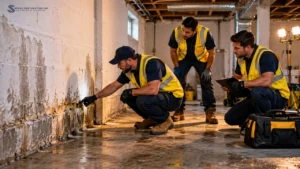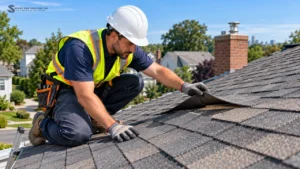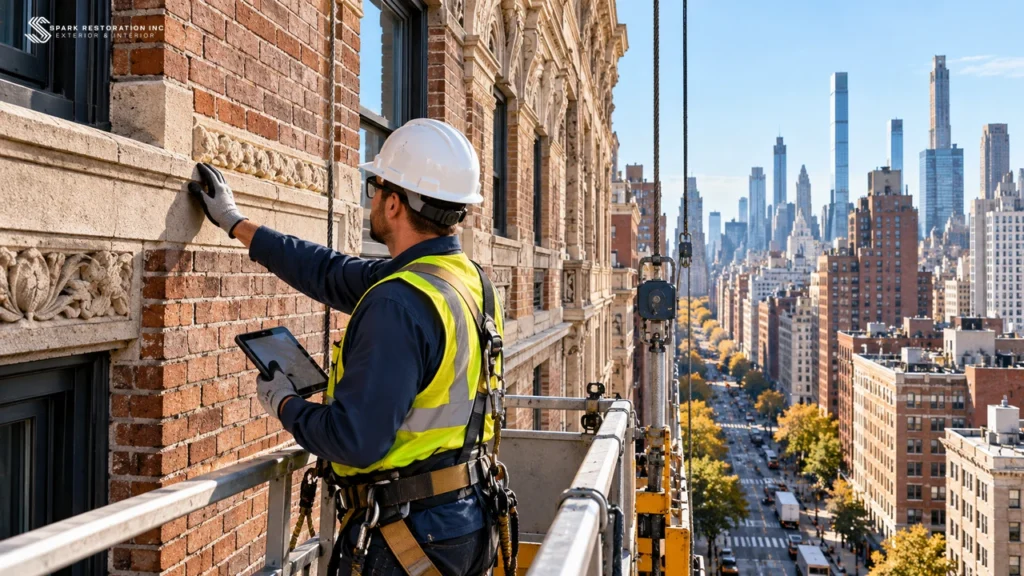
During a Local Law 11 inspection, a Qualified Exterior Wall Inspector (QEWI) inspects every facade of a covered building, using a scaffold, a suspended rig, or another close-up method where required, classifies the condition of the exterior walls and appurtenances, and files a report with the New York City Department of Buildings (DOB). Owners then repair what is flagged, so the building can return to a safe condition and the filing can be closed out.
Local Law 11, now known as the Facade Inspection and Safety Program (FISP), applies in New York City to buildings that are more than six stories tall. Inspections take place on a five-year cycle, with filing windows set by the last digit of the building’s block number. Each building is inspected and reported on individually, even though buildings in the same sub-cycle share a filing window.
Who Performs the Inspection
Only a Qualified Exterior Wall Inspector, or QEWI, may perform a Local Law 11 inspection and sign the report filed with the DOB. A QEWI is a licensed design professional, such as a registered architect or professional engineer, who meets the DOB’s qualification requirements for facade inspections. The inspector observes, documents conditions, and gives an independent classification. That independence matters, because the report becomes part of the building’s official record.
It is important to be clear about roles. Spark Restoration Inc. does the repair work that follows an inspection, not the inspection itself. We do not act as the QEWI, and we do not file the inspection report for the owner. When a report identifies work that must be done, our crews carry out the facade, masonry, waterproofing, cornice, parapet, and related exterior repair and renovation services in New York that the finding requires. Keeping inspection and repair separate helps everyone trust both steps: the inspector reports what is there, and the contractor then fixes it.
How Inspectors Access the Facade
Access is one of the most visible parts of a Local Law 11 inspection, and it is carefully planned. The DOB’s published rules require close-up inspections of the facade, rather than a simple look from the street. The QEWI, or a trained team working under the QEWI’s supervision, must be able to see and touch the exterior wall surfaces at close range, including areas that cannot be judged from the sidewalk.
Suspended scaffolds are a common choice for taller buildings. A suspended platform hangs from the roof and is lowered floor by floor, allowing the inspector to move along the facade, photograph conditions, tap masonry to listen for hollow or loose material, and note cracks, staining, or displacement. Boom lifts may be used where height, street layout, and site conditions make them practical, especially for lower portions of a facade. Rope access is another method used by qualified personnel on suitable buildings, where trained technicians descend the facade on ropes to reach specific areas.
Not every part of the inspection uses the same method. Inspectors may combine a visual drop, in which the facade is viewed closely while descending, with a hands-on close-up inspection for areas that need detailed checking. Rooftops, setbacks, balconies, terraces, parapets, and cornices are examined as part of the facade system, because conditions there can affect safety below. 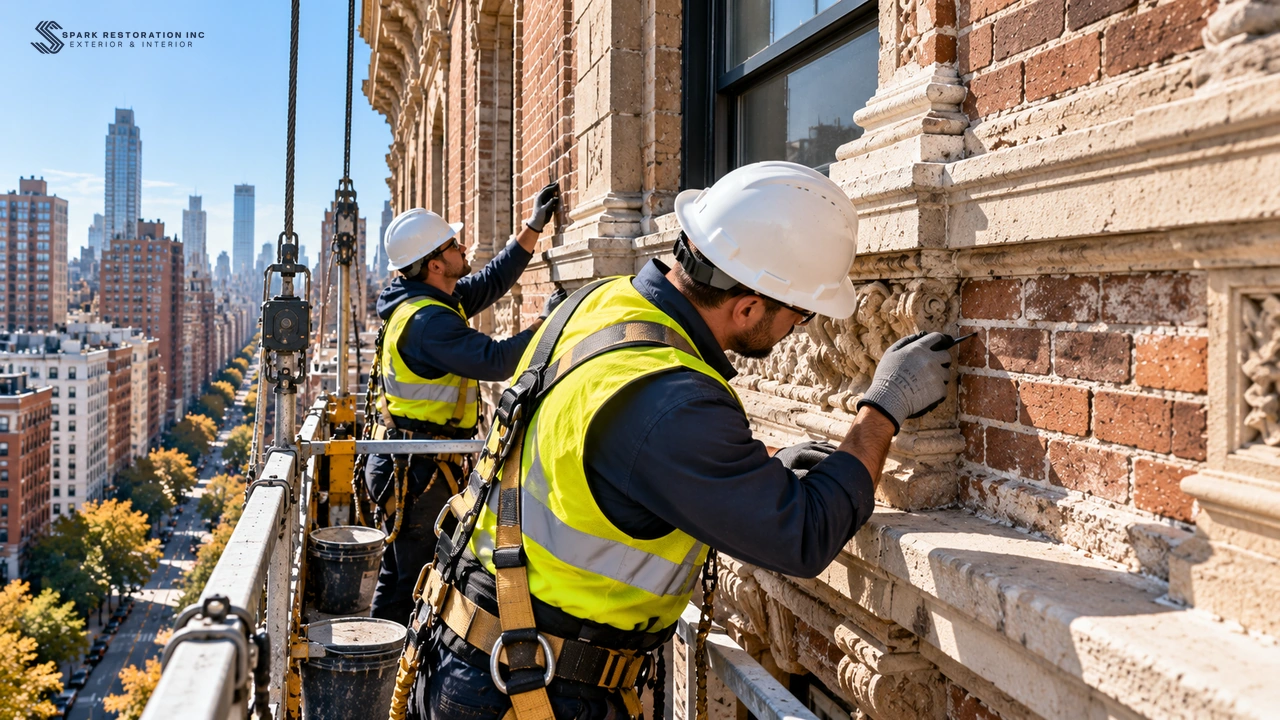
What the Inspector Looks For
The inspector looks for any condition that could make part of the facade unsafe, or that could become unsafe before the next cycle. That review covers the full exterior wall system, not just the brick or stone that is easiest to see. Masonry, mortar joints, stone, terra cotta, metal panels, stucco, and other cladding materials are checked for cracking, displacement, spalling, bulging, or missing pieces.
Cracks are recorded by location, size, and pattern, because a fine, isolated hairline crack and a wide, stepped crack through mortar joints can mean very different things. Displaced masonry, including bricks or stones that have shifted, bowed, or loosened, receives close attention, since a displaced unit may be at risk of falling. The inspector also checks for hollow-sounding masonry, deteriorated mortar, failed sealant joints, and areas where water has been entering the wall.
Cornice and parapet condition is central to the review. Cornices project from the facade and are exposed to weather on several sides, so they are prone to cracking, deterioration, and loosening. Parapets, the low walls at the roof edge, are checked for cracks, leaning, missing coping, and failed flashing. A damaged cornice or parapet can pose a risk to people below, even when the main wall appears sound.
Lintels, the supports above windows and doors, are checked for rust, cracking, deflection, and loss of bearing. Metal lintels can corrode and expand, pushing masonry apart, while stone or concrete lintels can crack under load or weathering. The inspector also looks for water entry points: failed flashing, open joints, damaged coping, and stains that suggest water has travelled inside the wall. Water is often the root cause of facade deterioration, so tracing it matters as much as noting visible damage. Balconies, railings, fire escapes, signs, and other appurtenances are reviewed for secure attachment and sound condition.
The Three Classifications
SAFE means that, in the inspector’s professional judgment, the facade and its appurtenances are in good condition, with no conditions requiring repair or maintenance beyond routine upkeep before the next cycle. A SAFE filing does not mean a building will never need work; it means that, at the time of inspection, no unsafe or SWARMP conditions were identified.
SAFE with a Repair and Maintenance Program (SWARMP) means the facade is safe at the time of inspection, but the inspector has identified conditions that must be repaired or maintained within a stated period. Published guidance commonly describes SWARMP repairs as work to be completed within the five-year cycle, so conditions do not become unsafe before the next inspection. The report lists the SWARMP items, and the owner is expected to complete and document them.
UNSAFE means the inspector has found a condition that poses a risk to public safety, such as loose material that could fall, a seriously deteriorated cornice, or a facade element that is no longer securely attached. An UNSAFE finding triggers immediate safety measures and a repair obligation. Whether a single cracked area makes a building UNSAFE depends on the inspector’s judgment about risk, location, and severity, which is why close-up inspection, rather than a distant view, is so important.
What Happens After an UNSAFE Finding
An UNSAFE finding moves quickly from report to action. The first step is public protection. The owner must arrange immediate safety measures, which often include erecting a sidewalk shed below the affected facade, so pedestrians are protected from falling material. Loose or unstable material may be removed or secured, and the area below may be cordoned off. These measures are not the repair itself; they are the protection that stays in place until the repair is complete and accepted.
The QEWI files the UNSAFE report with the DOB, and the owner must then carry out the required repairs in line with published rules and any DOB directions for the building. In general published terms, UNSAFE conditions are expected to be addressed promptly, with filings and progress reported as the work proceeds, rather than deferred to a later cycle. The exact sequence and timing for a particular building depend on DOB requirements, scope, permits, and access, so owners should confirm the applicable steps with their QEWI. 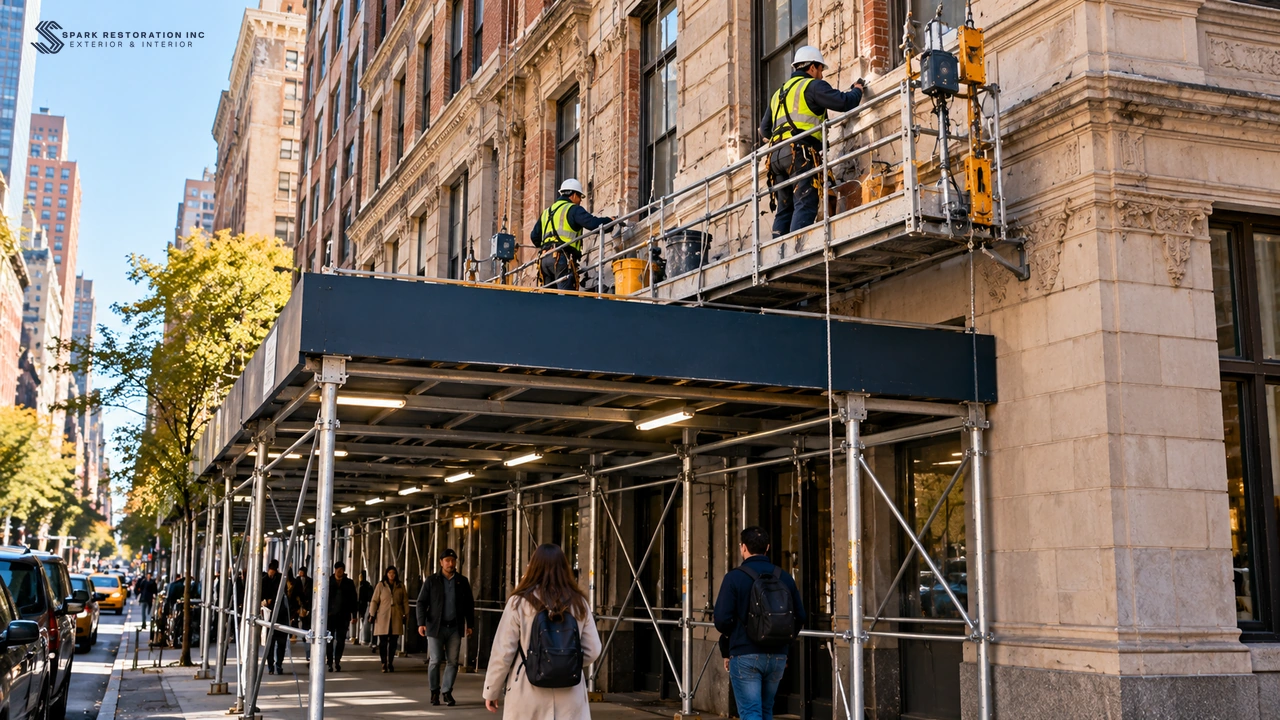
Once work is done, the QEWI re-inspects the repaired areas and, if the condition is resolved, files an amended report that can change the classification. Until that amended filing is accepted, the building remains listed as UNSAFE, and the sidewalk shed usually remains in place. Repair cost has no single figure for every building; it depends on factors such as facade size and height, the access method required, the extent and type of damage, materials, whether a sidewalk shed is needed, permit and filing requirements, and how much work is structural rather than cosmetic.
What Happens After a SWARMP Finding
A SWARMP finding gives owners time, but not indefinite time. Under published rules, SWARMP repairs are to be completed within the stated period, commonly within five years in published guidance, so listed conditions are resolved before they can become unsafe. Owners should treat that period as a planning window, not as permission to wait until the final months, because early repairs are often simpler and less disruptive than work left until deterioration has advanced.
In practice, the owner reviews the report with the QEWI, identifies each SWARMP item, and asks a qualified contractor to price and schedule the work. SWARMP work may include repointing mortar joints, repairing cracked masonry or stucco, resealing joints, repairing damaged lintels, restoring cornice and parapet sections, and correcting water entry points. Work may be phased by elevation or priority, so the building can remain occupied. Owners should keep contracts, photographs, permits, and completion records, since unresolved items can affect the next classification.
How Owners Prepare
Preparation begins well before the inspector arrives. Owners and managers should gather documents the QEWI is likely to ask for: prior FISP reports, previous repair records, drawings if available, permits, and records of water leaks, falling material, or earlier facade work. Prior reports are especially useful, because they show which conditions were noted before, which repairs were completed, and which areas deserve a second look.
Access arrangements should be confirmed in advance, including roof access, keys, and permission to set up suspended scaffolds or lifts. If the building has tenants, a notice explaining inspection dates, methods, and any balcony or window restrictions helps avoid delays. Owners should also check the filing window for the building, since missing a window can create compliance problems even when the inspection has been done. Guidance on Local Law 11 Cycle 10 deadlines can help owners confirm their sub-cycle with their QEWI, and early scheduling gives the inspector time to complete the work and file within the window.
How Repairs Are Completed and the Case Closed
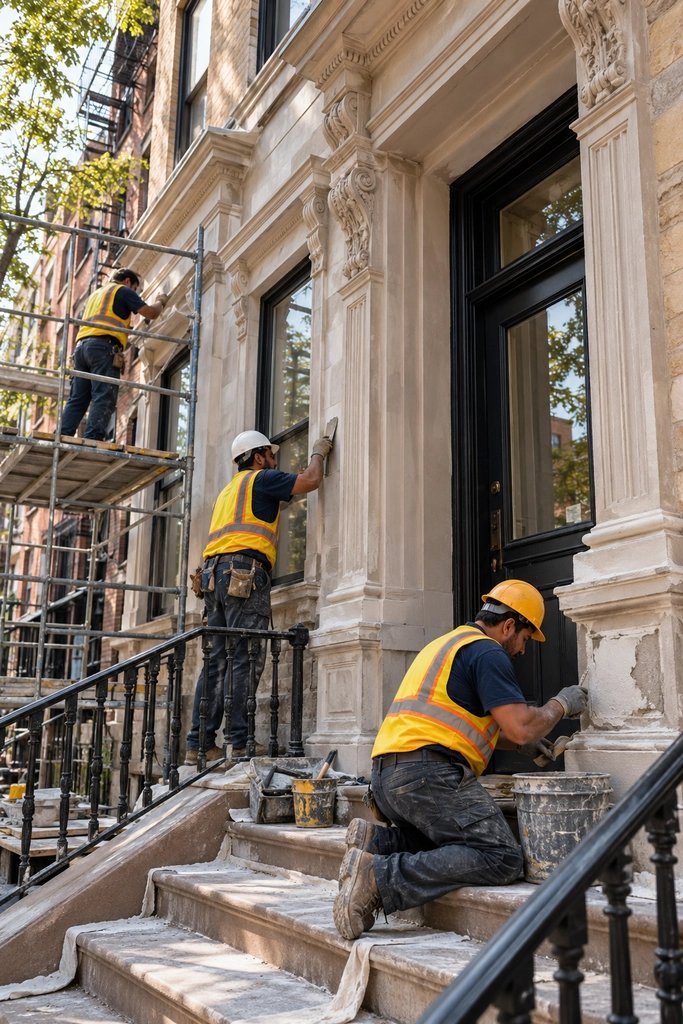
Once the report is filed, repair work follows a clear sequence. The contractor and owner agree on scope, access, protection, and schedule. Sidewalk sheds, scaffolds, or suspended platforms are installed, damaged material is removed, and repairs are carried out elevation by elevation. Masonry is repointed or rebuilt, stone and terra cotta are repaired or replaced, cornices and parapets are restored, lintels are treated or replaced, and flashing, sealants, and waterproofing are renewed to stop water entry at its source. 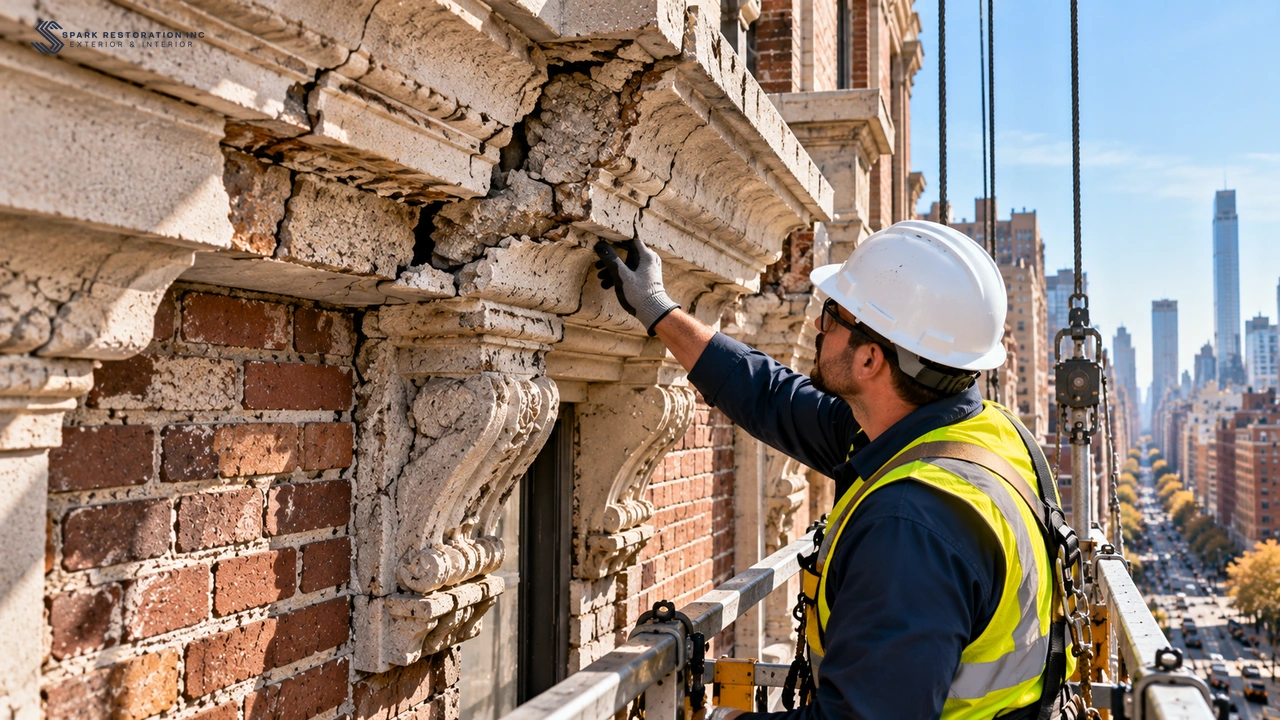
When repairs are complete, the QEWI re-inspects the repaired areas. For an UNSAFE building, this supports an amended filing that, if accepted, changes the classification and allows protective measures to be removed. For a SWARMP building, completed work is documented for the record and for review at the next cycle. In both cases, the case is closed only when the required filing has been accepted, not simply when the last brick has been laid. Working with exterior renovation contractors in Manhattan can help with scheduling where street activity and access constraints are complex.
If your building has received a SWARMP or UNSAFE finding, or if you are preparing for an upcoming cycle, Spark Restoration Inc. can help with the repair work that follows the inspection. To discuss your report and the next steps, please contact Spark Restoration Inc. and request a free estimate.
Frequently Asked Questions
1. What is a Local Law 11 (FISP) inspection?
A Local Law 11, or Facade Inspection and Safety Program (FISP), inspection is a periodic, close-up inspection of the exterior walls and appurtenances of New York City buildings that are more than six stories tall. A Qualified Exterior Wall Inspector examines every facade, classifies its condition as SAFE, SWARMP, or UNSAFE, and files a report with the DOB on a five-year cycle.
2. Who can perform a Local Law 11 inspection, and does Spark Restoration Inc. perform it?
Only a Qualified Exterior Wall Inspector (QEWI) may perform the inspection and sign the report. Spark Restoration Inc. does not perform the inspection itself; we carry out the repair work that follows an inspection, once the QEWI has filed the report and identified what must be fixed.
3. How does an inspector access the facade during the inspection?
Inspectors use close-up methods, including suspended scaffolds, boom lifts, and rope access, depending on height, layout, and site conditions. These methods allow the inspector to see and touch the facade at close range, rather than judging it from the street, and to examine cornices, parapets, lintels, balconies, and other features in detail.
4. What is the difference between SAFE, SWARMP, and UNSAFE?
SAFE means no repair or maintenance beyond routine upkeep was identified at the time of inspection. SWARMP means the facade is safe, but specific repairs must be completed within the stated period, commonly within five years in published guidance. UNSAFE means a condition poses a risk to public safety and requires immediate protective measures, such as a sidewalk shed, followed promptly by repair and an amended filing.
5. What should an owner do after receiving a SWARMP or UNSAFE finding?
After a SWARMP finding, the owner should review the report with the QEWI, schedule the listed repairs within the stated period, and keep records of the completed work. After an UNSAFE finding, the owner should arrange immediate safety measures, carry out the required repairs promptly, and have the QEWI re-inspect and file an amended report once the work is complete. In either case, a qualified repair contractor can help plan and complete the work, and owners can request a free estimate to get started.