Short answer: Interior waterproofing manages water after it enters your basement, while exterior waterproofing tries to stop water before it reaches the foundation wall. Neither approach is right for every home. The right choice for interior vs exterior basement waterproofing depends on where the water is coming from, how it is entering, whether the foundation itself is damaged, and what can realistically be reached around and inside your home.
If you live in New York City or Westchester and have found a damp corner, a puddle after heavy rain, or a musty smell that will not go away, it is tempting to look for a single fix. A wet basement, however, is a symptom, not a diagnosis. Water can rise through the joint where the floor meets the wall, seep through a crack, run down from the surface outside, or move through porous concrete and masonry over time. Each route points to a different solution, and sometimes to a combination of solutions.
What Is Interior Basement Waterproofing?
Interior basement waterproofing works from inside the home. It does not usually try to keep groundwater from touching the outside of the foundation. Instead, it collects water that enters, controls where it goes, and removes it before it can spread across the floor or damage finishes and stored belongings.
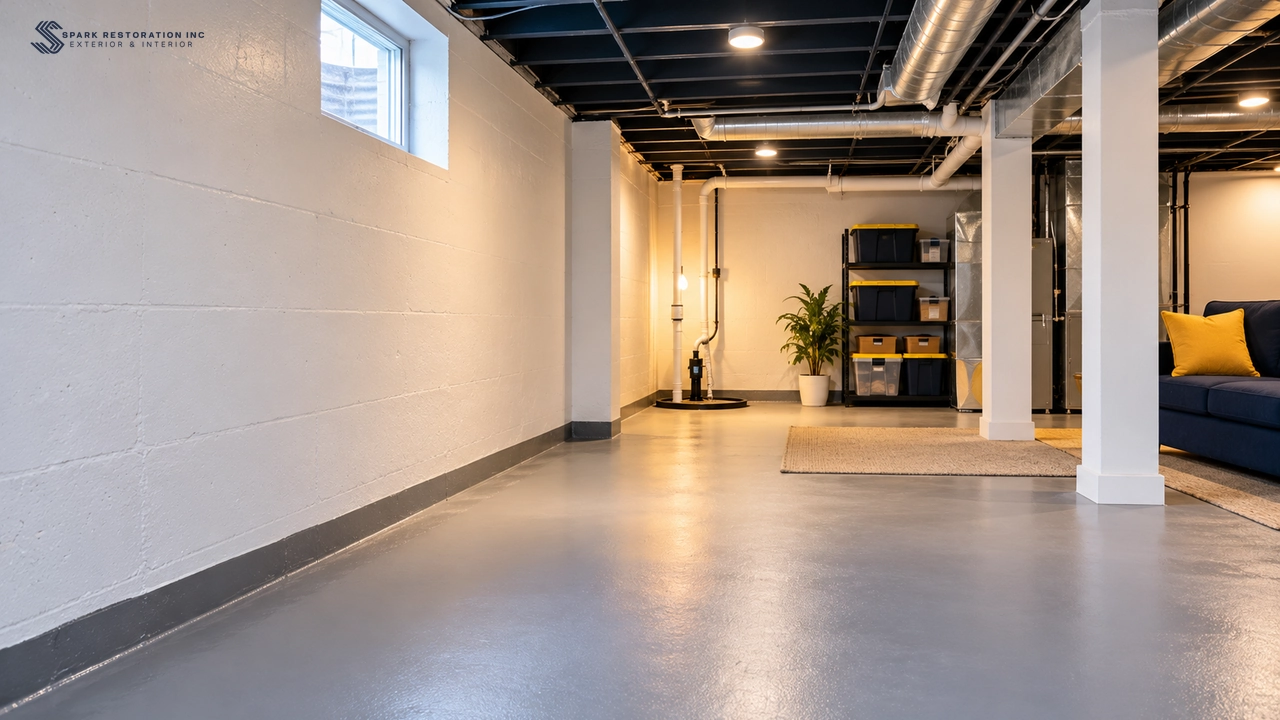
A common interior system starts with an interior drainage channel, installed along the inside perimeter of the basement floor, often at the cove joint where the wall meets the floor. Water that would otherwise seep in at that joint is captured by the channel and directed to a sump pit. A sump pump in the pit then discharges the water to a suitable outlet away from the foundation. Wall sealers, coatings, and vapour barriers are often used alongside the channel. They can reduce dampness on interior surfaces and direct moisture down toward the channel, and they can help with condensation and minor seepage. They are not the same as stopping water from pressing against the outside of the wall, and a coating on the inside face cannot, by itself, repair a structural crack or relieve pressure from saturated soil outside.
Interior work is generally less affected by weather, driveways, patios, decks, and landscaping than exterior excavation, but access inside still matters. Finished walls, built-in storage, boilers, water heaters, and electrical panels can limit how much of the perimeter can be reached. Its main limit is clear from its design: it manages water after it enters. It does not waterproof the exterior face of the foundation, and it does not, on its own, address water entering through a wall crack higher up or through a structural problem in the wall itself.
What Is Exterior Basement Waterproofing?
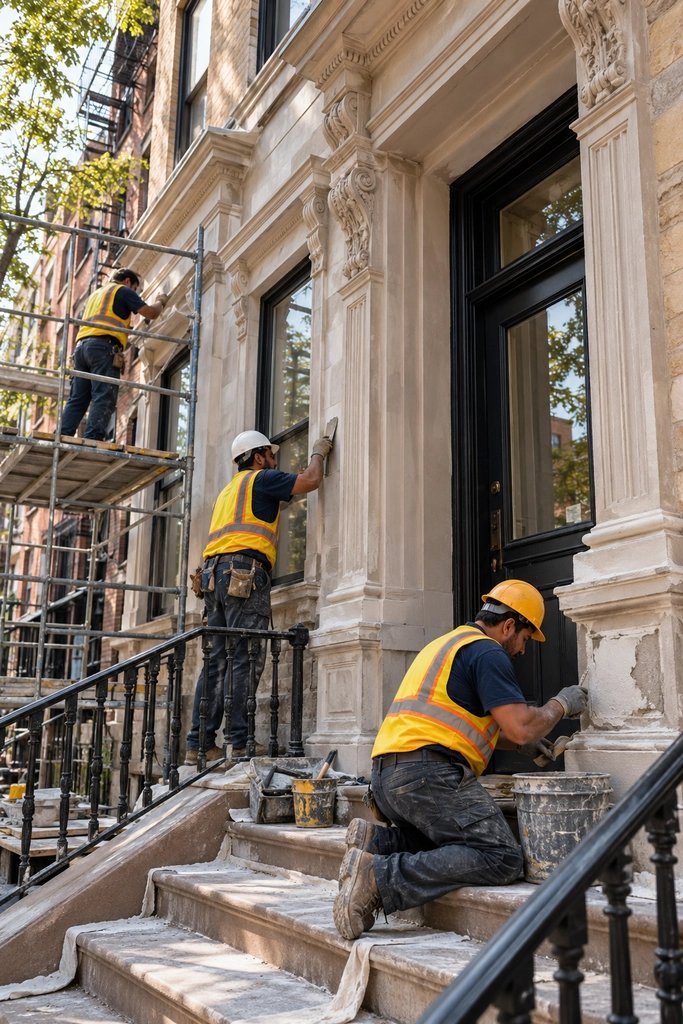
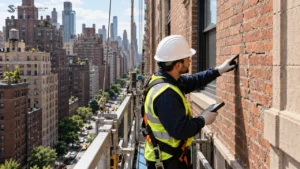
Exterior basement waterproofing works from outside the home. Its goal is to keep water from reaching the foundation wall in the first place, or to give water that reaches the wall a way to drain away safely.
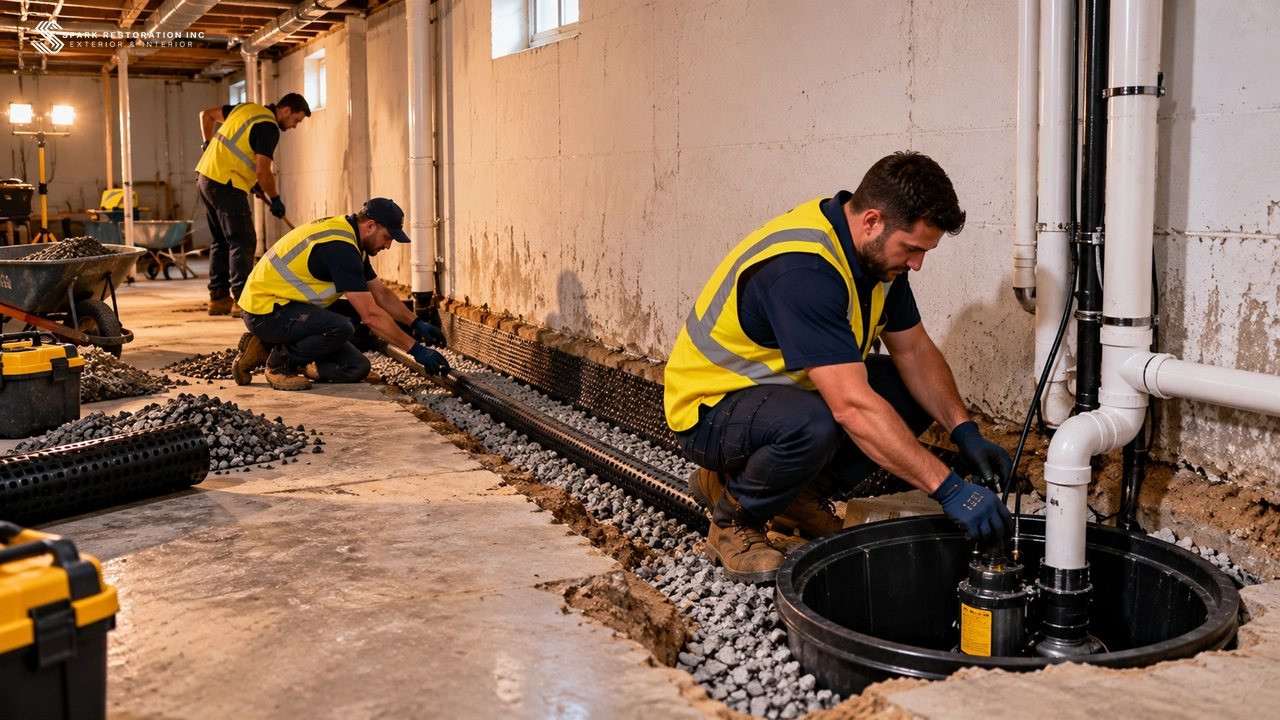
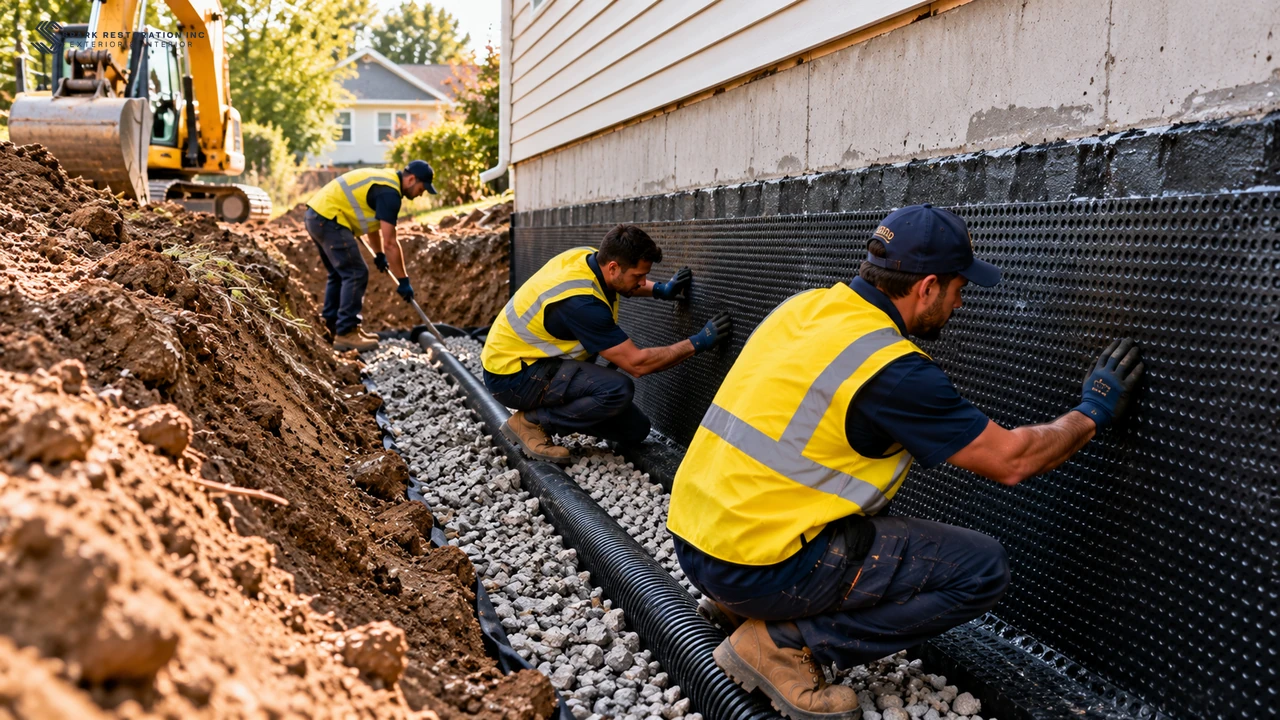
The work usually begins with excavation alongside the foundation, down to the footing where the wall meets the base of the foundation. Once the exterior face is exposed, it can be cleaned and inspected, and a waterproof membrane or coating can be applied. A membrane is a continuous barrier designed to resist water passing through it, and its performance depends on surface preparation, correct application, and sealed joints and details. Exterior drain tile is another key part of many systems: a perforated pipe laid beside the footing, usually surrounded by gravel and a filter material, which collects groundwater and directs it away from the foundation, reducing the pressure that pushes water through joints and cracks.
Grading and surface drainage are closely related. Soil should slope away from the foundation so rain does not pond against the wall, and downspouts and gutters should discharge away from the house. Correcting grading and surface water is often a first step. The main advantage of exterior waterproofing is that it addresses water at the source, on the outside face of the wall. The main limits are access and disruption: excavation can affect soil, plants, walkways, patios, and decks, and it may not be practical where a neighbour’s property, a driveway, a porch, or a utility line is very close to the foundation.
How to Tell Which Problem You Actually Have
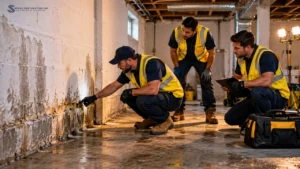
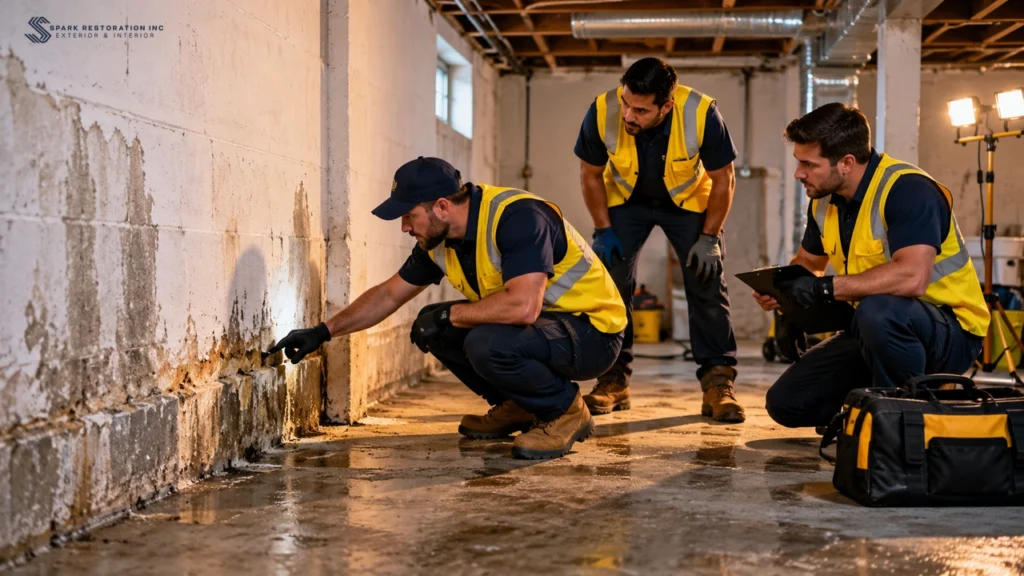
Water through the floor cove joint is a common pattern. You may see dampness or a line of water where the basement floor meets the wall, especially after heavy rain or when groundwater is high. This can happen even when the wall above looks dry, because water rising under the floor slab finds the joint, which is a natural seam. An interior drainage channel and sump pump are designed for this kind of problem, because they collect water at that seam and remove it.
Water through wall cracks is a different pattern. You may see a stain, a damp line, or active seepage following a crack, a tie-rod hole, a pipe penetration, or a joint in the wall. A single crack does not always mean a structural failure, but a crack that is widening, offset, leaking repeatedly, or accompanied by bowing or displacement should be treated seriously. Sealing the inside face of a crack may hide the symptom while water continues to press from outside, so the cause and the condition of the wall need to be assessed, not just the stain.
Surface and grading water is a third pattern. Water may appear after rain, near a wall below a downspout, below a window well, or where the ground slopes toward the house. You may notice ponding outside, a soggy area beside the foundation, or water entering at a window or a low point rather than through the floor joint. Correcting grading, gutters, and downspout discharge can reduce the load on any waterproofing system.
Interior vs Exterior: A Fair Comparison
Disruption and access. Interior work is generally less disruptive outside the property, but it can disrupt the inside of the basement, including finishes and stored items along the wall. Exterior work is generally more disruptive outside, because excavation affects soil, planting, and hard surfaces, but it leaves the inside of the basement largely untouched during the exterior phase.
What each fixes, and what it cannot fix. Interior drainage is well suited to water entering at the cove joint and to managing rising groundwater inside the basement. Exterior membrane and drain tile are well suited to water pressing against the outside face of the wall and to reducing that pressure at the footing. Neither system, on its own, fixes a structural wall problem, a plumbing leak, condensation alone, or surface water funnelled toward the house. An interior system cannot keep the exterior face dry, and a wall sealer cannot repair a moving crack. An exterior system cannot help if water comes from inside the house, from a failed interior drain, or from a sump discharge that returns water beside the foundation.
Longevity and maintenance, in general terms. Interior systems depend on the sump pump, the discharge route, and keeping the channel clear. A pump needs power, and a discharge that freezes, clogs, or drains back toward the house undermines the system. Exterior systems depend on the membrane remaining continuous, the drain tile remaining clear, and grading remaining sloped away from the house. No system should be treated as fit and forget: periodic checks after heavy rain, and attention to gutters, grading, and pump operation, are part of keeping a basement dry.
Can You Combine Interior and Exterior Waterproofing?
Yes, in many homes the answer is a combination, used for different parts of the problem. Exterior work may be used where access is good and water is pressing from outside, while interior drainage may be used where exterior access is limited, or where groundwater at the cove joint is also a problem. Grading and gutter corrections are often added to either approach. A combination does not mean doing everything everywhere; it means matching each measure to a specific water route. An inspector should be able to explain, in plain terms, what each part of a combined plan is meant to do. For homeowners comparing basement waterproofing in New York, that explanation matters more than the label of interior or exterior alone.
Warning Signs Not to Ignore
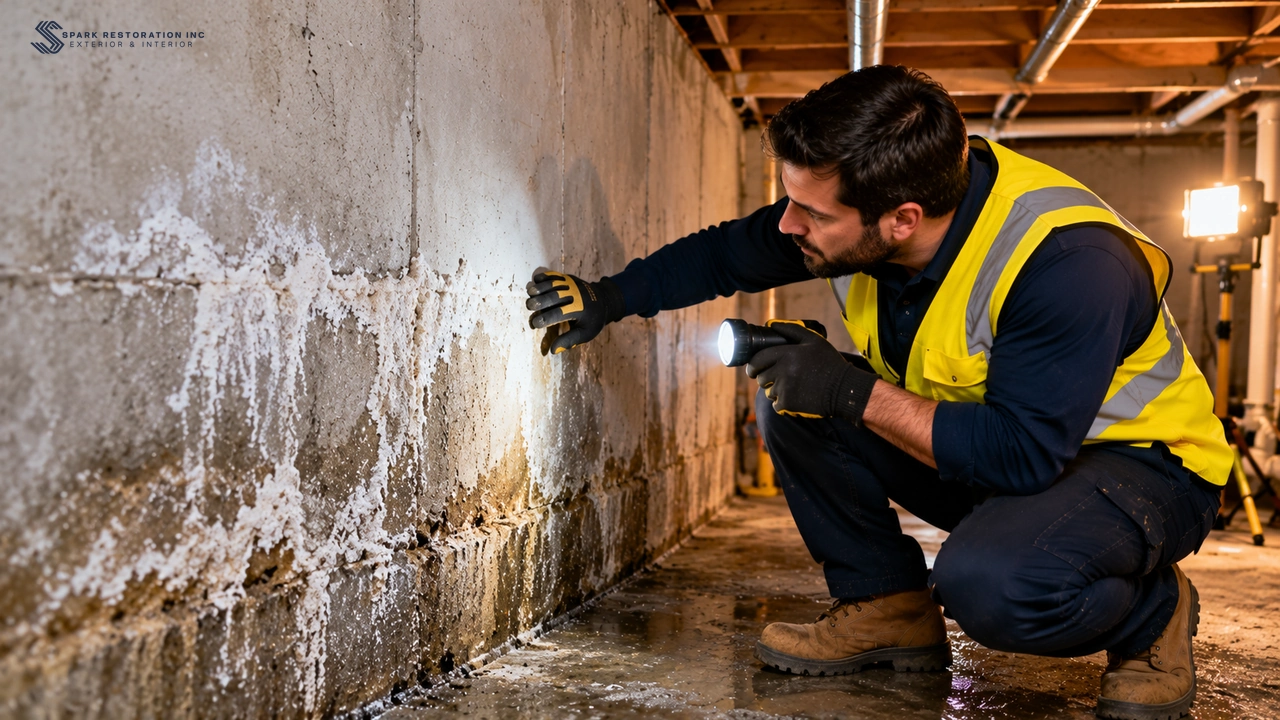
Do not ignore a musty odour that returns after cleaning, damp patches that reappear in the same place, or white, powdery deposits on a wall. That white deposit is efflorescence: mineral salts left behind as water moves through masonry and evaporates. Efflorescence itself is not mould, but it is evidence that water has been moving through the wall, and it deserves investigation rather than a coat of paint. Mould growth, persistent dampness, and damaged finishes are also signs that moisture is not under control, even if no standing water is present. Mould needs moisture to grow, so removing visible growth without addressing the moisture source is unlikely to solve the problem for long.
Bowed walls are different, and this point needs to be plain: a bowed basement wall is structural. It means the wall is deflecting under pressure, and it is not a problem that interior drainage or an exterior membrane alone will correct. Cracks that are horizontal, stair-stepped, widening, or accompanied by bowing, leaning, or displacement should be assessed promptly by a qualified professional, because the structural question comes before the waterproofing question. Do not delay that assessment while trying sealers or cosmetic repairs.
How an Inspection Decides
The decision is a matter of matching the evidence to the approach. Cove-joint water points toward interior drainage. A leaking exterior wall face with good access points toward exterior work. Surface water points toward grading and drainage corrections, sometimes in addition to a waterproofing system. A bowed or otherwise structurally affected wall points toward structural assessment first. A useful inspection therefore checks outside and inside: grading, gutters, downspouts, window wells, where water appears, the condition of the walls and floor joint, signs of past water, structural clues, and the sump system and its discharge point.
If you are in New York City or Westchester, including homeowners looking for waterproofing contractors in Scarsdale, NY, the right next step is to get the water route identified, the wall condition checked, and a plan explained in terms of what each part fixes. To arrange that conversation, contact Spark Restoration Inc to request a free inspection and estimate.
Frequently Asked Questions
Can interior waterproofing alone stop a leaking foundation wall?
Not always. Interior drainage can manage water at the cove joint and keep the floor drier, but it does not seal the exterior face of the wall. If water is seeping through a crack or pressing against the outside of the wall, the wall itself still needs to be assessed, and an exterior or combined approach may be needed.
Is exterior waterproofing always better because it stops water outside?
No. Exterior waterproofing has a clear logic, but it is not always practical or sufficient on its own. Access may be limited, excavation is disruptive outside, and exterior work does not address cove-joint groundwater in the same way interior drainage does, nor does it fix a structural wall problem.
How do I know if my problem is groundwater, a wall crack, or surface water?
Look at where and when water appears. Water at the floor-to-wall joint after heavy rain often points to groundwater. Water following a crack or penetration points to that opening. Water near a downspout, a window well, or a low spot where the ground slopes toward the house points to surface water. Many basements show more than one pattern, so an inspection that checks both outside and inside is more reliable than a guess based on one damp patch.
Will waterproofing fix a bowed basement wall?
No. A bowed basement wall is structural, and waterproofing alone will not straighten it or remove the pressure that caused it to deflect. A bowed wall, especially with horizontal or stair-stepped cracks, widening cracks, leaning, or displacement, should be assessed promptly by a qualified professional before waterproofing is treated as the solution.
How long does basement waterproofing last, and what maintenance does it need?
Longevity varies with the system, the installation, the soil and water conditions, and ongoing maintenance, so no single lifespan applies to every home. In general terms, interior systems need attention to the sump pump, the discharge route, and the channel, while exterior systems need grading to stay sloped away from the house and drains to stay clear. Checking after heavy rain and keeping gutters and downspouts working help protect any system.