EIFS is a lightweight, layered exterior system built around insulation board, a reinforced base coat, and a thin acrylic finish, while traditional stucco is a cement plaster applied in coats over lath and a solid substrate. The two finishes can look similar from the street, but they are built differently, handle water differently, and suit different buildings. The right choice depends on your wall construction, your insulation goals, how the wall will be used, and how much impact and maintenance exposure it will face.
That distinction matters most in New York City and Westchester, where older masonry, freeze-thaw weather, wind-driven rain, and tight access all test an exterior wall. A system that performs well on a new, well-drained frame wall may not be the best match for an older brick building, and a hard, cement-based finish may not be the best way to add insulation to a wall that already needs careful moisture management. This guide explains how each system is built, where each one performs best, and what to watch for when an existing finish starts to fail.
What EIFS Is and How It Is Built
EIFS stands for Exterior Insulation and Finish System. It is often called synthetic stucco, although that name can be misleading, because EIFS is not cement plaster. It is a complete wall cladding system, and its layers work together rather than acting as a single thick coat of plaster.
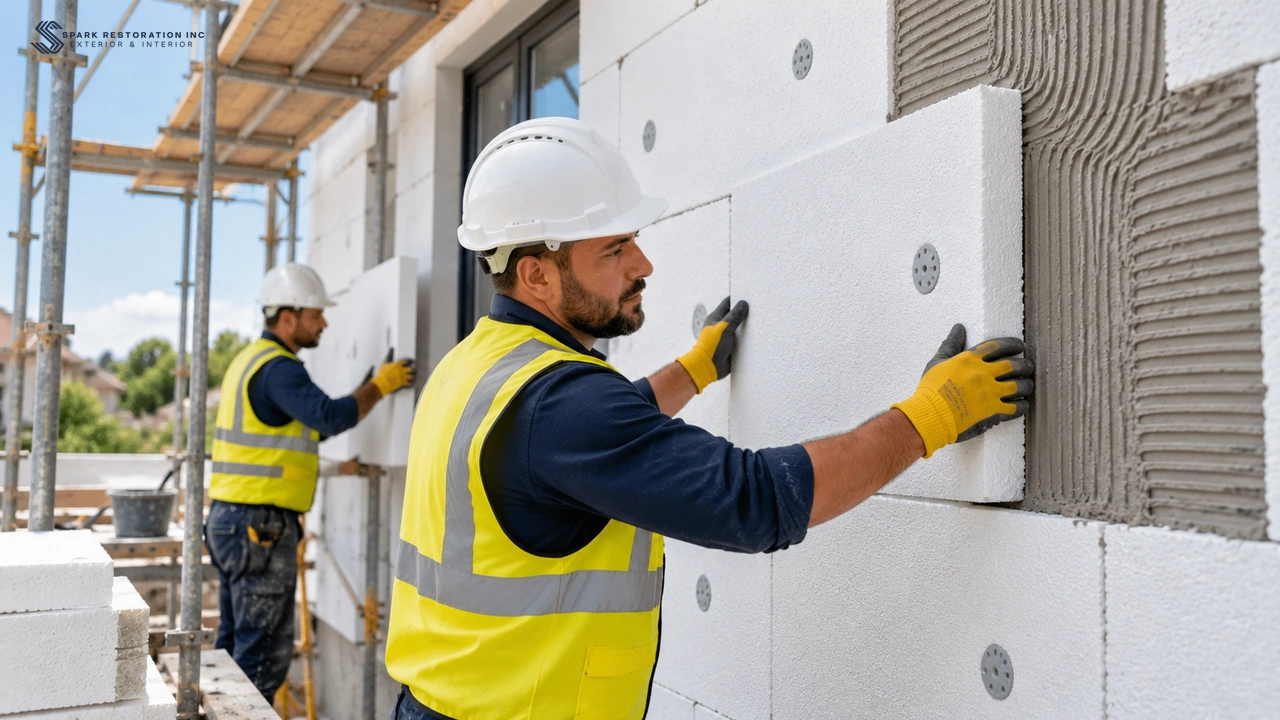
A typical EIFS assembly starts with insulation board fixed to the wall, either with adhesive, mechanical fasteners, or a combination of both. Over that board goes a base coat, usually a polymer-modified material, into which a reinforcing mesh is embedded. The mesh helps spread stress and resist cracking across the surface. The final layer is a finish coat, often acrylic-based, which provides colour and texture and helps shed rain.
Some EIFS assemblies are designed as barrier systems, where the outer layers are expected to keep water out, while others include a drainage plane behind the insulation so that any water that gets in can drain out. That difference is important, and it should be clear before work begins, because it affects flashing details, terminations at windows and doors, and how the system is inspected and repaired later. Joints, sealants, and flashings are not cosmetic details in EIFS. They are part of how the system manages water, and they need regular attention.
Because the insulation sits on the outside of the wall, EIFS can improve the thermal performance of a wall without taking space from the interior. It also creates a continuous outer layer, which can reduce the effect of gaps and joints in the wall behind it. At the same time, the finish layer is relatively thin and flexible compared with cement plaster, so the quality of the base coat, mesh, and detailing matters a great deal. A well-detailed EIFS wall can look crisp and uniform, with clean lines and a wide range of colours and textures, while a poorly detailed one can trap moisture or show damage at corners and openings.
What Traditional (Hard-Coat) Stucco Is
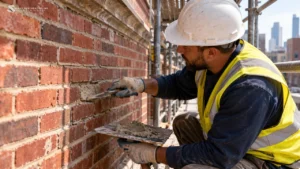
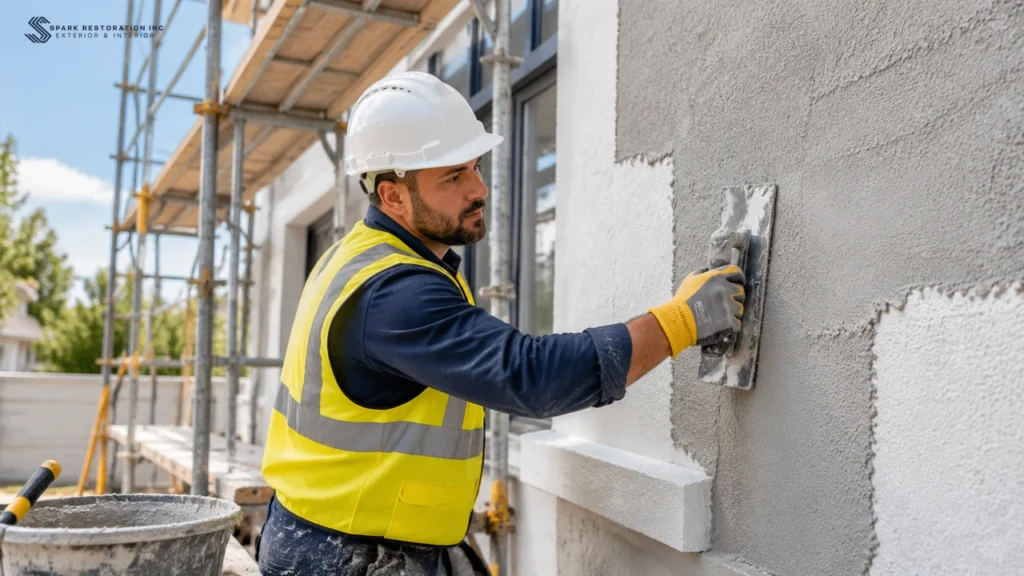
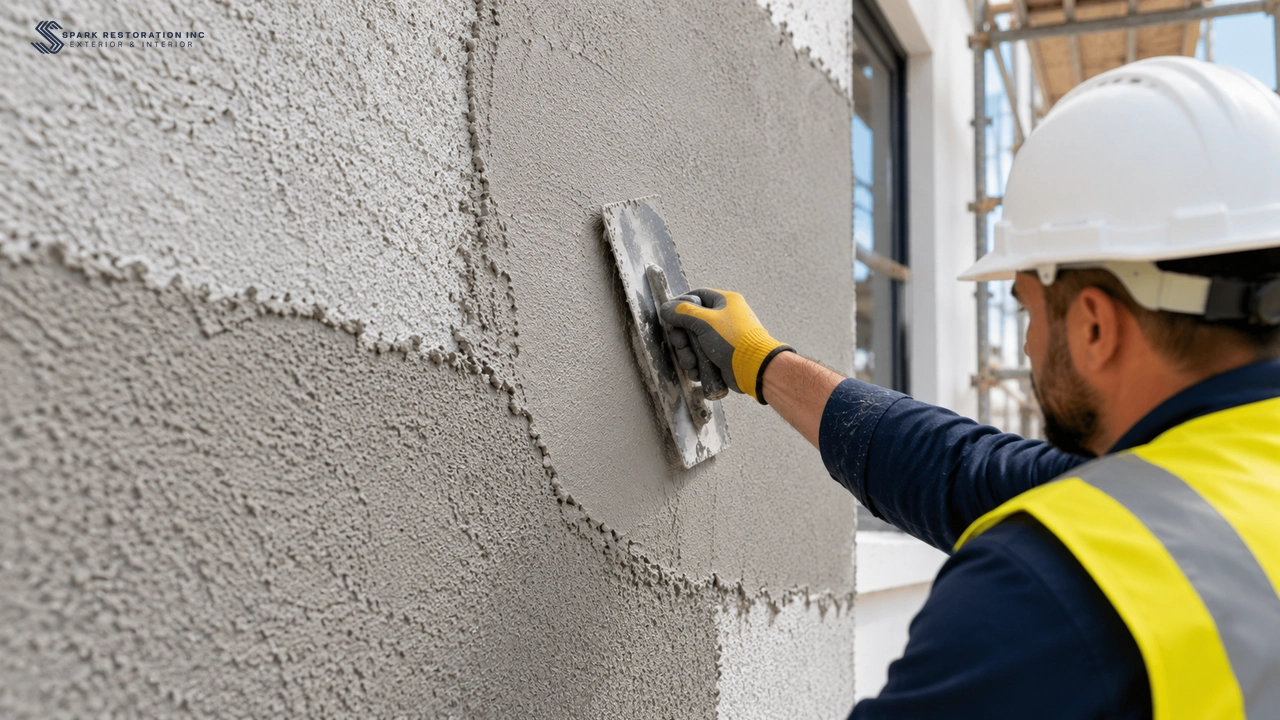
Traditional stucco, often called hard-coat stucco, is a cement-based plaster. It is applied in layers, most commonly as a three-coat system, over a suitable substrate. The first coat, known as the scratch coat, is pressed into and keyed to metal lath or a masonry surface. The second coat, the brown coat, builds thickness and creates a flat, even plane. The finish coat provides the final colour and texture.
That layered build gives traditional stucco its weight and hardness. The plaster itself is rigid, and it bonds to the wall in a way that feels solid under the hand. It can be applied over masonry, and over framed walls when lath, a water-resistive barrier, and proper flashing are in place. The substrate, the condition of the lath, and the curing of each coat all affect the result, which is why preparation and timing matter as much as the finish itself.
Traditional stucco is also a breathable system in the sense that it is not a sealed plastic skin. It can absorb some moisture and release it as conditions change, although it still needs sound flashing, drip details, and sealants at openings and penetrations. When it cracks, the crack is usually visible and local, and repair often means cutting out the damaged area, checking what lies behind it, and rebuilding the coats in that section before blending the finish.
Finish options are broad. A traditional stucco wall can be smooth, lightly textured, or heavily textured, and it can be coloured through the finish coat or painted. That flexibility makes it a good match for many older buildings, where a new finish should sit comfortably beside existing masonry, stone, and trim rather than looking like a completely different material.
Side-by-Side Comparison
Construction
The clearest difference is what each system is made of. EIFS is a layered system with insulation board at its core, a mesh-reinforced base coat, and a thin finish coat. Traditional stucco is a cement plaster built up in coats, usually three, over lath or masonry. EIFS is lighter and more flexible, while traditional stucco is heavier and more rigid.
That difference also affects how each system is installed. EIFS work is often quicker to build up once the wall is prepared, because the boards go on in large panels and the coats are thin. Traditional stucco takes more time in coats and curing, and it depends on good lath, good mixing, and suitable weather for each layer. Both systems depend on careful preparation, flashing, and detailing at openings, but the details themselves are not interchangeable.
Insulation
EIFS has a clear advantage when the goal is to add insulation to the outside of a wall. The insulation board is part of the system, so it can improve thermal performance without reducing interior space. That continuous outer layer can also help with airtightness when it is detailed well at joints and penetrations.
Traditional stucco, on its own, does not provide that same insulation layer. A traditional stucco wall can still be part of a well-insulated assembly, but the insulation must come from elsewhere in the wall, such as cavity insulation, interior insulation, or an added insulation layer beneath the stucco. For a building that needs a meaningful insulation upgrade, that distinction often decides the choice.
Durability and Impact Resistance
Traditional stucco is generally more resistant to everyday knocks, scrapes, and contact. Its cement coats are hard and solid, so it copes better at ground level, near walkways, and around entrances where people, carts, and equipment pass close to the wall. It can still crack from movement or impact, but surface damage is usually local and visible.
EIFS is more vulnerable to denting and puncture, especially where the finish is exposed to regular contact. A ball, a ladder, or a sharp object can leave a mark that goes through the thin finish and into the insulation board. Heavier mesh and stronger reinforcement can improve impact resistance in vulnerable areas, and those upgrades are worth discussing for ground floors and busy entrances, but they do not make EIFS as hard as cement plaster.
Both systems age with weather. Freeze-thaw cycles, wind-driven rain, and sun exposure test the finish, the joints, and the details at edges and openings. The system that lasts longer is usually the one that was detailed correctly for its wall and maintained regularly, rather than the one that looked best on the day it was finished.
Moisture Behaviour
Moisture is where the two systems differ most in practice. Traditional stucco can absorb water and release it as conditions change, but it is not waterproof on its own. It relies on a water-resistive barrier, flashing, weeps where appropriate, and sound details at windows, doors, and the base of the wall. If water gets behind it, it should have a way out, and the wall behind it should be able to dry.
EIFS, especially in its barrier form, relies more heavily on the outer layers and sealants to keep water out. That approach can work well when every joint and flashing is sound, but it leaves less room for error if a sealant fails or a flashing is missed. Drainage EIFS gives water a path out behind the insulation, which adds a safety margin, but it still needs correct detailing and regular inspection of joints and terminations.
In either system, the warning signs are similar: staining, bubbling, soft or hollow areas, and cracks that grow or reopen after repair. Those signs should not be covered with a fresh coat of finish alone. The cause needs to be found first, whether it is a failed joint, a flashing problem, a blocked drainage path, or damage to the layers behind the finish.
Maintenance and Repair
Maintenance for both systems starts with regular inspection. Joints and sealants should be checked, cracks should be noted, and the base of the wall and areas around openings should be looked at closely. Small problems are usually easier and less disruptive to fix than problems that have been left to spread.
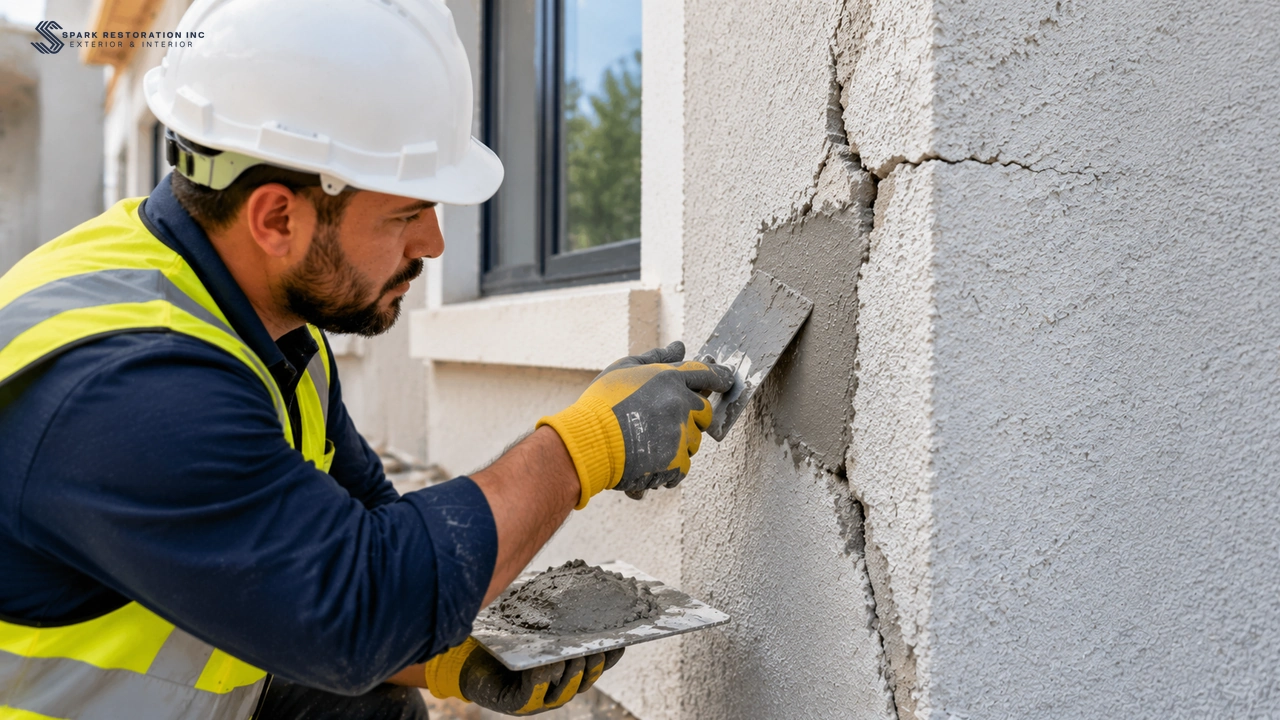
Repair methods differ. Traditional stucco repair often means cutting out the damaged section, checking the lath and substrate, and rebuilding the coats before blending the finish. EIFS repair often means cutting out the damaged board and finish, replacing the affected layers, and restoring the mesh and finish so the patch blends with the surrounding wall. In both cases, a patch that only covers the surface without checking what lies behind it is a short-term fix.
For a clearer sense of what drives repair work, it helps to read our stucco repair cost guide, which explains the factors that affect scope and access. The size of the damaged area, the height and access, the condition of the layers behind the finish, and the amount of detailing at openings all affect how much work a repair involves.
Appearance and Finish Options
Both systems offer a wide range of finishes, and both can be coloured to suit a building. EIFS finishes are typically smooth or lightly textured, with crisp lines that suit modern and commercial buildings. Traditional stucco offers a broader texture range, from smooth to heavily textured, and it often suits older buildings where a hand-finished look is part of the character.
Colour is another practical difference. EIFS finishes are often coloured through the finish coat, which can give a uniform appearance. Traditional stucco can also be coloured through the finish coat, or it can be painted, which gives more flexibility for later colour changes but adds a maintenance cycle of its own. Either way, the finish should be chosen with the building’s style, the surrounding materials, and the exposure of each elevation in mind.
Cost Factors
Cost is best understood as a set of factors rather than a single figure, because every wall is different. The system itself is one factor: EIFS involves insulation board, mesh, base coat, and finish, while traditional stucco involves lath, multiple plaster coats, and curing time. Labour is another factor, because the skills, the number of visits, and the time on site differ between the two systems.
Access and preparation often matter as much as the finish. Scaffolding or lift access, the condition of the existing wall, the amount of removal or repair needed before the new finish goes on, and the detailing at windows, doors, corners, and the base of the wall all affect the scope of work. A straightforward wall at ground level is a different job from a tall elevation with many openings and a damaged substrate.
Long-term cost should also be considered. A system that needs frequent joint resealing, patch repairs, or repainting may cost more over its life than a system with a higher initial scope but lower ongoing maintenance. The cheapest finish on day one is not always the most economical choice over the life of the wall.
Which Suits Older Masonry Buildings in NYC and Westchester
Older masonry buildings raise a particular set of questions. The wall may already be brick or stone, it may have moved slightly over time, and it may have a history of repairs, coatings, and moisture exposure. In that context, the existing wall construction matters more than the finish alone. A solid masonry wall behaves differently from a framed wall with a cavity, and a wall that already holds moisture needs a different approach from a dry, well-drained one.
Traditional stucco often sits comfortably on older masonry, because it is a cement-based system that bonds to a solid substrate and matches the weight and character of the building. It can also be repaired in sections, which suits buildings where only part of a wall is damaged. That makes it a common choice for older homes and apartment buildings where the goal is to restore a sound, hard finish rather than to change the wall system.
EIFS can still suit an older building, especially where added insulation is a priority and the wall can be prepared and detailed to suit the system. It is important, however, to check the condition of the existing wall, the flashing at openings, and the drainage path before adding a new outer layer. Adding insulation and a new finish over a wall that already has moisture problems can hide the problem rather than solve it, so an inspection should come first.
Local experience also helps. Our brick and stucco services in New York cover both repair and restoration work on older buildings, and our brick and stucco contractors in Bronxville regularly work on homes where masonry, stucco, and trim meet. In either case, the choice should follow an inspection of the wall, not a preference for one finish over the other.
Signs Your Stucco or EIFS Needs Repair
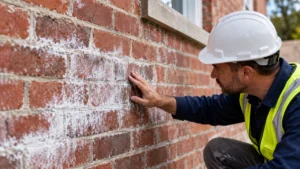
Cracks are the most common warning sign, but not all cracks mean the same thing. Fine hairline cracks in a finish coat may be cosmetic, while wider cracks, cracks that follow a pattern, or cracks that reopen after repair can point to movement, a failed substrate, or moisture behind the finish. Cracks at corners, around windows and doors, and at the base of a wall deserve particular attention, because those are the areas where detailing and water exposure matter most.
Other signs include bubbling or blistering of the finish, staining or discolouration, soft or hollow areas when tapped, and sections that feel loose or move under light pressure. On EIFS, damage at joints and sealants, or dents and punctures in exposed areas, can allow water in even when the rest of the wall looks sound. On traditional stucco, crumbling at the base, delamination from the lath, and repeated patch failures can point to a deeper problem with the substrate or the layers behind the finish.
Delaying repair rarely helps. Water that gets behind a finish can damage the layers beneath it, and a small local problem can spread into a larger section. A timely inspection can tell you whether a local repair will be enough, or repeated patch failures may point to a larger section replacement. An inspection that checks behind the finish, not just the surface, gives the clearest answer.

If you are unsure which system suits your building, or whether an existing finish needs repair, contact us for a free estimate. An inspection of your wall, its construction, and its current condition will give you a clearer basis for choosing between EIFS and traditional stucco.