Choosing a general contractor in New York City is one of the most important decisions you will make for your home. The short version is simple: verify the licence and insurance, check reviews and recent work, compare written estimates on scope — not just price — and get everything in a signed contract before work starts. That checklist sounds straightforward, but in New York, where buildings, boards, permits and older structures add layers of complexity, each step deserves care. A contractor who is a good fit will welcome your questions, explain the process clearly, and put the details in writing. A contractor who rushes you, avoids paperwork, or cannot show proof of credentials is giving you useful information too. This guide walks you through the process step by step, so you can hire with confidence and avoid costly surprises.
Why Choosing Carefully Matters More in NYC
New York homes are rarely simple projects. Apartments sit inside larger buildings, brownstones and brick houses have ageing facades and systems, and many properties are governed by co-op or condo boards with their own rules. Work that looks simple on the surface may involve shared walls, common areas, protected features, or approvals from a building manager. The wrong hire can lead to delays, disputes with neighbours or a board, rework, or work that does not pass inspection. The right hire plans for those realities from the start, communicates with the building when needed, and sequences the work in a sensible order.
Choosing carefully also protects your budget and your home. A clear scope, a realistic schedule and a written agreement reduce misunderstandings about what is included, who supplies materials, and what happens if something unexpected is found once work opens up. Taking time at the hiring stage is not wasted time. It is the stage where you have the most control, before deposits are paid and work begins.
Step 1: Verify the Licence and Insurance
Start with credentials, not charm or a low estimate. Home improvement contractors in New York City are licensed through the city’s consumer protection department, and you can ask a contractor for the business name and licence details and check them through that department. Confirm that the licence covers the type of work you are planning, and that the details match the company you are actually hiring, not a different business or an individual working under another name.
Insurance matters just as much. Ask for proof of general liability insurance and workers’ compensation coverage, and check that the policies are current. If a worker is injured on your property or neighbouring property is damaged, you do not want to discover that coverage was missing or out of date. A reputable contractor will provide documentation without hesitation and will not ask you to overlook this step. Spark Restoration Inc states that it is licensed and insured, which is the kind of straightforward assurance you should expect from any company you consider.

Step 2: Check Reviews, References and Recent Work
Reviews are a useful starting point, but they work best alongside references and real examples of work. Read reviews for patterns rather than a single comment. Look for mentions of communication, cleanliness, staying close to the agreed scope, and how problems were handled when they arose. Every renovation can hit a snag; the way a contractor responds tells you a great deal about how your project will go.
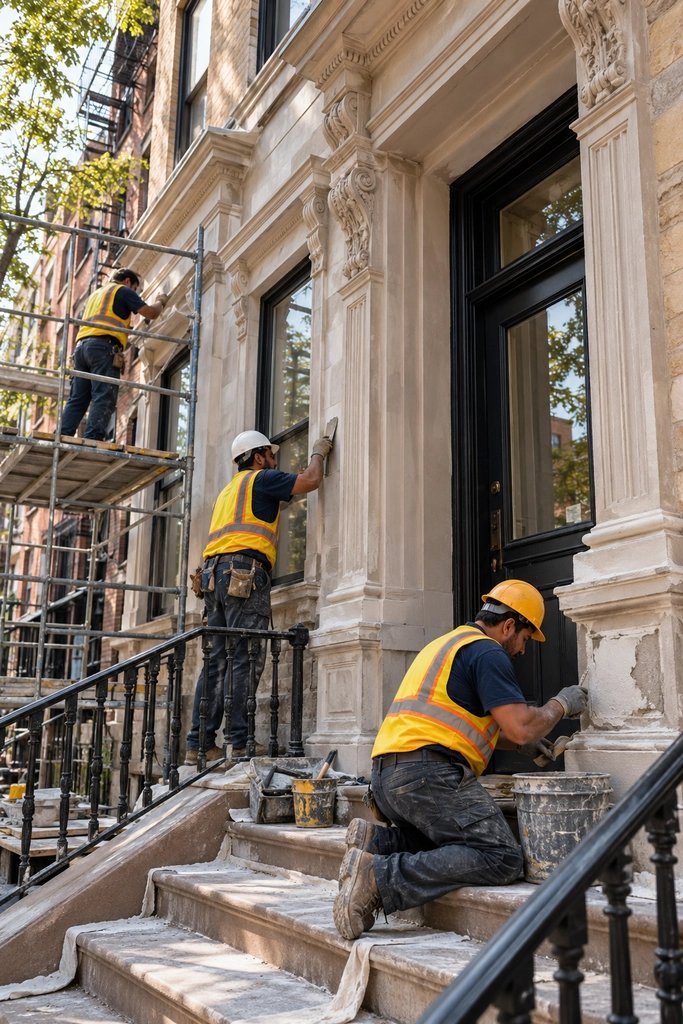
Ask for recent references for projects similar to yours, and contact them. Ask whether the work was finished as described, whether the site was kept tidy, whether changes were documented, and whether they would hire the company again. If possible, look at completed work in person or in detailed photographs, and ask about the condition of the work some time after completion. For exterior work, for example, it helps to understand how a company approaches exterior repair and renovation services in New York, including how it assesses existing conditions before recommending repairs. In neighbourhoods such as Bayside, you may also want to see work by exterior renovation contractors in Bayside so you can judge experience with similar homes and building types.
Be wary of a portfolio that shows only close-up or heavily edited images, or references that cannot be reached. A confident contractor should be able to point you to recent, relevant work and to clients willing to speak honestly about the experience.
Step 3: Compare Written Estimates — Scope, Not Just Price
Get written estimates from more than one contractor, and compare them line by line. A lower figure is not automatically better value, and a higher figure is not automatically a sign of quality. The question is what each estimate actually includes. Does it list the work in detail, the materials and finishes, the areas to be worked on, preparation and cleanup, and any work that is excluded? Vague language such as “renovate bathroom” or “repair exterior” leaves too much room for disagreement later.
Ask each contractor to explain differences in scope, materials and method. One estimate may include protection for floors and furnishings, disposal of debris, and patching and finishing, while another may leave those items out. Timelines matter too: ask for a realistic start window, an estimated duration, working hours, and how delays will be communicated. If an estimate is much lower than the others, ask why. It may reflect a narrower scope, lower-grade materials, or an assumption that will later become an extra charge.
Keep notes from site visits as well. Did the contractor measure carefully, ask about access, notice existing damage, and discuss building rules? That attention at the estimate stage usually carries through to the work itself. A thorough estimate is a sign of a thorough contractor.

Step 4: The Contract — What Must Be in Writing
Do not start work on a handshake or a brief email. A written contract protects both sides by recording what was agreed before anyone picks up a tool. It should name the contractor and homeowner, describe the property and the project, and set out the full scope of work in clear language. Materials, brands or grades, finishes and colours should be specified where they matter, along with who is responsible for supplying each item.
The contract should also include the payment schedule, start and completion terms, how change orders will be priced and approved in writing, who will obtain permits and approvals, cleanup and disposal responsibilities, and warranty terms. It should explain what happens if hidden damage is found, if the scope changes, or if either side needs to pause the work. Read the whole document, ask questions about anything unclear, and keep a signed copy. If a contractor is reluctant to put an important promise in writing, treat that as a warning sign, not a minor detail.
Payment terms deserve special attention. Payments should follow progress, with stages tied to completed work rather than to dates alone. Avoid paying a large sum before work begins, and never pay in full before the work is complete and you have had a chance to inspect it. A clear schedule makes the project easier to manage and gives you a fair way to raise concerns if a stage is not finished properly.
Step 5: Permits, Building Rules and Approvals
Permits and building approvals are a normal part of many New York projects, and they should be discussed early, not discovered halfway through. Permits in New York City are handled through the Department of Buildings, and the type of permit needed depends on the scope of work, the building type, and whether structural, plumbing, electrical or facade work is involved. Your contractor should be able to explain, in general terms, which approvals are likely to be needed for your project and who will be responsible for obtaining them.
Building rules can be just as important as city permits. Co-op and condo boards often require an alteration agreement, insurance certificates, work hours, approved contractors, and inspections. If you live in a co-op, allow time for board review and ask early what documents are required. A helpful starting point is guidance on a co-op board alteration package, which explains the kind of paperwork boards commonly ask for. Starting that process early can prevent a project from being delayed after a contractor has already been booked.
Also ask how inspections, neighbour notifications and access to shared areas will be handled. A contractor experienced in New York buildings will factor these steps into the schedule and will communicate with the building manager or superintendent when needed. If a contractor suggests skipping a required permit or board approval to save time, walk away. The short-term saving is not worth the risk to your home, your building relationship, or a future sale.

Red Flags That Should End the Conversation
Some warning signs are enough to end the conversation, even if the estimate looks attractive. Be cautious if a contractor cannot show a licence or current insurance, refuses to provide a written contract, or asks for a large cash payment upfront. Pressure tactics are another clear signal: a genuine deadline for a material order is different from being told you must sign today or lose the offer.
Other red flags include no fixed business address or contact details, a constantly changing scope or price, reluctance to provide references, and a request to obtain permits in your name alone when the contractor should be responsible. Poor communication at the hiring stage rarely improves once work starts. If calls go unanswered, questions are brushed aside, or promises keep changing, trust that pattern. There are reputable contractors in New York, and you do not need to settle for one who makes you uneasy.
Questions to Ask Before You Sign
Use these questions at your final meeting, and note the answers in writing:
- Are you licensed for this type of work, and can you show current insurance certificates?
- Who will supervise the work day to day, and who is my main point of contact?
- What exactly is included and excluded, and how will change orders be priced?
- What permits or building approvals are needed, and who will obtain them?
- What is the payment schedule, and what warranties cover labour and materials?
If the answers are clear, consistent and reflected in the contract, you are in a strong position to proceed. If they are vague, ask for clarification before you sign.

Choosing a general contractor in NYC takes a little patience, but that patience pays off in a smoother project and a result you can trust. Verify the licence and insurance, review recent work, compare written estimates on scope, and insist on a clear contract and the right approvals. If you would like help with your next renovation or repair, contact Spark Restoration Inc to discuss your project and the next steps.