


Waterproofing contractors in Manhattan who start with the diagnosis, not the system
Waterproofing contractors in Manhattan, NY, work on buildings tight to the street, with neighbours on both sides and below-grade space that often runs under the sidewalk. Spark Restoration waterproofs basements, foundations, cellar vaults and terraces across the island. Every job starts with a free inspection and a diagnosis of where the water is coming from, and the scope goes into a written estimate. This page covers our work as waterproofing contractors in New York City.
Why Manhattan basements leak (and why the fix is different here)
Made land downtown — the water table is the problem, not the rain
Much of Lower Manhattan is made land. The original shoreline ran roughly along Pearl and Cherry streets on the east side and Greenwich Street on the west. Battery Park City is 1970s landfill from World Trade Center excavation spoil. Below-grade spaces on that ground sit in a high water table. Hurricane Sandy in 2012 flooded the made land first, Ida in 2021 showed how fast a basement can fill from above, and groundwater has risen where pumping stopped, reaching structures built when the level was lower.
Rubble-stone foundations — why townhouses can’t just be dug up
Manhattan townhouse foundations are often rubble-stone: thick, strong walls laid up long before membrane technology existed and almost never waterproofed from the outside. Digging one up sounds straightforward until you look at the street: neighbours on both sides, no side yard, a sidewalk at the front and a garden or areaway at the back. The honest fix for most of these houses is interior: control the water, drain it away and build a separate dry layer inside.
Cellar vaults under the sidewalk — a Manhattan-only leak
A cellar vault is a basement room that extends under the public sidewalk, and it is a Manhattan-only problem. The roof of the vault carries the pavement, and the membrane that keeps it dry — usually hot rubberized asphalt or modified bitumen — sits on that roof, under the sidewalk pavers, tied into the waterproofing on the foundation wall. When that membrane fails, water comes through the vault ceiling and down the wall.
Setback terraces and bulkheads — the top-floor leak
At the top of the building the leak changes character. Setback terraces, bulkheads and parapets are the classic sources of top-floor leaks in Manhattan: a terrace membrane over living space, a bulkhead door that has lost its seal, a parapet coping that lets water in and down. The fix is a terrace job, diagnosed from above. Our facade repair and restoration work, roof repair and installation work and parapet wall repair and installation work meet this kind of leak where it starts.
Residential waterproofing in Manhattan
Brownstones and townhouses — cellars, garden levels, areaways
The brownstone cellar is the Manhattan basement. The garden level is the room people live in, the areaway is the trench in front of it, and the cellar vault may run under the pavement beyond that. We waterproof these houses from the inside wherever the foundation is rubble-stone: an interior drainage system with a sump and battery backup, a dry layer on the walls, and the areaway drain cleared and checked.
Pre-war walk-ups and multi-family apartments
Pre-war walk-ups and multi-family buildings bring shared walls, shared drains and shared decisions. Water in one flat is often water from the building: a failed areaway drain, a parapet leak travelling down, a vault that belongs to the whole house. We work flat by flat and put the findings in writing.
Co-op and condo apartments — board approval first
In a co-op or condo, the board comes first. Alteration agreements, work hours, elevator bookings and insurance certificates all have to be settled before a crew can start, and the scope must be written for the board and the managing agent to approve.
Can you waterproof a garden-level flat while the building stays occupied? Yes. The work is done from inside the flat, the building keeps running around it, and the noisy work is fitted into the hours the board allows.
What if the leak is coming through a shared party wall? Then the fix is shared too. We trace the water to its side of the wall and scope the work to the wall letting water in.
Commercial waterproofing in Manhattan
Sub-basements, garages and plazas — Midtown, Chelsea, East Side
Midtown, Chelsea and the East Side hold the deep buildings: sub-basements two and three levels down, parking garages, and plazas built over occupied space. Down here the water table is the load, not the weather, and the system is sized for it: interior drainage, sumps with battery backup, and membranes where the structure can be reached.
Below-grade mechanical rooms, storage and parking
Mechanical rooms, storage and parking are the spaces that flood first and get noticed last. A sump that fails in a mechanical room takes out equipment; a damp storage level takes out stock. We design these systems with redundancy — a battery backup on the sump and a drain that can be cleared without taking the room apart — and we water-test before handover.
Can the work happen while the building stays open? In most cases, yes. Work is sequenced floor by floor around the building’s hours. A garage bay or storage level closes while it is worked on.
Who signs off on the scope — the board or the managing agent? Usually both, in that order. The board approves the alteration and the managing agent runs the logistics.
Interior drainage or exterior excavation — which does your Manhattan building need?
When interior drainage is the honest answer — rubble-stone foundations, neighbours either side, no side yard
Interior drainage is the honest answer when the foundation is rubble-stone, when neighbours stand on both sides and when there is no side yard to dig in. The system controls the water instead of trying to keep it out of a wall that was never sealed: a drainage channel at the wall base, a sump with a battery backup, and a separate dry layer on the wall itself. Scratch coats and waterproofing paint applied directly to the wall fail.
When exterior excavation is worth it — vaults, exposed foundations, new construction
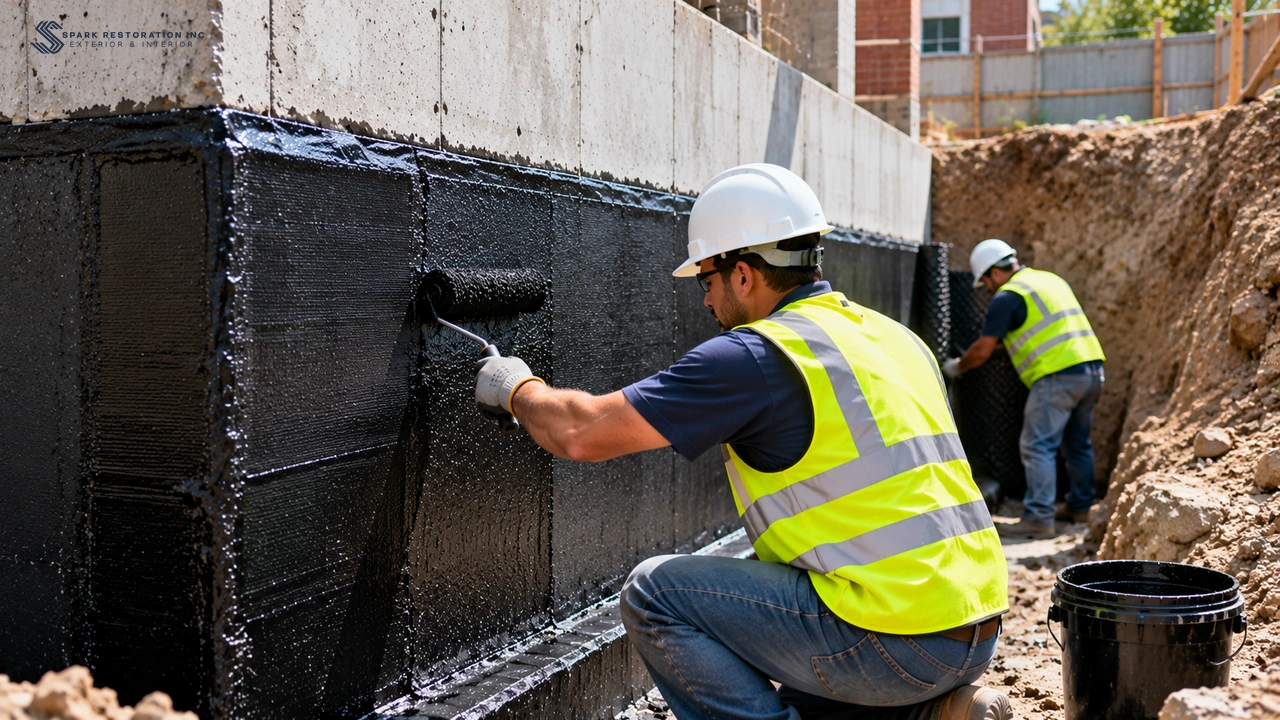
Exterior excavation is worth it when the foundation can actually be reached: an exposed rear wall, a vault roof under the sidewalk, or a new building or extension where the membrane goes on before the ground goes back. A membrane on the outside stops water before it touches the wall. It needs a Department of Buildings permit, room to dig by hand or mini-excavator, and a building that can spare the time.
Cellar vaults — the membrane under the sidewalk
A vault is the one place where exterior work is almost always the answer, because the vault roof is the sidewalk. The membrane — hot rubberized asphalt or modified bitumen — goes on the vault roof under the pavers and is tied into the waterproofing on the foundation wall. Our sidewalk repair in New York team handles the pavement that comes up and goes back.
What waterproofing costs in Manhattan — estimates only
There is no honest price list for this work. A basement on made land, a vault under a sidewalk and a terrace over a living room are three different jobs.
- Depth of excavation — by hand or mini-excavator, with no side yard.
- Vault or foundation — a membrane under the sidewalk, not a wall inside the building.
- Interior drainage or exterior excavation — the system the diagnosis points to.
- Board, DOB and LPC approvals, and the time they add.
- Access — hand digging, a mini-excavator through the building.
- Sump and battery backup, and redundancy for a mechanical room or garage.
- A terrace membrane over living space, where the detailing is the job.
Every figure is an estimate — final price after a free on-site inspection.
Permits, landmark districts and board approval in Manhattan
NYC DOB permits — exterior excavation and foundation work
Exterior excavation and foundation work need permits from the New York City Department of Buildings. The permit covers the excavation, the shoring and the work on the foundation itself, and it has to be in place before a spade goes in the ground. We arrange the permits as part of the job.
Landmark districts — LPC approval, repair-in-kind — Greenwich Village, Upper East Side, Upper West Side, Hamilton Heights, Harlem historic districts
In a landmark district, the Landmarks Preservation Commission has a say before exterior work starts, and the rule is usually repair-in-kind: the work must match what is there. A vault roof in Greenwich Village, a rear wall on the Upper East Side, a brownstone front on the Upper West Side, a facade in Hamilton Heights or the Harlem historic districts. Anything that changes the outside of a landmarked building goes through the Commission first.
Co-op and condo boards — alteration agreements, work hours, elevator bookings, insurance certificates
Most Manhattan multi-family buildings are co-ops or condos, and their boards control the work. An alteration agreement sets out the scope, the hours and the conditions; elevator bookings move the material; insurance certificates have to be on file before the crew arrives.
Sidewalk vaults — DOT requirements for work in the public way
A vault roof is under the public sidewalk, so the work happens in the public way and the Department of Transportation’s requirements apply. The vault membrane and the sidewalk restoration are planned as one job.
Where we work in Manhattan
- Upper West Side (10023, 10024, 10025) — brownstone cellars, garden levels and areaways.
- Upper East Side (10021, 10028, 10065, 10075, 10128) — townhouses, pre-war co-ops and vaults under sidewalks.
- Harlem (10026, 10027, 10030, 10037) — brownstones and historic-district rows.
- Tribeca (10007, 10013) and the Financial District (10004, 10005, 10006, 10038) — made-land basements and sub-basements.
- Midtown (10016, 10017, 10019, 10022) and Chelsea (10001, 10011) — deep sub-basements, garages and plazas.
- Greenwich Village (10003, 10011, 10012) and SoHo (10012, 10013) — landmark-district townhouses and setback terraces.
Beyond Manhattan, see our waterproofing contractors in Astoria, waterproofing contractors in Brooklyn and waterproofing contractors in Yonkers pages.
Frequently asked questions about waterproofing in Manhattan
How much does basement waterproofing cost in Manhattan, NY?
Every figure is an estimate, and the final price follows a free on-site inspection. What drives it is the building: the depth of excavation, vault or foundation, interior or exterior work, the approvals needed and the access available. We put the scope and the estimate in writing before the work starts.
Interior drainage or exterior excavation — which does my Manhattan building need?
It depends on the diagnosis. Interior drainage and a sump are the honest answer for rubble-stone foundations, for houses with neighbours on both sides and no side yard, and for occupied co-op and condo buildings. Exterior membrane is right for exposed foundations, cellar vaults and new construction, where the wall can be reached.
How long does basement waterproofing take, and how long does it last?
An interior drainage system in a typical townhouse cellar is usually a matter of days. Exterior excavation takes longer: the permit, the digging and the restoration all add time, and a vault adds the city’s requirements on top. How long the work lasts depends on the system, the water load and the upkeep — drains kept clear, sumps and battery backups checked.
If your Manhattan basement, vault or terrace is letting water in, ask for a free inspection. You can read more about Spark Restoration or contact us to arrange a visit.