
Local Law 11 Contractors in Long Island City, NY
Long Island City’s skyline pairs modern high-rise residential towers with converted industrial buildings, and both fall squarely under Local Law 11 wherever they rise above six stories. Under the Facade Inspection and Safety Program (FISP), a Qualified Exterior Wall Inspector (QEWI) inspects the facade every five years and files a report with the Department of Buildings (DOB), rating conditions SAFE, SWARMP, or UNSAFE. Along the East River waterfront, wind-driven rain works mortar joints, lintels, and sealants hard, so Long Island City reports commonly name shelf-angle and lintel corrosion, spalling brick, parapet cracking, sealant failure on tower elevations, and balcony and terrace deterioration.
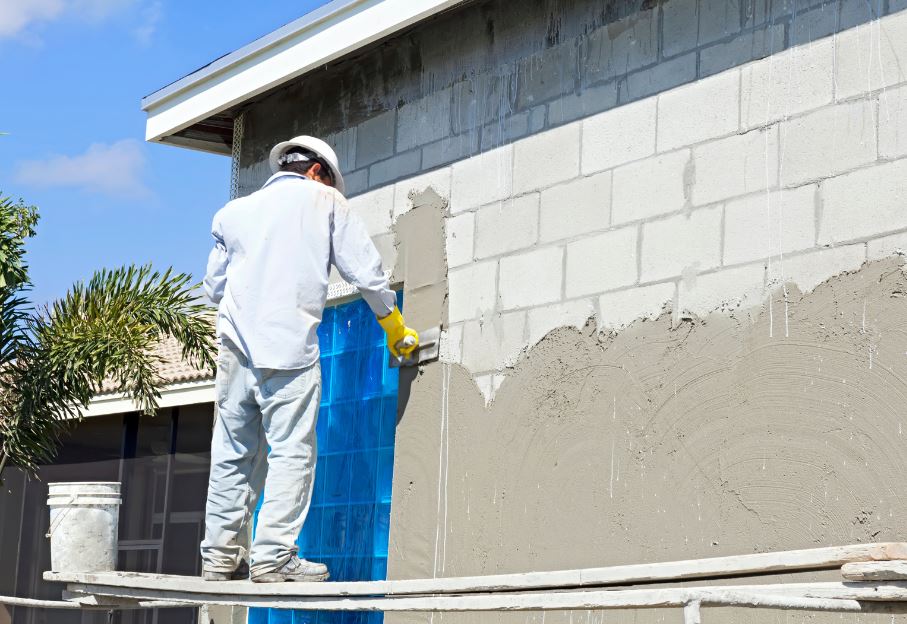
Spark Restoration does not inspect facades, assign ratings, or file FISP reports — only a QEWI may do that. We are the repair contractor owners and managers call once the report lands: we price each finding line by line, complete the repairs, and document them for the amended filing. Our exterior renovation crews in Long Island City handle the facade work itself, from repointing and parapet work on converted loft buildings to suspended-scaffold repairs on residential towers, so your building can clear its SWARMP or Unsafe conditions.
Request a Quote
What We Do After Your FISP Report
Once your QEWI has filed the FISP report for your Long Island City building, Spark Restoration takes it from there. We work through the report item by item and price every finding line by line, so you can see exactly what each repair covers before any work begins. You receive a written scope tied to the report’s own language and locations, not a lump-sum estimate that hides the details.
From there we handle DOB permits and access planning, coordinate sidewalk shed installation where an Unsafe condition requires public protection, and sequence the work by elevation so the building stays occupied and safe throughout. On tower elevations that means suspended scaffold; on long converted-industrial elevations it means finishing one stretch at a time so sheds can come down in stages. Long-lead materials such as terra cotta, cast stone, and lintels are ordered first to avoid delays, and every day’s work is photographed and documented for your QEWI. When repairs are complete, we coordinate re-inspection with your QEWI and keep the shed in place until the amended filing clears — then it comes down. Parapet repair and rebuilding in Long Island City is among the most common FISP corrections we complete, alongside repointing, lintel work, and facade crack repair.
How the repair process works: you send us your FISP report, we prepare the line-item scope and bid, arrange permits, access, and the shed, complete the repairs by elevation, document the work for the QEWI re-inspection, and finish with the amended filing and shed removal.
What Is Local Law 11 (FISP)?
Local Law 11 is New York City’s Facade Inspection and Safety Program (FISP). It requires owners of buildings taller than six stories to have a Qualified Exterior Wall Inspector (QEWI) inspect the entire facade and its appurtenances — parapets, cornices, balconies, and fire escapes — once every five years, and to file the resulting report with the Department of Buildings. In Long Island City, that rule reaches both the modern residential towers and the converted industrial buildings whose tall masonry elevations and large parapets face the East River.
The QEWI rates each condition SAFE, SWARMP, or UNSAFE. That rating determines what happens next: SAFE buildings carry no repair programme, SWARMP buildings must complete named repairs within the timeframe the QEWI sets, and Unsafe buildings must protect the public immediately and complete repairs on an expedited schedule. Spark Restoration enters the picture after the report is filed, carrying out the repairs the QEWI identified. Read our Local Law 11 NYC guide for a fuller explanation of the programme.
Our Services
Spark Restoration Inc. delivers expert property restoration, repair, and remodeling services across New York, trusted for reliable concrete installation, sidewalk repair, exterior renovation, and full building restoration. Our certified team handles concrete work, curb repair, masonry services, flooring installation, deck construction, stucco restoration, and complete residential and commercial renovations. Whether you need structural repairs or exterior upgrades, we provide durable, high-quality results with precision and craftsmanship.
Brick Repointing and Replacement
On Long Island City's converted industrial elevations and tower podiums, failed mortar joints are ground out and repointed, and cracked or spalled bricks are replaced and matched, keeping water out of the wall and the facade on schedule for its amended filing.
Spalling and Loose Brick Repair
Spalled, cracked, and loose bricks on your Long Island City building are removed and replaced before they become a falling hazard, with the surrounding masonry tied back in and the pointing restored to match.
Facade Crack Repair
Cracks in brick, stone, and stucco are traced to their cause — from lintel movement to water entry at the waterfront — then repaired and sealed so water stops reaching the structure behind the wall.
Lintel and Shelf-Angle Repair and Replacement
Rusted, deflected, or failed lintels and shelf angles — among the most common findings on Long Island City reports — are repaired or replaced, with flashing and weeps renewed so the steel stays dry.
Parapet Repair and Rebuilding
Leaning, cracked, or deteriorated parapets on converted industrial buildings and tower roofs are repaired or rebuilt to full height, with new coping and flashing to hold up against wind-driven rain off the East River.
Terra Cotta and Stone Repair
Cracked, spalled, or displaced terra cotta and stone units on Long Island City's converted buildings are repaired or replaced with matching units, re-anchored and sealed so ornamental detail is safe and sound.
Balcony and Terrace Repairs
Deteriorated balcony slabs, railings, and terrace waterproofing on residential towers are repaired and resealed so these amenities stay safe for residents and clear of the FISP report.
Waterproofing and Sealants
Failed joint sealants, flashing, and waterproofing membranes — a frequent cause of sealant failure on tower elevations — are replaced so water stops reaching the masonry and steel behind the facade.
Cornice Repair
Damaged or loose cornices and trim on Long Island City's converted industrial buildings are repaired, re-anchored, and sealed so decorative elements are secure and the facade reads clean at re-inspection.
Searching for Local Law 11 Contractors in Long Island City?
If you are searching for Local Law 11 contractors in New York for a Long Island City building, what you really need is a repair contractor you can trust with a DOB filing on the line. Spark Restoration is a licensed and insured New York City general contractor, and a single contractor for every trade on the wall — masonry, parapet, lintel, waterproofing, and balcony work — so you are not coordinating separate crews against a filing deadline. Every day’s work is photographed and documented in a form your QEWI can use at re-inspection.
Comparing bids? Check that every bid: lists and prices every report item — no lump sum that hides the scope, uses quantities that match the QEWI report, spells out the repair method for each item, shows access and sidewalk shed costs separately, assigns permits and filings to a named party, and provides insurance certificates naming the owner and managing agent as additional insured before work begins.
If a bid cannot answer those points line by line, it cannot be compared fairly with one that does — and it leaves your amended filing exposed.
Reviews
Customers consistently praise Spark Restoration Inc. for reliable service, skilled workmanship, and durable results across exterior repair, renovation, masonry services, and full property restoration. Homeowners and commercial clients value the team’s professionalism, clear communication, and high-quality finishes.


 Trustindex verifies that the original source of the review is Google.
 Trustindex verifies that the original source of the review is Google.
 Trustindex verifies that the original source of the review is Google.
 Trustindex verifies that the original source of the review is Google.
 Trustindex verifies that the original source of the review is Google.
 Trustindex verifies that the original source of the review is Google.
 Trustindex verifies that the original source of the review is Google.
 Trustindex verifies that the original source of the review is Google.
 Trustindex verifies that the original source of the review is Google.
The Three FISP Ratings
Every condition your QEWI records on a Long Island City facade carries one of three ratings. The rating sets how urgent the work is and what follows if it is left undone — and it is the starting point for the repair scope Spark prices for you.
SAFE
A SAFE rating means the facade is in good condition, with nothing requiring repair at this time. No repair programme comes with a SAFE filing; the owner’s ongoing duty is preventive maintenance and staying on schedule for the next five-year inspection — including keeping tower sealants and converted-building parapets in sound condition between cycles.
SWARMP
SWARMP — Safe With a Repair and Maintenance Programme — means the facade is currently safe, but the QEWI has named specific conditions that must be repaired within the timeframe stated in the report. On a Long Island City tower or converted industrial building, that often means repointing, parapet work, lintel replacement, or sealant renewal. Spark prices each named item, completes it on schedule, and documents it so a SWARMP condition never becomes an Unsafe one. Learn more about what a SWARMP finding means for NYC building owners.
UNSAFE
An UNSAFE rating means a condition endangers the public, such as loose material that could fall to the sidewalk below. Public protection — typically a sidewalk shed — must go up immediately, and the repairs must be finished within the DOB’s 90-day window. Spark coordinates the shed, expedites the repairs elevation by elevation, and keeps the documentation your QEWI needs for the amended filing.
Cycle 10 Deadlines
Cycle 10 runs from February 21, 2025, to February 20, 2030, and your filing window follows the last digit of your building’s block number: sub-cycle 10A (block numbers ending in 4, 5, 6, or 9) runs February 21, 2025, to February 21, 2027; 10B (ending in 0, 7, or 8) runs February 21, 2026, to February 21, 2028; and 10C (ending in 1, 2, or 3) runs February 21, 2027, to February 21, 2029. Late filing carries a penalty of $1,000 per month, and failure to file carries a penalty of $5,000 per year. See our Local Law 11 Cycle 10 deadlines post for the full schedule.
Why Choose Us?
From Harlem brownstones to Westchester townhomes, our experienced team understands New York masonry inside and out.
Why locals trust Spark Restoration Inc for masonry services in NYC:
- Licensed & fully insured masonry experts
- Deep knowledge of NYC construction codes
- Skilled in historic restoration and modern builds
- Quick turnaround for masonry violation corrections
- Honest pricing and detailed project planning
We proudly serve all boroughs and nearby neighborhoods with responsive, reliable service.

How we Works.
Request a Quote
Ready to Work Together? Build a project with us!
Need any help with projects?
Have questions or need professional property restoration services? Spark Restoration Inc is here to help. Get in touch today to schedule a consultation and let us bring your property improvement project to life.
Frequently Asked Questions
Do you perform the Local Law 11 inspection itself?
No. Only a Qualified Exterior Wall Inspector (QEWI) may inspect a facade and file a FISP report with the Department of Buildings. Spark Restoration is the repair contractor hired after that report is filed for your Long Island City building: we price the repairs line by line, complete the work, and document it so your QEWI can re-inspect and file the amended report.
What does a SWARMP rating mean for my building?
SWARMP — Safe With a Repair and Maintenance Programme — means your facade is currently safe, but the QEWI has named specific repairs that must be completed within the timeframe in the report. On a Long Island City tower or converted industrial building, that often means repointing, parapet work, lintel replacement, or sealant renewal. Spark prices each named item, completes it on schedule, and documents it, so a SWARMP condition does not become an Unsafe one.
How quickly does an Unsafe condition have to be repaired?
Public protection comes first: a sidewalk shed or other protection must be put in place immediately for an Unsafe condition on your Long Island City building, and the repairs themselves must be completed within the DOB’s 90-day window. Spark coordinates the shed, expedites the work elevation by elevation, and documents it for your QEWI’s re-inspection and amended report. Contact us promptly if your report contains an Unsafe rating.
When is my building's Cycle 10 filing deadline?
Cycle 10 runs from February 21, 2025, to February 20, 2030, and your filing window depends on the last digit of your building’s block number. Sub-cycle 10A covers block numbers ending in 4, 5, 6, or 9 (February 21, 2025, to February 21, 2027); 10B covers endings 0, 7, or 8 (February 21, 2026, to February 21, 2028); and 10C covers endings 1, 2, or 3 (February 21, 2027, to February 21, 2029). Late filing carries a penalty of $1,000 per month, and failure to file carries a penalty of $5,000 per year.
How do I get my FISP report priced?
Send us your QEWI’s FISP report for your Long Island City building and we will review every item on it. You will receive a written, line-by-line bid with quantities that match the report, a stated repair method for each item, and access, shed, permit, and filing costs shown separately — never a single lump sum.
- Jerome Park, NY
- Village of Pelham, NY
- Harlem, NY
- Eastchester, NY
- North Side, NY
- Yonkers, NY
- New Rochelle, NY
- Pelham Manor, NY
- Mamaroneck, NY
- Larchmont, NY
- Tuckahoe, NY
- Hastings-on-Hudson, NY
- Scarsdale, NY
- Bronxville, NY
- White Plains, NY
- Manhattan, NY
- Astoria NY
- Long island city NY
- Fresh meadows NY
- Flushing NY
- Bayside NY
- Queens NY
Can't find your location? Give us a call.