
Local Law 11 Contractors in North Side, Bronx, NY
In North Side, Bronx, the apartment buildings that fall under New York City’s Facade Inspection and Safety Program (FISP), known as Local Law 11, are the mid-rise and taller brick elevator buildings. The law covers buildings taller than six stories, so those larger residential buildings must have their facades inspected every five years, while smaller walk-ups in the neighborhood generally sit outside it. A Qualified Exterior Wall Inspector (QEWI) inspects the facade and its appurtenances and files a report with the Department of Buildings (DOB), rating conditions SAFE, SWARMP, or UNSAFE.
Spark Restoration does not inspect facades, assign ratings, or file FISP reports — only a QEWI may do that. We are the repair contractor owners and managers call once the report is in hand. For North Side buildings, we price every repair the report calls for line by line and document the work so your QEWI can support the amended filing. Our broader citywide Local Law 11 work is described on our Local Law 11 contractors in New York page.
Request a Quote
What We Do After Your FISP Report
When your QEWI has filed the FISP report for a North Side apartment building, Spark Restoration turns that report into a repair plan. We work through it item by item, matching our scope and quantities to the report’s own language, so nothing the inspector flagged is left vague or lumped into a single lump sum. That matters on the large brick elevations common in the north Bronx, where mortar joint failure, parapet cracking, lintel corrosion, spalling at shelf angles, and balcony deterioration often appear together on one report.
From there we handle the practical side of the job: permits, access, and sidewalk shed coordination, sequencing the work elevation by elevation, and keeping a clear record of what was repaired, where, and how. Our crews cover the wall trades a FISP report typically touches, from exterior renovation in North Side, Bronx to parapet wall work in North Side, Bronx. As repairs are completed, we share documentation with your QEWI and coordinate re-inspection until the amended filing can be made.
How the repair process works: you send us your QEWI’s FISP report, you receive a line-item bid tied to each report item, we arrange permits, access, and sidewalk shed protection, repairs are completed elevation by elevation, work is documented for your QEWI’s re-inspection, and your QEWI files the amended filing and the shed comes down.
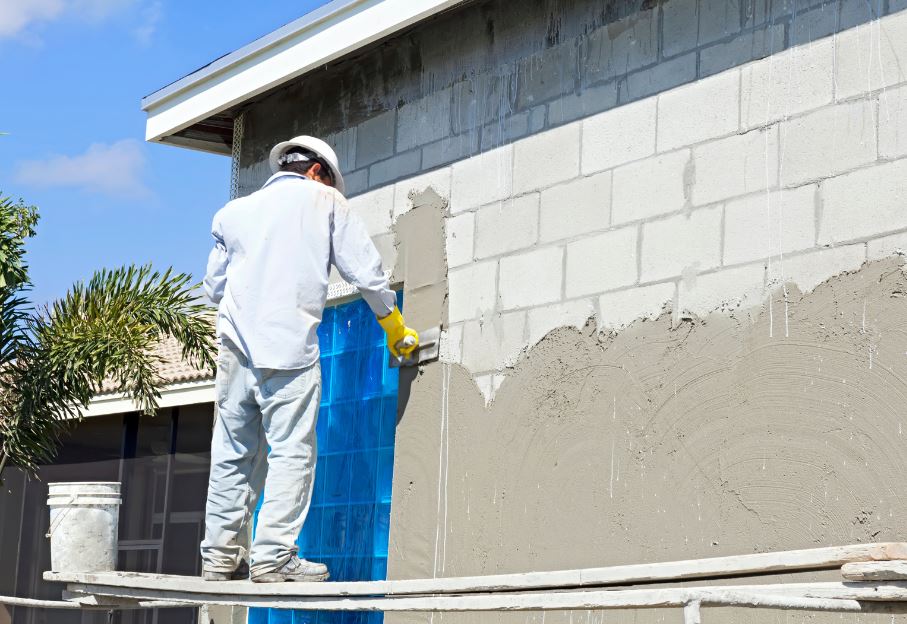
What Is Local Law 11 (FISP)?
Local Law 11 is New York City’s Facade Inspection and Safety Program (FISP). It requires owners of buildings taller than six stories to have the entire facade, including parapets, balconies, cornices, and other appurtenances, inspected by a Qualified Exterior Wall Inspector (QEWI) once every five years. The QEWI files the resulting report with the Department of Buildings and rates each condition SAFE, SWARMP, or UNSAFE.
The rating is what drives the next step. A SAFE facade needs only routine upkeep until the next cycle, while SWARMP and UNSAFE findings call for repairs on a set timetable. Spark Restoration comes in after that filing: we do not inspect or rate the facade, we carry out the repairs the report requires and document them for your QEWI’s amended filing.
Our Services
Spark Restoration Inc. delivers expert property restoration, repair, and remodeling services across New York, trusted for reliable concrete installation, sidewalk repair, exterior renovation, and full building restoration. Our certified team handles concrete work, curb repair, masonry services, flooring installation, deck construction, stucco restoration, and complete residential and commercial renovations. Whether you need structural repairs or exterior upgrades, we provide durable, high-quality results with precision and craftsmanship.
Brick Repointing and Replacement
Worn mortar joints across North Side brick elevations are cut out and repointed, and damaged bricks are replaced with matching units for a sound, even facade.
Spalling and Loose Brick Repair
Spalled, cracked, and loose bricks on North Side apartment facades are removed and replaced before they loosen further and become a falling hazard.
Facade Crack Repair
Cracks in brick, stone, and stucco on North Side buildings are traced to their cause, then repaired and sealed so water stops reaching the wall behind them.
Lintel and Shelf-Angle Repair and Replacement
Rusted or deflected lintels and shelf angles over North Side windows and openings are repaired or replaced, with flashing and weeps restored to shed water.
Parapet Repair and Rebuilding
Cracked, leaning, or deteriorated parapets on North Side rooftops are repaired or rebuilt to full height, with new coping and flashing to keep water out.
Terra Cotta and Stone Repair
Cracked, spalled, or displaced terra cotta and stone units on North Side facades are repaired or replaced with matching units, anchored and sealed.
Balcony and Terrace Repairs
Worn balcony slabs, railings, and terrace waterproofing on North Side apartment buildings are repaired and resealed so these outdoor spaces stay safe and dry.
Waterproofing and Sealants
Failed joint sealants, flashing, and waterproofing on North Side facades are replaced so water stops reaching brick, steel, and interior walls.
Cornice Repair
Damaged or loose cornices and trim on North Side buildings are repaired, re-anchored, and sealed so decorative elements stay secure and weather-tight.
Searching for Local Law 11 Contractors in North Side, Bronx, NY?
If you are looking for Local Law 11 contractors in North Side, Bronx, you are really looking for one repair contractor who can handle everything a FISP report can throw at a brick apartment building — repointing, parapet and lintel work, shelf-angle repairs, and balcony and terrace restoration — and who will keep the paperwork straight as the job progresses. That is the work Spark Restoration does, with each repair tied back to the report item it clears.
Comparing bids? Check that every bid: prices every item on the FISP report, not just the largest ones, uses quantities that match the report’s measurements and locations, states the repair method for each item, not a generic description, shows access and sidewalk shed costs separately from the repair work, assigns responsibility for permits and filings clearly, and provides insurance certificates before work begins.
A bid that skips any of these can leave conditions unpriced or undocumented — and that is what puts an amended filing at risk.
Reviews
Customers consistently praise Spark Restoration Inc. for reliable service, skilled workmanship, and durable results across exterior repair, renovation, masonry services, and full property restoration. Homeowners and commercial clients value the team’s professionalism, clear communication, and high-quality finishes.


 Trustindex verifies that the original source of the review is Google.
 Trustindex verifies that the original source of the review is Google.
 Trustindex verifies that the original source of the review is Google.
 Trustindex verifies that the original source of the review is Google.
 Trustindex verifies that the original source of the review is Google.
 Trustindex verifies that the original source of the review is Google.
 Trustindex verifies that the original source of the review is Google.
 Trustindex verifies that the original source of the review is Google.
The Three FISP Ratings
On a North Side building, every condition your QEWI records carries one of three ratings. The rating sets how quickly work must happen and whether public protection is needed in the meantime.
SAFE
A SAFE rating means the facade is in good condition, with no repairs required at this time. Keep up routine maintenance, watch for new deterioration between cycles, and plan for the next scheduled inspection.
SWARMP
SWARMP — Safe With a Repair and Maintenance Programme — means the facade is safe for now, but named repairs must be completed within the timeframe your QEWI sets. On North Side brick buildings these are often the slow-moving problems: failing mortar joints, cracked parapets, and corroding lintels. Left alone, they worsen into Unsafe conditions, so pricing and scheduling them promptly protects both the building and its next filing. Learn more about what a SWARMP finding means for NYC building owners.
UNSAFE
An UNSAFE rating means a condition poses a hazard to the public, such as loose material that could fall. Protection, such as a sidewalk shed, must be put in place immediately, and the condition must be corrected within 90 days. Spark prioritizes these repairs so protection can come down and the amended filing can proceed.
Cycle 10 Deadlines
Cycle 10 runs from February 21, 2025, to February 20, 2030. Filing windows are set by the last digit of the building’s block number: Cycle 10A covers blocks ending in 4, 5, 6, and 9, from February 21, 2025, to February 21, 2027; Cycle 10B covers blocks ending in 0, 7, and 8, from February 21, 2026, to February 21, 2028; and Cycle 10C covers blocks ending in 1, 2, and 3, from February 21, 2027, to February 21, 2029. A late filing carries a penalty of $1,000 per month, and failure to file carries a penalty of $5,000 per year, so North Side owners should have SWARMP and Unsafe repairs priced and scheduled well inside their window.

Request a Quote
Ready to Work Together? Build a project with us!
Need any help with projects?
Have questions or need professional property restoration services? Spark Restoration Inc is here to help. Get in touch today to schedule a consultation and let us bring your property improvement project to life.
Frequently Asked Questions
Do you perform the Local Law 11 inspection itself?
No. Only a Qualified Exterior Wall Inspector (QEWI) may inspect a facade and file a FISP report with the Department of Buildings. Spark Restoration does not inspect, rate, or file. We are the repair contractor you hire after your QEWI’s report is filed, to complete the repairs it calls for and document them for the amended filing.
What does a SWARMP rating mean for my building?
SWARMP — Safe With a Repair and Maintenance Programme — means your facade is currently safe, but the report names repairs that must be completed within the timeframe your QEWI sets. For a North Side building, that often means repointing, parapet work, or lintel repairs. Completing them on schedule keeps a manageable repair from becoming an Unsafe condition.
How quickly does an Unsafe condition have to be repaired?
Public protection comes first: a sidewalk shed or other protection must be put in place immediately around an Unsafe condition. The condition itself must then be corrected within 90 days. If your North Side building has an Unsafe finding, send us the report right away so protection and repairs can be scheduled without delay.
When is my building's Cycle 10 filing deadline?
Cycle 10 runs from February 21, 2025, to February 20, 2030, and your filing window depends on the last digit of your building’s block number. Cycle 10A, for blocks ending in 4, 5, 6, and 9, runs February 21, 2025, to February 21, 2027; Cycle 10B, for blocks ending in 0, 7, and 8, runs February 21, 2026, to February 21, 2028; and Cycle 10C, for blocks ending in 1, 2, and 3, runs February 21, 2027, to February 21, 2029.
How do I get my FISP report priced?
Send us your QEWI’s FISP report and we will review every item on it. You will receive a written, line-item bid that prices each repair separately and matches the report’s scope and quantities, so your board or manager can compare it fairly and your QEWI can track each correction through to the amended filing.
- Jerome Park, NY
- Village of Pelham, NY
- Harlem, NY
- Eastchester, NY
- North Side, NY
- Yonkers, NY
- New Rochelle, NY
- Pelham Manor, NY
- Mamaroneck, NY
- Larchmont, NY
- Tuckahoe, NY
- Hastings-on-Hudson, NY
- Scarsdale, NY
- Bronxville, NY
- White Plains, NY
- Manhattan, NY
- Astoria NY
- Long island city NY
- Fresh meadows NY
- Flushing NY
- Bayside NY
- Queens NY
Can't find your location? Give us a call.