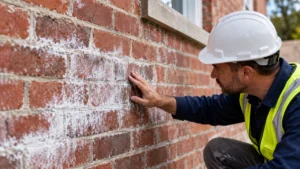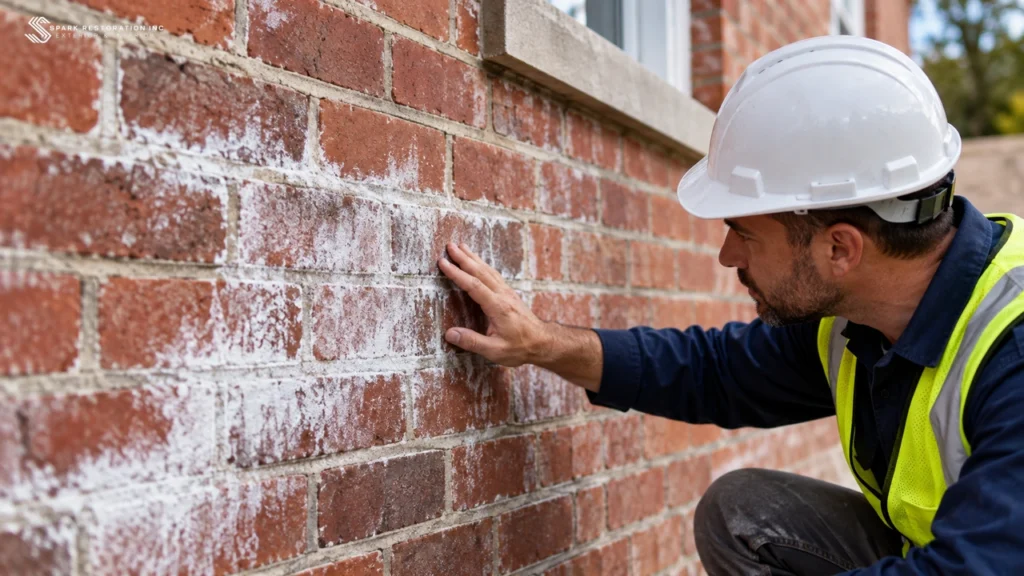
If you have noticed a white, chalky film spreading across a brick wall, you are most likely looking at efflorescence on brick. In short, it is not paint, mould, or dirt. It is a deposit of soluble salts left behind when water moves through brick or mortar and then evaporates from the surface.
That simple answer explains why cleaning alone so often disappoints. The white marks are a symptom of water movement, not the original problem. Until the water source is found and controlled, the salts can return, sometimes in the same place and sometimes nearby. This guide explains what efflorescence is, where its salts come from, how to remove it safely, and how to judge when it deserves a closer look by a masonry professional.
What Efflorescence Actually Is
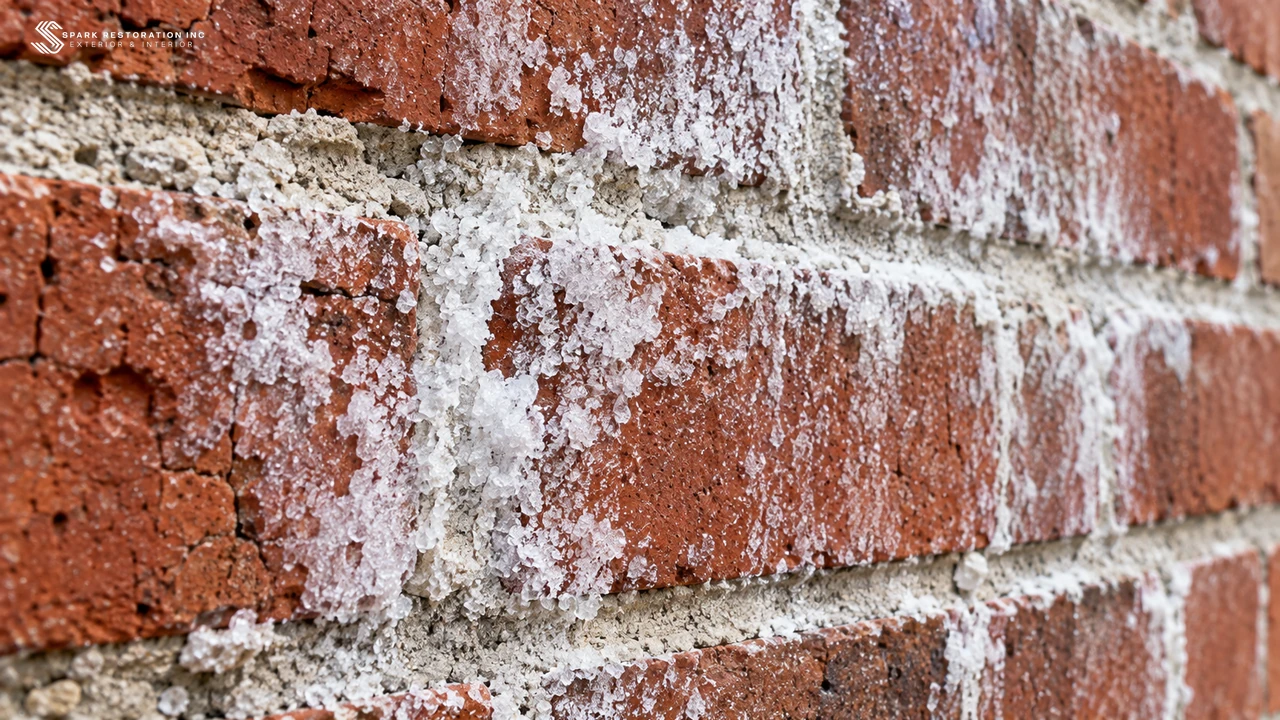
Efflorescence is a white, crystalline deposit that forms on the surface of masonry. Water enters brickwork, dissolves small amounts of soluble salts inside the brick, mortar, or adjoining materials, and carries those salts toward the surface. When the water evaporates, the salts are left behind as a powdery or crusty white bloom.
It can appear as a light dusting, streaks below a joint, or a thicker crust in sheltered areas. It often shows up more clearly after wet weather, after a wall has dried out, or on new brickwork as it dries for the first time. Colour and texture can vary, but the deposits are usually white and feel dry and chalky rather than damp or slimy.
It is important to distinguish surface efflorescence from salts trapped inside the wall. Surface deposits are mainly cosmetic at first. Salts that crystallise just below the surface, sometimes called subflorescence, can exert pressure as they grow and may contribute to flaking, or spalling, over time. That distinction is one reason a persistent or worsening pattern should not simply be ignored.
Unlike mould, efflorescence usually brushes off dry and does not have a soft, organic growth pattern. It also tends to follow water paths, joints, and areas below ledges, sills, or copings. If a white deposit does not brush off, feels greasy, returns in exactly the same damp patch, or is accompanied by a musty smell indoors, it is worth checking whether another issue, such as mould, lime staining, or ongoing damp, is also present. When in doubt, a careful visual inspection and a note of when the marks appear can help a professional narrow down the cause.
What Causes Efflorescence on Brick Walls
Efflorescence needs three things: soluble salts, water to dissolve and carry them, and a route to the surface where evaporation can leave them behind. Remove any one of those elements and the deposits usually stop forming. In practice, water is the element that can most often be controlled, which is why investigation usually starts with how water is reaching and moving through the wall.
The salts themselves can come from several ordinary sources. Brick and mortar can contain soluble salts from their raw materials and manufacturing process. Soil and groundwater can also carry salts into the lower courses of a wall, especially where brickwork is in prolonged contact with damp ground. In some cases, salts come from adjoining concrete, stone, or even from water used during construction. The presence of salts alone does not mean a material is defective; the problem begins when water keeps moving those salts to the surface.
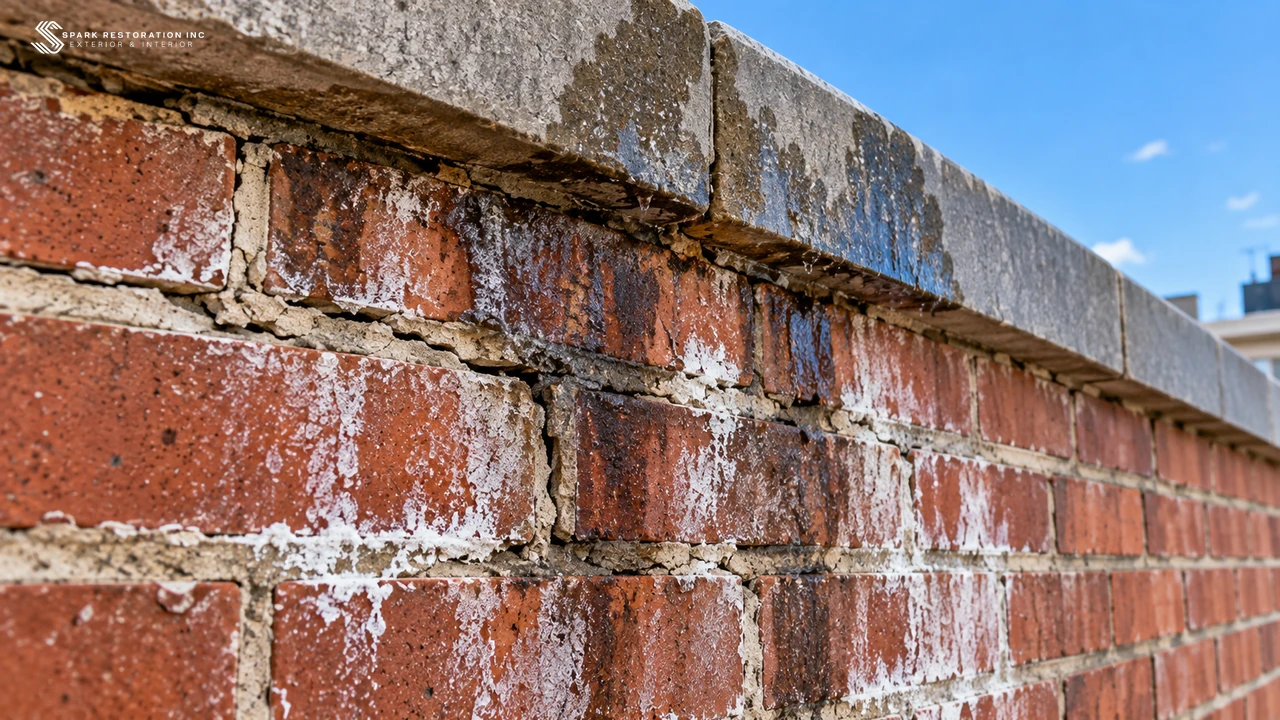
Water entry points are often small and easy to overlook. Failed or cracked mortar joints let rain enter the wall instead of shedding it. A cracked coping, a poorly sealed flashing, an open joint below a windowsill, or a damaged parapet cap can direct water into brickwork over a long period. Even a small gap can matter, because brick and mortar are porous and can absorb and hold water, releasing it slowly as conditions change.
Rising damp is another common route, particularly at the base of a wall. Ground moisture can be drawn upward through porous masonry when there is no effective damp barrier, when ground levels have built up against the brickwork, or when drainage keeps the base of the wall wet. Splashback from hard surfaces, overflowing gutters, downspouts discharging too close to a wall, and irrigation or sprinklers aimed at brickwork can all keep a wall wetter than it should be.
New brickwork deserves a special mention. Fresh mortar and newly laid brick contain moisture from construction, and efflorescence can appear as that moisture dries out. In many new walls, a light bloom fades after the wall has had time to dry and the weather has run through a few cycles. If the pattern is heavy, uneven, or concentrated in one area, however, it may point to a specific leak or detail that is trapping water rather than to normal drying alone. For a broader view of professional brickwork care, see our masonry services in New York, and for local help, our masonry contractors in Fresh Meadows, NY can assess wall details in person.
Is Efflorescence Harmful, or Just Ugly?
Most light, occasional efflorescence is mainly a cosmetic problem. It can make a handsome brick facade look stained and neglected, and it can interfere with paint or coatings if it is covered before the wall is clean and dry. On its own, a faint dusting that appears once and does not return is not usually a reason for alarm.
The concern grows when efflorescence is heavy, persistent, or spreading. A pattern that keeps returning after cleaning is telling you that water is still moving through the wall. Over time, repeated wetting and drying, salt crystallisation, and freeze-thaw cycles can weaken mortar, encourage surface flaking, and make brickwork more vulnerable to further water entry. The white deposit is therefore best treated as a clue, not just as a stain to remove.
It is also worth looking at what the deposits are hiding. Efflorescence can draw attention away from cracked joints, soft or crumbling mortar, rust staining, or damp patches inside. A quick check of the wall, the joints, and the details above and below the affected area will often reveal more than the white bloom alone.
How to Remove Efflorescence From Brick
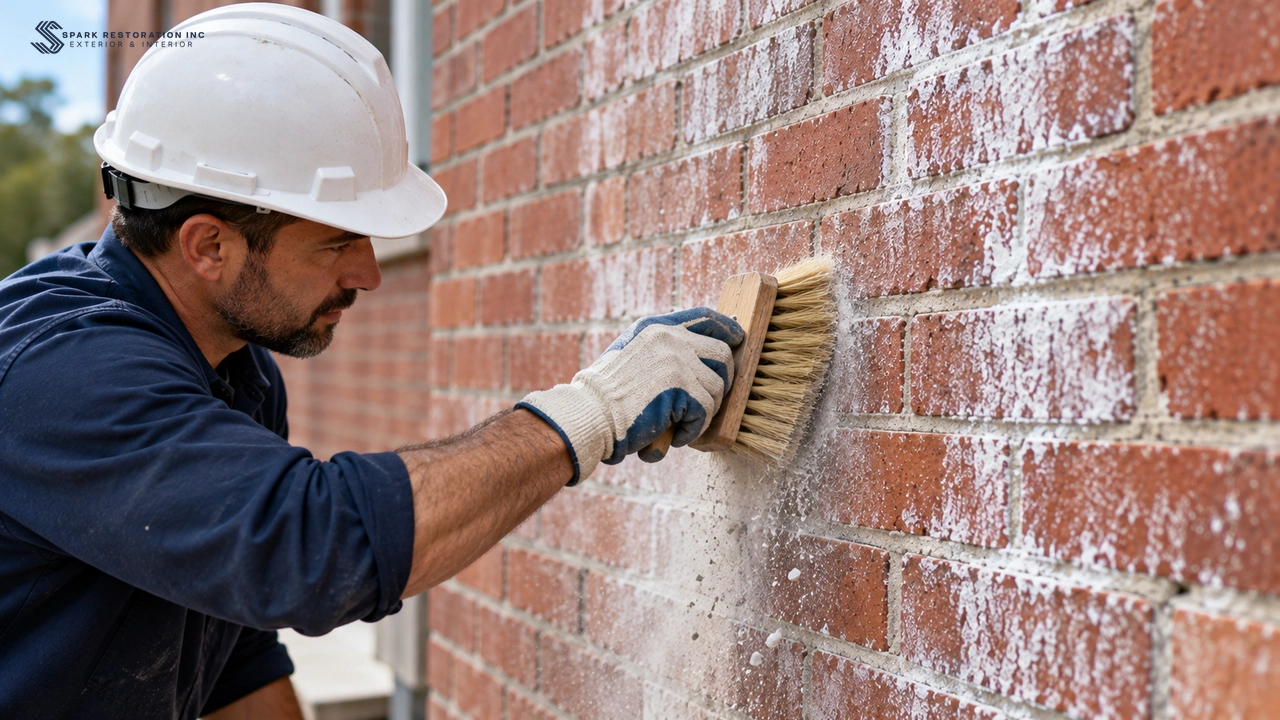
Removal should start dry, before any washing is considered. Dry brushing is the safest first step for most surface deposits, and it avoids dissolving salts and driving them back into the brick, where they could reappear later.
- Start dry: Use a stiff, dry brush to sweep loose deposits from the brick and mortar joints. Work methodically and brush debris away from the wall so it does not settle back into joints.
- Test a small area first: Before using water or any cleaner on a visible area, test it in a discreet spot and allow it to dry fully. This helps you see whether the deposit returns and whether the cleaner changes the brick colour.
- Wash gently only if needed: If dry brushing leaves a residue, a careful wash with clean water may help. Avoid soaking the wall, and allow it to dry between attempts rather than repeatedly saturating it.
- Be cautious with chemicals and pressure: Strong acids and high-pressure washing can damage brick, mortar, and pointing, especially on older or softer brick. Any chemical cleaner should be chosen for the specific type of deposit and brick, used exactly as directed, and rinsed with care.
- Let the wall dry and watch it: After cleaning, note the date, the weather, and where deposits were heaviest. If the same pattern returns quickly, the water source has not yet been addressed, and further cleaning alone is unlikely to solve the problem.
Cleaning is also not the right first step for a wall with loose, spalled, or deeply cracked brick. In that case, brushing or washing can dislodge weak material and make the damage worse. Stabilising the masonry and finding the moisture source should come first.
How to Stop Efflorescence From Coming Back
Stopping recurrence means fixing the water source, not just the white deposit. The right repair depends on where the water is coming from, so a careful inspection of joints, caps, flashings, drainage, and ground levels is essential before work begins.
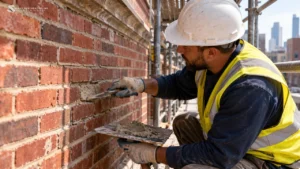
Failed mortar joints are a common starting point. Where joints are cracked, eroded, or missing, repointing can restore a weather-resistant joint and reduce water entry. The choice of mortar matters, particularly on older buildings, because a mortar that is too hard or incompatible can cause more harm than good. If you are weighing different joint repairs, it helps to understand the difference between tuckpointing and pointing before choosing a method.
Copings, sills, and flashings deserve equal attention. A coping that has cracked, shifted, or lost its seal can let water into the top of a wall, where it then travels downward and appears as streaks or patches lower down. Flashings that are missing, damaged, or poorly detailed can have a similar effect around windows, roofs, and parapets. Repairing these details often stops a pattern that cleaning alone never could.
Drainage and ground conditions also play a large role. Gutters and downspouts should carry water away from the wall, not overflow onto it or discharge at its base. Ground levels should not be built up against brickwork, and hard surfaces should not constantly splash water onto the lower courses. Where rising damp is suspected, the cause may be a failed or missing damp barrier, a bridging detail, or persistent ground wetness that needs a specialist assessment rather than a surface coating.
Sealers are sometimes suggested as a quick fix, but they are not a substitute for repair. A sealer applied to a wet wall, or to a wall with an active leak, can trap moisture inside the masonry and make salt problems worse. Sealers may have a place after the wall has been repaired and allowed to dry, and only when the product is suitable for the brick and the wall can still breathe as intended. The scope of any lasting repair will depend on factors such as the area affected, the condition of the joints and details, access, and whether drainage or flashing work is also needed.
Finally, keep a simple record after any repair. Photograph the wall in the same light, note wet weather, and check the area after rain and after a dry spell. A wall that stays clean through changing conditions is a much better sign than one that simply looks clean on the day it was brushed.
When Efflorescence Is a Warning Sign of Bigger Masonry Problems
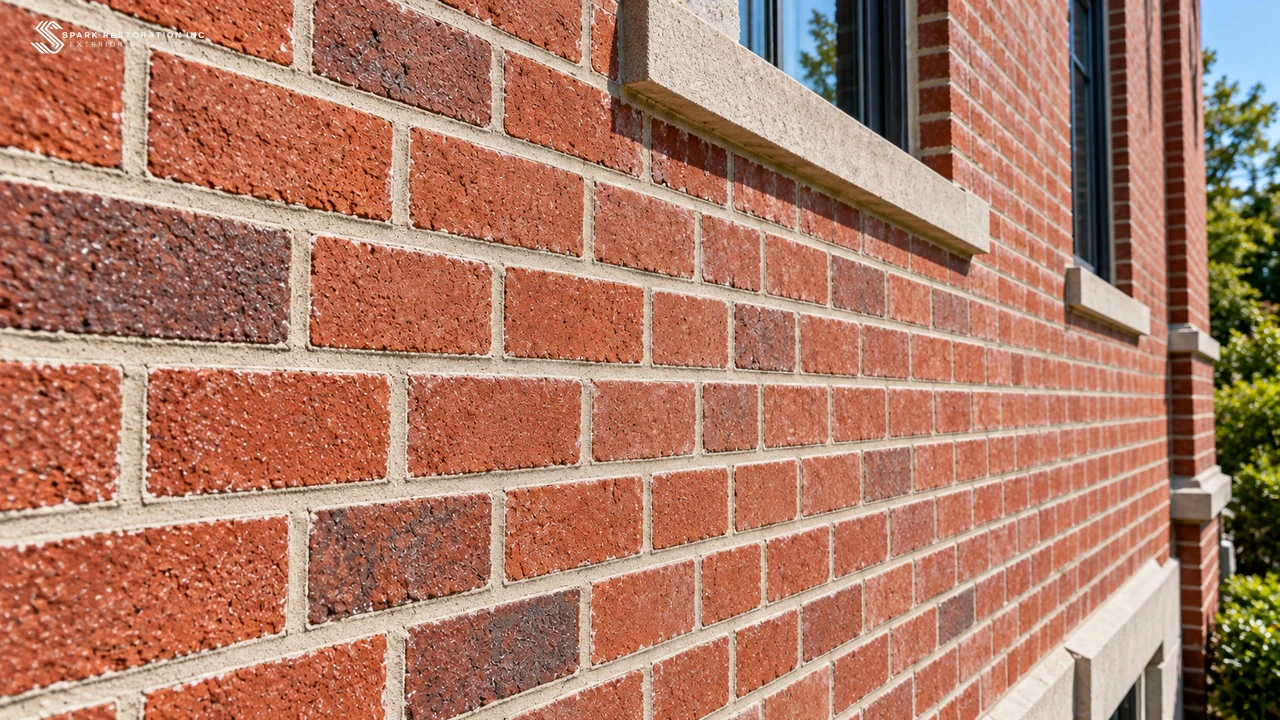
Seek a professional inspection if efflorescence is heavy, widespread, or persistent, or if it appears alongside spalling, crumbling mortar, cracked or displaced brick, bowing, or damp inside the building. Those signs can indicate ongoing moisture problems that also drive mortar decay and surface damage, and they should not be covered with paint or sealant while the cause remains active.
If white deposits keep returning, or if you are unsure whether the wall needs repointing, flashing repair, or another fix, contact Spark Restoration Inc for an inspection and a clear next step for your brickwork.