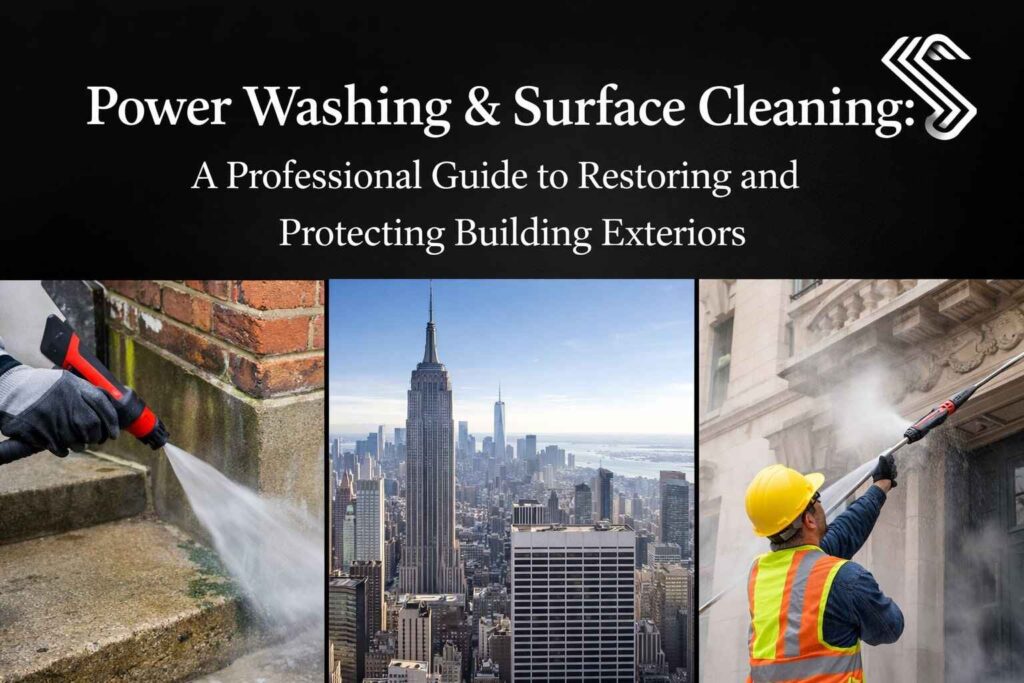
Exterior surfaces are constantly exposed to environmental stressors that accelerate deterioration, discoloration, and material breakdown.
Power washing and surface cleaning are not cosmetic services—they are preventative maintenance processes that preserve structural materials, extend service life, and support long-term property value.
In dense urban environments like New York City, professional surface cleaning is a critical part of façade care, masonry maintenance, and property management strategies. This guide explains how power washing works, when it should be used, and how professional techniques differ from improper high-pressure cleaning that causes damage.
What Is Power Washing & Surface Cleaning?
Power washing is a controlled cleaning process that uses pressurized water—sometimes combined with detergents or surface-specific agents—to remove contaminants from exterior substrates. Surface cleaning is a broader category that includes low-pressure washing, soft washing, steam cleaning, and chemical-assisted cleaning, depending on material type.
Professional surface cleaning is designed to:
- Remove pollutants without damaging substrates
- Prepare surfaces for repairs, coatings, or waterproofing
- Restore original appearance and material performance
Improper pressure selection or chemical misuse can permanently damage masonry, concrete, wood, and stucco.
Why Exterior Surfaces Deteriorate in Urban Environments?
Buildings in New York City face unique exposure conditions that accelerate surface contamination.
Key contributing factors include:
- Airborne pollutants and carbon residue
- Biological growth (mold, algae, mildew)
- Efflorescence from migrating salts
- Traffic-related grime and oil deposits
- Freeze–thaw moisture retention
Over time, these contaminants trap moisture against surfaces, leading to staining, cracking, spalling, and coating failure.
The Difference Between Power Washing, Pressure Washing, and Soft Washing
These terms are often used interchangeably, but they represent distinct cleaning methodologies.
Cleaning Method Comparison:
| Method | Pressure Level | Typical Use |
|---|---|---|
| Pressure Washing | High PSI | Durable concrete, sidewalks |
| Power Washing | Heated water | Grease, oil, heavy buildup |
| Soft Washing | Low PSI + detergents | Masonry, stucco, siding |
| Steam Cleaning | Very low PSI + heat | Historic façades |
Professional contractors select methods based on material strength, porosity, and age—not convenience.
Surfaces That Require Specialized Cleaning Approaches
Not all exterior materials respond safely to the same cleaning techniques.
Common Surface Categories:
- Brick and stone masonry
- Concrete slabs and foundations
- Stucco and EIFS systems
- Siding (vinyl, fibre cement, wood)
- Roof surfaces and parapets
Each surface has specific pressure thresholds, chemical compatibility, and drying requirements.
Masonry Power Washing: Brick, Stone & Mortar Considerations
Masonry is porous by nature and requires careful cleaning to avoid forcing water into the wall assembly.
Professional masonry cleaning focuses on:
- Removing surface contaminants without eroding mortar
- Preventing efflorescence reactivation
- Preserving historic brick and stone finishes
In older NYC buildings, aggressive pressure washing is a leading cause of premature mortar joint failure.
Concrete Surface Cleaning for Structural Longevity
Concrete appears durable, but improper cleaning can weaken its surface matrix.
Concrete cleaning commonly addresses:
- Oil and grease stains
- Biological growth in shaded areas
- De-icing salt residue
- Slip hazards on walkways and driveways
Low-angle spray patterns and controlled pressure prevent surface pitting and aggregate exposure.
Power Washing as a Preparation Step for Repairs & Coatings
Surface cleaning is often a required prerequisite before repair or restoration work.
Professional cleaning ensures:
- Proper adhesion of coatings and sealants
- Accurate inspection of cracks and defects
- Removal of contaminants that interfere with repairs
Skipping this step often leads to coating delamination and premature failure.
Environmental & Safety Considerations in NYC Cleaning Projects
Urban surface cleaning must comply with environmental and safety regulations.
Key considerations include:
- Wastewater containment and disposal
- Protection of adjacent properties and pedestrians
- Non-toxic, biodegradable cleaning agents
- Controlled runoff to prevent sewer contamination
Experienced contractors plan cleaning operations to meet NYC environmental compliance standards.
How Often Should Buildings Be Power Washed?
Cleaning frequency depends on exposure, material type, and property use.
General Guidelines:
- Residential façades: every 2–3 years
- Commercial buildings: annually or biannually
- High-traffic sidewalks: seasonal
- Roofs and parapets: as part of inspections
Regular cleaning reduces long-term repair costs by preventing embedded deterioration.
Power Washing in New York City Neighborhoods
Buildings in Manhattan and Brooklyn experience higher pollution buildup, while Queens and the Bronx often see more biological growth due to varied exposure patterns. Coastal areas near Staten Island face salt-related surface degradation.
Localized cleaning strategies account for:
- Building orientation
- Traffic density
- Proximity to water
- Shade and drainage conditions
A one-size-fits-all approach is ineffective in NYC’s varied microclimates.
When Power Washing Is Not Recommended?
Not all surfaces should be cleaned aggressively.
Avoid power washing when:
- Mortar joints are already deteriorated
- Historic façades require preservation methods
- Water intrusion pathways are unresolved
- Coatings are failing and trapping moisture
In these cases, repairs or soft cleaning methods are required first.
Long-Term Benefits of Professional Surface Cleaning
Professional power washing delivers measurable advantages beyond appearance.
Key benefits include:
- Extended material service life
- Reduced maintenance and repair costs
- Improved safety and slip resistance
- Enhanced curb appeal and property value
For commercial properties, regular cleaning also supports compliance and tenant satisfaction.
Conclusion
Power washing and surface cleaning are integral components of responsible building maintenance—not optional aesthetic services. When performed correctly, they protect materials, reveal early-stage issues, and support long-term asset preservation.
In complex urban environments like New York City, professional assessment and technique selection determine whether cleaning extends a building’s life or accelerates its deterioration.