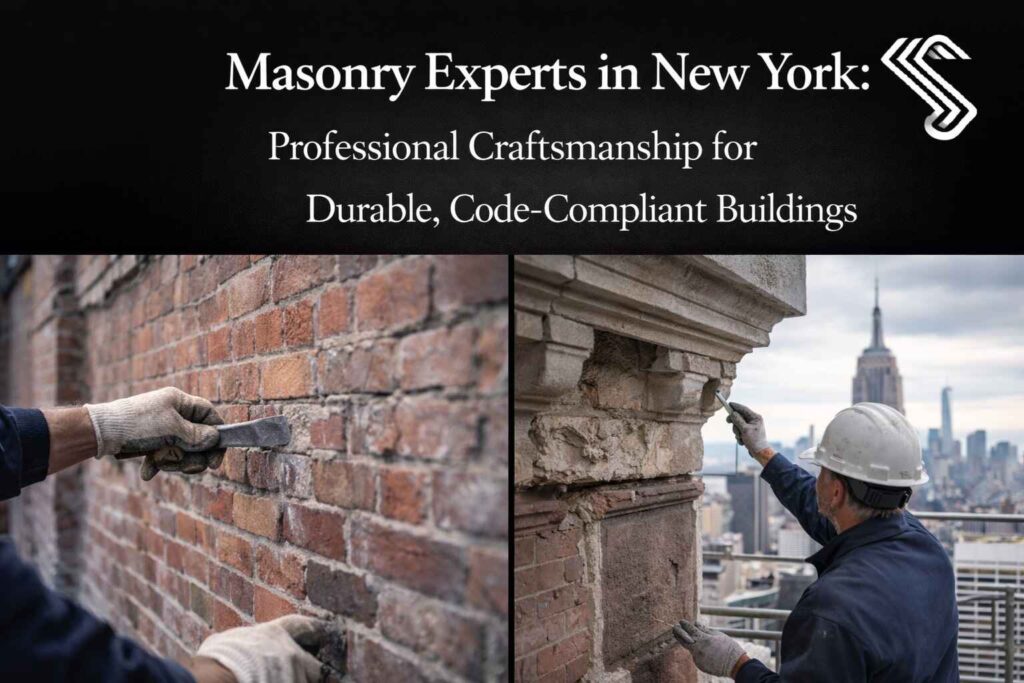
New York City’s buildings are defined by masonry. From historic brownstones in Brooklyn to pre-war brick walk-ups in Manhattan and concrete façades in Queens and the Bronx, masonry is both a structural system and an architectural identity. Working on these buildings requires more than general construction skills—it demands actual masonry expertise, deep material knowledge, and familiarity with local codes, weather conditions, and aging infrastructure.
This guide explains what professional masonry contractors in New York actually do, how their work protects buildings long term, and what property owners should understand before hiring a contractor.
Understanding Masonry in the New York Built Environment
Masonry refers to construction using individual units—brick, stone, concrete block, or brownstone—bonded together with mortar. In New York, most masonry structures are load-bearing or partially load-bearing, meaning failures can impact safety, not just appearance.
Standard masonry systems across NYC include:
- Solid brick masonry (pre-1930 buildings)
- Cavity wall systems (post-war construction)
- Cast stone and architectural concrete façades
- Brownstone and limestone cladding
- CMU (concrete masonry unit) backup walls
Each system behaves differently under moisture, freeze-thaw cycles, and structural movement.
What Defines True Masonry Experts in New York?
Not every contractor who lays brick is a masonry expert. In NYC, expertise is defined by technical skill, regulatory knowledge, and real-world experience with aging urban buildings.
Professional masonry experts typically demonstrate:
- Advanced knowledge of historic and modern masonry systems
- Proper mortar analysis and compatibility matching
- Understanding of NYC DOB, Local Law 11, and façade safety requirements
- Hands-on experience with scaffolding, rigging, and urban site logistics
- Proven repair methodologies—not surface-level patching
This level of expertise is critical in a city where incorrect repairs often accelerate deterioration.
Core Masonry Services Offered by NYC Masonry Specialists
Brick Masonry Repair and Repointing
Brick repointing involves removing deteriorated mortar and installing new mortar that matches the original in strength, color, and permeability. In NYC, improper mortar selection is a leading cause of brick failure.
Professional repointing addresses:
- Open or eroded mortar joints
- Water penetration through joints
- Brick displacement or cracking
- Structural load redistribution
Correct repointing can extend a façade’s life by 30–50 years.
Brownstone Restoration and Repair
Brownstone is a soft sandstone that deteriorates differently from brick or concrete. Many NYC brownstones suffer from delamination, sugaring, and surface loss due to moisture and pollution.
Expert brownstone restoration includes:
- Hand carving and patching with compatible materials
- Custom color and texture matching
- Structural pinning where material loss is severe
- Breathable protective coatings when appropriate
This work requires artisan-level skill and cannot be rushed or mechanized.
Concrete and Cast Stone Masonry Repair
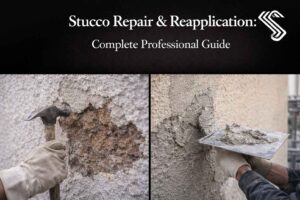
Concrete façades and cast stone elements often fail due to corrosion of embedded steel reinforcement. Masonry experts understand how to properly expose, treat, and rebuild these elements.
Typical repairs include:
- Spall removal and re-casting
- Rebar cleaning and corrosion protection
- Structural patching with engineered repair mortars
- Joint replacement and waterproofing integration
Ignoring these issues can lead to falling hazards and DOB violations.
Façade Restoration and Local Law 11 Compliance
Local Law 11 (FISP) mandates periodic façade inspections for buildings over six stories. Masonry experts play a central role in correcting unsafe or SWARMP (Safe With a Repair and Maintenance Program) conditions.
Façade restoration work may involve:
- Parapet wall reconstruction
- Lintel and shelf angle repair
- Masonry anchoring and stabilization
- Full façade resurfacing or selective rebuilding
Proper execution protects occupants and ensures regulatory compliance.
How NYC Climate Affects Masonry Performance?
New York’s climate is one of the harshest for masonry systems. Freeze-thaw cycles, salt exposure, wind-driven rain, and pollution all accelerate deterioration.
Key environmental stressors include:
- 40+ freeze-thaw cycles per year
- Road salt and airborne chlorides
- Acidic rain interacts with limestone and brownstone
- High humidity and urban heat island effects
Masonry experts design repairs that account for these conditions rather than applying generic solutions.
Mortar Compatibility: A Critical Expert Skill
One of the most common masonry failures in NYC results from using mortar that is too hard for the masonry units. This causes the brick or stone to crack instead of the mortar.
Professional masonry experts:
- Perform mortar analysis on historic buildings
- Match compressive strength, permeability, and flexibility
- Replicate original joint profiles and tooling
- Use lime-based mortars where required
Correct mortar selection protects masonry units and allows buildings to “breathe.”
Waterproofing and Masonry Protection Systems
Water is the primary enemy of masonry. Expert masonry contractors integrate waterproofing without trapping moisture inside walls.
Best-practice masonry waterproofing includes:
- Breathable silane/siloxane sealers
- Proper flashing installation at transitions
- Joint sealants for dissimilar materials
- Drainage path correction behind façades
Poor waterproofing is often worse than no waterproofing at all.
Structural Masonry Repairs vs Cosmetic Fixes
A critical distinction homeowners and property managers must understand is the difference between cosmetic masonry repairs and structural masonry work.
Structural masonry issues include:
- Bowing or bulging walls
- Cracked lintels and shelf angles
- Parapet wall instability
- Load-bearing wall movement
Masonry experts assess load paths and failure mechanisms—not just surface appearance.
Choosing the Right Masonry Experts in New York
Hiring the wrong contractor can permanently damage a building. Before selecting a masonry expert, evaluate:
- Proven NYC project experience
- Knowledge of DOB regulations and permits
- Understanding of historic preservation requirements
- Detailed repair methodology, not vague proposals
- Willingness to explain material choices and processes
Lowest price bids often result in the highest long-term costs.
Why Experience Matters More Than Materials Alone?
Even the best materials fail when installed incorrectly. Masonry performance depends heavily on workmanship, sequencing, and curing conditions.
Expert-level practices include:
- Proper surface preparation
- Controlled curing and protection
- Correct joint depth and compaction
- Sequencing repairs to manage moisture movement
These details separate true masonry professionals from general contractors.
Long-Term Value of Professional Masonry Work
Quality masonry restoration is an investment, not a cosmetic upgrade. Professionally performed repairs can:
- Increase building lifespan by decades
- Prevent interior water damage
- Improve energy efficiency
- Reduce DOB violations and liability
- Preserve property value in competitive NYC markets
Shortcuts almost always resurface as more expensive problems.