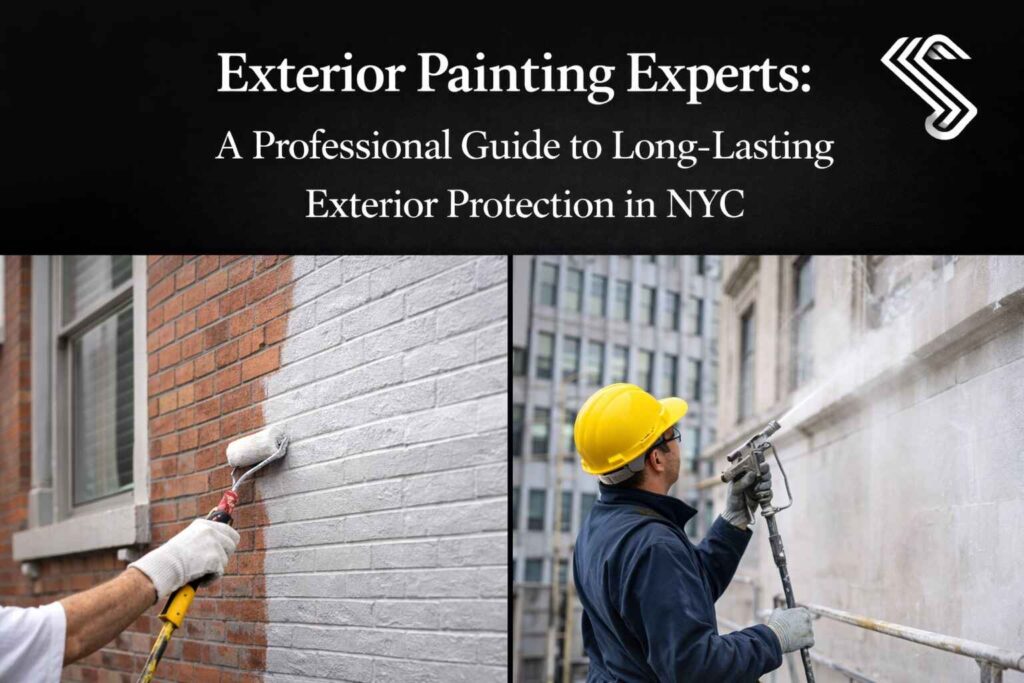
Exterior painting is not a cosmetic upgrade—it is a critical building protection system. In dense urban environments like New York City, exterior coatings must withstand UV exposure, moisture intrusion, pollution, freeze-thaw cycles, and substrate movement. As exterior painting experts, we approach every project as a surface protection and performance task, not simply a color application.
This guide explains how professional exterior painting works, why expert preparation matters, and how the right systems extend building life across residential, commercial, and mixed-use properties.
What Defines True Exterior Painting Expertise?
An exterior painting expert understands substrate behavior, coating chemistry, and environmental stress factors. NYC buildings are constructed from brick, stucco, concrete, wood, metal, and masonry hybrids—each requiring a different preparation and coating strategy.
Professional exterior painters focus on:
- Surface compatibility
- Moisture vapor transmission
- Adhesion profiles
- Long-term durability, not short-term aesthetics
This technical knowledge separates experts from general painters.
Exterior Painting in NYC: Unique Environmental Challenges
Urban Climate Stress Factors
New York City presents one of the most aggressive environments for exterior coatings:
- High humidity and rainfall
- Winter freeze-thaw cycles
- UV exposure amplified by building height
- Airborne pollutants and salt residue
These conditions demand high-performance exterior paint systems, not standard retail-grade products.
Borough-Specific Considerations
- Manhattan & Brooklyn: Older masonry buildings with lime-based substrates
- Queens & Bronx: Mixed concrete and brick façades
- Staten Island: Higher exposure to wind and moisture
Local experience matters when selecting primers, coatings, and application methods.
Exterior Surface Assessment: The Foundation of Professional Painting
Before any exterior paint is applied, experts conduct a surface condition assessment. This step determines whether painting is appropriate or if repairs are required first.
Common Conditions Identified
- Efflorescence (salt migration)
- Hairline and structural cracks
- Peeling or chalking coatings
- Moisture intrusion points
- Failed sealants and joints
Painting over unresolved issues leads to premature failure—often within 12–24 months.
Surface Preparation Methods Used by Exterior Painting Experts
Surface preparation accounts for 60–70% of project success. Professionals select methods based on substrate type and condition.
Preparation Techniques Include:
- Low-pressure power washing (1,200–2,500 PSI)
- Chemical cleaning for biological growth
- Hand and mechanical scraping
- Masonry patching and crack repair
- Rust treatment for metal substrates
Improper preparation is the #1 cause of exterior paint failure.
Exterior Paint Systems: Understanding Coatings and Performance
Acrylic Elastomeric Coatings
Used on masonry and concrete surfaces, elastomeric coatings:
- Bridge hairline cracks
- Provide waterproofing benefits
- Offer UV resistance
- Expand and contract with the building
High-Build Acrylic Paints
Ideal for:
- Brick façades
- Stucco exteriors
- Previously painted surfaces
These coatings balance breathability and moisture resistance.
Specialty Coatings
Experts may specify:
- Anti-carbonation coatings for concrete
- Rust-inhibitive primers for steel
- Breathable mineral paints for historic buildings
Product selection is never one-size-fits-all.
Residential Exterior Painting: Protecting Homes and Townhouses
Exterior painting experts adapt their approach based on building age and construction type.
Residential Applications Include:
- Single-family homes
- Brownstones and townhouses
- Multi-unit residential buildings
Professional painters ensure:
- Proper ladder and scaffold safety
- Protection of landscaping and sidewalks
- Compliance with NYC regulations
A professionally painted home exterior can extend repaint cycles to 8–12 years, compared to 3–5 years with improper work.
Commercial Exterior Painting for NYC Buildings
Commercial properties demand logistical planning in addition to technical skill.
Key Commercial Considerations:
- Work sequencing to minimize disruption
- Compliance with DOB and OSHA standards
- High-access painting using scaffolding or lifts
- Long-term maintenance planning
Exterior painting experts often coordinate with property managers, engineers, and restoration contractors on complex façades.
Exterior Painting vs. Exterior Restoration: Knowing the Difference
Painting is not always the correct solution.
| Condition | Painting | Restoration |
|---|---|---|
| Sound substrate | ✔ | ❌ |
| Cracked masonry | ❌ | ✔ |
| Spalling concrete | ❌ | ✔ |
| Moisture intrusion | ❌ | ✔ |
| Cosmetic fading | ✔ | ❌ |
Experts identify when restoration or waterproofing must precede painting.
Color Selection and Reflectivity for Urban Buildings
Exterior painting experts consider more than aesthetics.
Professional Color Considerations:
- Light Reflectance Value (LRV)
- Heat absorption
- Fading resistance
- Neighborhood and landmark compliance
In NYC, certain districts require approval for color changes, especially on historic buildings.
How Exterior Painting Improves Building Value and Longevity?
A professionally executed exterior paint system:
- Extends substrate lifespan
- Reduces moisture-related damage
- Improves curb appeal
- Increases property value
- Lowers long-term maintenance costs
For commercial buildings, exterior painting can directly impact leasing and tenant perception.
Why Professional Exterior Painters Outperform DIY and Low-Cost Contractors?
Exterior painting failures are expensive to fix. Expert contractors provide:
- Manufacturer-backed coating systems
- Proper surface diagnostics
- Skilled applicators
- Documented processes
- Warranty-backed work
Low-cost painting often leads to peeling, blistering, and water damage within a few seasons.
Exterior Painting Experts in New York City: Local Knowledge Matters
Local expertise means understanding:
- NYC building codes
- Scaffold permit requirements
- Seasonal painting windows
- Substrate variations across boroughs
Companies like Spark Restoration Inc. integrate exterior painting with façade repair, waterproofing, and restoration—ensuring systems work together, not in isolation.
Maintenance Planning After Exterior Painting
Exterior painting experts recommend:
- Annual visual inspections
- Spot repairs before coating failure
- Joint and sealant maintenance
- Scheduled cleaning
Preventive maintenance can double the lifespan of an exterior paint system.