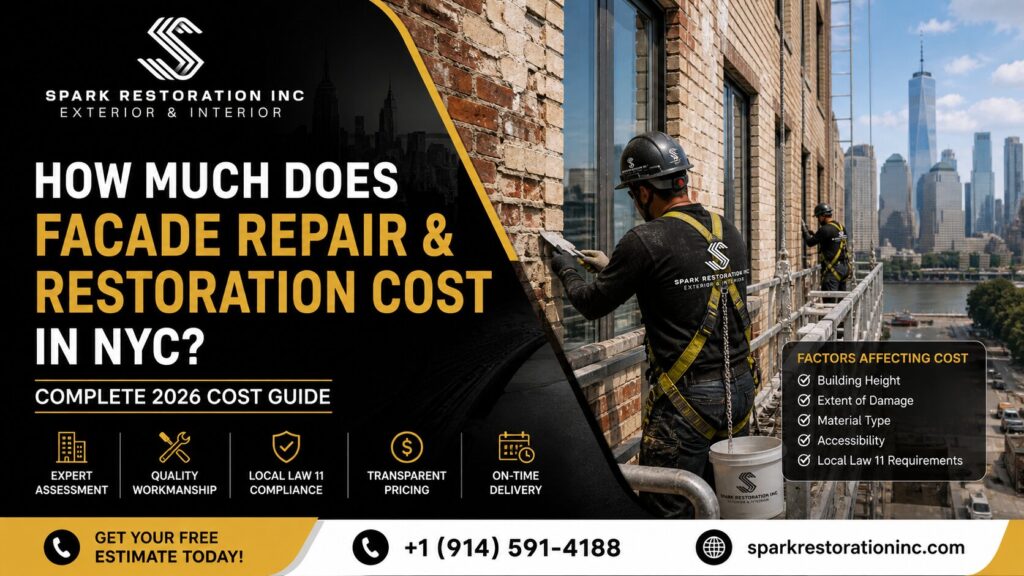
Facade repair and restoration costs in NYC vary widely depending on building condition, height, materials, and compliance requirements. In a city where structures are constantly exposed to harsh weather and strict regulations like Local Law 11 (FISP), maintaining the exterior of your building is not optional—it’s a necessity.
Many property owners search for facade repair cost NYC expecting a simple number, but the reality is far more complex. From minor masonry repairs to full-scale exterior restoration, pricing depends on multiple technical and logistical factors that directly impact the total project cost.
Understanding the cost of facade repair in NYC is essential for budgeting, planning, and avoiding unexpected expenses. Whether you own a residential property, manage a commercial building, or oversee a multi-unit structure, having a clear cost breakdown helps you make informed decisions and prevent long-term structural damage.
In this guide, we’ll break down everything you need to know—from average facade restoration cost in New York to key pricing factors, Local Law 11 expenses, and strategies to control your budget effectively.
Average Cost of Facade Repair in NYC
When property owners ask about facade repair cost in NYC, the most accurate answer is: it depends on the scope and condition of the building. However, based on industry standards and real project data, there are reliable cost ranges that can help you estimate your budget.
In New York, facade repair and restoration is typically priced per square foot, which allows contractors to scale costs based on building size and complexity. For smaller issues like minor masonry repair or crack sealing, costs are relatively lower. But as soon as structural damage, waterproofing failure, or compliance work is involved, pricing increases significantly.
On average, the facade repair cost per square foot in NYC falls into three general categories:
- Minor repairs: $15 – $40 per sq. ft.
- Moderate restoration: $40 – $80 per sq. ft.
- Major facade restoration: $80 – $150+ per sq. ft.
These ranges are not fixed—they fluctuate based on access, labor intensity, and material requirements.
For a clearer picture, total project costs vary depending on building type:
- Small residential properties may range between $10,000 to $50,000
- Mid-size buildings often fall between $50,000 to $250,000
- Large commercial or high-rise projects can exceed $500,000 and even reach $1M+
A key factor that many overlook is that commercial facade restoration cost in NYC is usually higher than residential work due to stricter safety requirements, complex access systems, and longer project durations.
Another important distinction is between low-rise and high-rise buildings. High-rise facade repair costs are significantly higher because they require scaffolding, swing stages, and additional safety systems, all of which increase labor and equipment expenses.
It’s also important to understand that these numbers represent baseline estimates. The actual cost of your project can increase if hidden structural issues are discovered during the repair process—something that is very common in older NYC buildings.
For this reason, a professional inspection is always recommended before finalizing any budget. It ensures that your estimate reflects the true condition of your building and helps avoid costly surprises later.
Cost Breakdown by Type of Facade Work
To accurately estimate the facade repair cost in NYC, it’s important to understand how pricing varies based on the type of work involved. Facade restoration is not a single task—it’s a combination of specialized repairs, each with its own cost structure depending on materials, labor, and complexity.
Below is a detailed breakdown of common facade work and how each contributes to the overall cost.
Masonry Repair & Repointing
Masonry work is one of the most common components of facade restoration in New York, especially for older brick buildings. Over time, mortar joints deteriorate due to weather exposure, leading to water infiltration and structural weakening.
Repointing involves removing damaged mortar and replacing it with new material that matches the original composition.
Typical masonry repair cost in NYC ranges between $25 to $70 per sq. ft., depending on accessibility and depth of deterioration. If brick replacement is required, costs increase due to material matching and labor intensity.
Crack Repair & Structural Stabilization
Cracks in the facade can indicate either surface-level damage or deeper structural issues. The repair method depends on severity.
- Hairline cracks may be sealed with specialized fillers
- Structural cracks often require epoxy or polyurethane injection
The cost of structural facade repair can range from $500 for minor crack repairs to several thousand dollars for reinforced stabilization work. If anchoring or load-bearing elements are involved, pricing increases significantly.
Waterproofing Systems
Waterproofing is a critical part of any facade restoration project, especially in NYC where moisture damage is common. This includes sealants, coatings, and membrane systems that protect the building envelope.
The waterproofing cost for building facades in NYC typically ranges from $10 to $30 per sq. ft., depending on the system used. High-performance coatings and multi-layer membranes may cost more but offer longer durability.
Brick and Stone Replacement
When facade materials are severely damaged, replacement becomes necessary. This is more expensive than standard repair because it involves sourcing matching materials and careful installation.
The cost of brick facade repair in NYC with replacement can range from $50 to $150 per sq. ft., especially if historic materials or custom fabrication is required.
Facade Cleaning
Cleaning is often included as part of restoration to remove dirt, pollutants, and stains. This improves both appearance and material performance.
Methods include:
- Pressure washing
- Chemical cleaning
- Steam cleaning
Facade cleaning costs generally range from $5 to $15 per sq. ft., depending on the method and level of buildup.
Local Law 11 (FISP) Related Repairs
If your building falls under Local Law 11, repair costs may increase depending on inspection results.
- SWARMP conditions require scheduled repairs
- Unsafe conditions require immediate action, often at higher cost
The Local Law 11 repair cost in NYC varies widely, but emergency repairs are typically more expensive due to urgency, safety measures, and compliance requirements.
Key Factors That Affect Facade Repair Cost in NYC
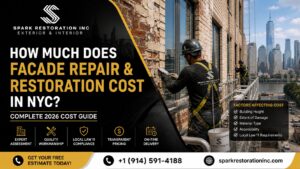
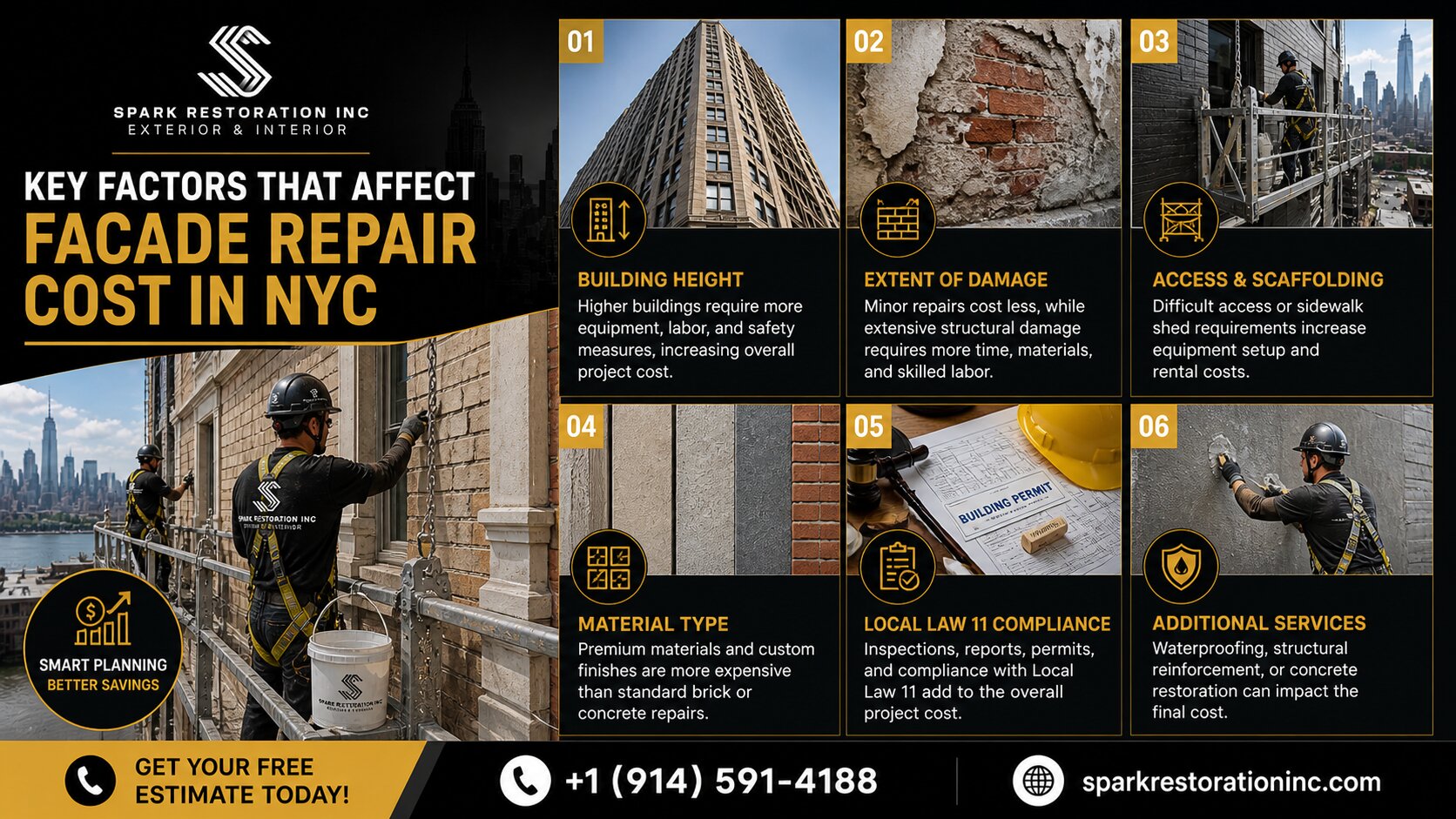
While average pricing gives a general idea, the actual facade repair cost in NYC is determined by several critical factors. These variables can significantly increase or decrease the final project cost depending on the building’s condition, location, and technical requirements.
Understanding these factors helps property owners make better decisions, avoid unexpected expenses, and plan projects more efficiently.
Building Height & Accessibility
One of the biggest cost drivers in New York is how easily the facade can be accessed.
Low-rise buildings are relatively straightforward to work on, but as soon as you move into mid-rise or high-rise structures, costs increase due to the need for specialized equipment such as:
- Scaffolding systems
- Swing stages (suspended platforms)
- Boom lifts or aerial access equipment
High-rise projects also require additional safety measures, inspections, and labor coordination. This is why high-rise facade repair cost in NYC is significantly higher than low-rise work, even if the repair scope is similar.
Extent of Damage
The condition of the facade plays a major role in determining cost.
- Minor surface damage requires simple repairs
- Moderate deterioration involves repointing and sealing
- Severe structural damage requires reinforcement and material replacement
In many cases, hidden issues such as internal moisture damage or corroded steel are only discovered during the project. These unexpected findings can increase the building facade repair cost beyond initial estimates.
Type of Materials Used
Different facade materials require different repair techniques, which directly impacts cost.
- Brick is generally more affordable to repair
- Stone requires specialized restoration methods
- Concrete may need structural reinforcement
- Glass and modern systems involve higher technical complexity
For example, brick facade repair cost in NYC is typically lower than stone restoration, but matching historic materials can increase expenses.
Labor & Skilled Workforce
New York has some of the highest labor costs in the construction industry. Facade restoration requires skilled trades such as:
- Masonry specialists
- Waterproofing experts
- Structural technicians
The more specialized the work, the higher the labor cost. Projects that require experienced contractors and certified professionals will naturally have higher pricing—but also deliver better quality and durability.
Permits & Compliance Requirements
Facade restoration projects in NYC often require permits and regulatory approvals.
These may include:
- NYC Department of Buildings permits
- Local Law 11 (FISP) compliance documentation
- Engineering reports and inspections
Permit costs and filing fees add to the overall budget, especially for large or complex projects.
Location & Site Conditions
Even within New York, location can affect pricing.
- Manhattan projects often cost more due to logistics and restrictions
- Limited access areas may require additional setup
- High-traffic zones need extra safety measures
Urban constraints such as tight spaces, parking limitations, and pedestrian protection systems can increase both labor time and cost.
Project Duration
Longer projects typically cost more due to extended labor, equipment rental, and supervision.
Delays caused by weather, permit approvals, or material shortages can also impact the final cost. This is why proper planning and scheduling are essential to control expenses.
Cost of Local Law 11 (FISP) Compliance in NYC
In New York City, facade repair costs are often closely tied to compliance with Local Law 11, officially known as the Facade Inspection Safety Program (FISP). For buildings over six stories, this is not optional—it’s a mandatory requirement that directly impacts your overall budget.
Many property owners underestimate the Local Law 11 cost in NYC, assuming it only involves an inspection. In reality, compliance includes multiple stages such as inspection, reporting, filing, and in many cases, required repairs.
Inspection Cost (QEWI)
The first step in compliance is hiring a Qualified Exterior Wall Inspector (QEWI), which is typically a licensed engineer or architect.
Inspection costs vary based on building size and complexity:
- Small buildings: $3,000 – $7,000
- Mid-size properties: $7,000 – $15,000
- Large or high-rise buildings: $15,000 – $30,000+
If close-up inspections are required using scaffolding or swing stages, costs increase further due to equipment and labor.
Report Filing & Documentation Costs
After inspection, the QEWI must submit a detailed report to the NYC Department of Buildings.
This includes:
- Condition assessment
- Classification (Safe, SWARMP, or Unsafe)
- Recommended repairs
Filing and documentation costs typically range from $1,000 to $5,000 depending on project complexity and professional fees.
Repair Costs Based on Classification
The biggest cost impact comes from the building’s classification under FISP.
Safe
- No immediate repairs required
- Minimal cost beyond inspection
SWARMP (Safe With Repair and Maintenance Program)
- Repairs are required within a specified timeframe
- Costs vary depending on scope
- Typically includes preventive and corrective work
Unsafe
- Immediate repair is mandatory
- Requires emergency measures such as sidewalk sheds
- Significantly higher cost due to urgency and safety requirements
The facade repair cost NYC under Local Law 11 can increase substantially if a building is classified as unsafe, as work must be completed quickly and under strict supervision.
Additional Compliance Costs
Beyond inspection and repairs, there are other costs associated with Local Law 11:
- Sidewalk shed installation
- Public safety measures
- Re-inspections after repair completion
- Engineering supervision
These additional requirements can add tens of thousands of dollars to the total project cost, especially for large buildings.
Penalties for Non-Compliance
Failing to comply with Local Law 11 can result in significant financial penalties.
Common fines include:
- Late filing penalties
- Monthly fines for non-compliance
- Additional violations for unsafe conditions
These penalties can quickly exceed the cost of proactive inspection and repair, making early compliance the most cost-effective approach.
Hidden Costs Most Property Owners Miss
When estimating the facade repair cost in NYC, many property owners focus only on visible repairs like masonry work or waterproofing. However, a significant portion of the total budget often comes from hidden or indirect costs that are not immediately obvious during initial planning.
Failing to account for these can lead to budget overruns, project delays, and financial strain.
Extended Scaffolding & Equipment Rental
Access systems such as scaffolding or swing stages are usually rented on a time basis. If the project takes longer than expected due to delays or additional work, these costs increase.
Even a short delay can add thousands of dollars to the overall project, especially in high-rise buildings where access equipment is more complex.
Weather-Related Delays
New York weather can significantly impact construction timelines.
Rain, snow, or extreme temperatures can:
- Halt work temporarily
- Extend project duration
- Increase labor and equipment costs
Since facade work is performed on the exterior, weather delays are a common and often unavoidable factor.
Unexpected Structural Issues
During facade restoration, hidden problems are frequently discovered after work begins.
These may include:
- Internal moisture damage
- Corroded steel reinforcement
- Deeper cracks not visible during initial inspection
Addressing these issues increases both labor and material costs, making the building facade repair cost higher than originally estimated.
Material Price Fluctuations
Construction material prices can vary based on market conditions, availability, and supply chain issues.
If your project is delayed or extended, the cost of materials such as:
- Brick or stone
- Sealants and coatings
- Structural components
may increase during the project timeline.
Change Orders & Scope Modifications
Changes in project scope after work has started can significantly impact cost.
Examples include:
- Adding additional repair areas
- Upgrading materials
- Adjusting design or specifications
Each change requires additional labor, materials, and sometimes new approvals, increasing the overall cost.
Additional Safety Requirements
In busy urban areas, additional safety measures may be required beyond standard setup.
These can include:
- Extended sidewalk sheds
- Traffic control measures
- Additional protective barriers
These requirements are often mandated for compliance and can add unexpected costs to the project.
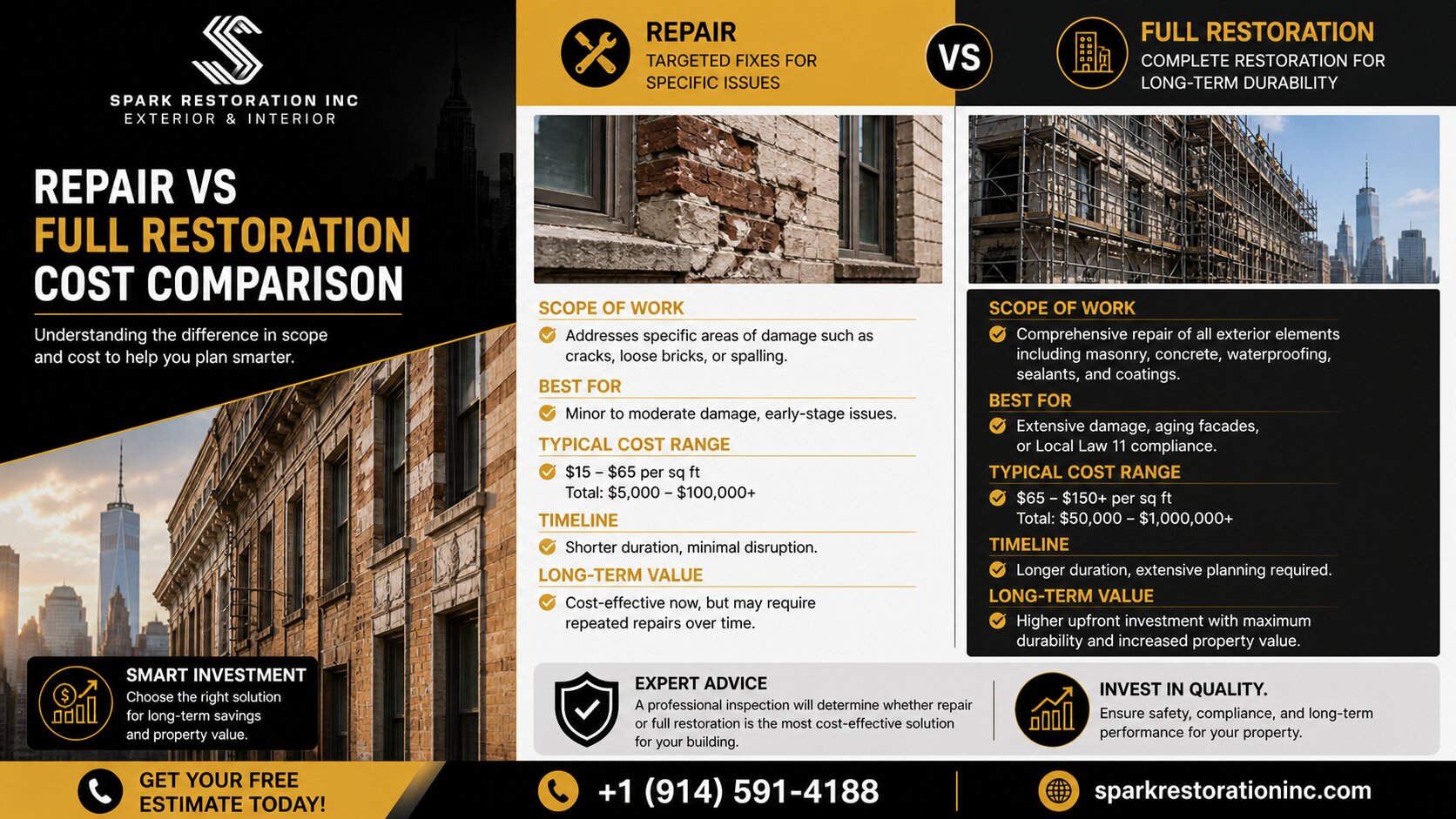
Repair vs Full Restoration Cost Comparison
One of the most important decisions property owners face is whether to proceed with targeted repairs or a full facade restoration. This choice has a direct impact on both short-term expenses and long-term financial outcomes.
While repairs may seem more affordable initially, they are not always the most cost-effective solution in the long run—especially for buildings with widespread deterioration.
When Targeted Repair is the Right Option?
Facade repair is suitable when damage is localized and limited in scope. This typically applies to buildings where the overall structure is still in good condition but certain areas require attention.
Common situations where repair is sufficient:
- Minor cracks in masonry or concrete
- Isolated water leakage issues
- Small sections of deteriorated mortar
- Early-stage material wear
In these cases, the facade repair cost in NYC remains relatively controlled because the work is focused on specific problem areas rather than the entire exterior.
Targeted repairs are ideal for:
- Preventive maintenance
- Extending the life of the facade
- Addressing issues before they escalate
When Full Facade Restoration is Required?
Full restoration becomes necessary when damage is widespread or when the building no longer meets safety or compliance standards.
This typically includes:
- Extensive masonry deterioration
- Structural instability or anchoring issues
- Repeated water infiltration across multiple areas
- Local Law 11 violations requiring major corrective work
In such cases, partial repairs are often ineffective because they do not address the underlying problems.
Although the facade restoration cost in New York is higher for full-scale projects, it provides a comprehensive solution that improves durability, safety, and compliance.
Cost Comparison: Short-Term vs Long-Term
At first glance, repairs appear more affordable. However, repeated patchwork over time can result in higher cumulative costs.
Repair Approach:
- Lower initial cost
- May require frequent follow-up work
- Risk of recurring issues
Full Restoration Approach:
- Higher upfront investment
- Long-term durability
- Reduced maintenance costs
In many cases, property owners who choose repeated repairs end up spending more over time compared to a one-time comprehensive restoration.
Strategic Decision-Making
Choosing between repair and full restoration should be based on:
- Condition of the building
- Results of professional inspection
- Compliance requirements (Local Law 11)
- Long-term ownership plans
A professional assessment helps determine whether a repair-focused approach is sufficient or if a complete restoration is the better investment.
How to Reduce Facade Repair Costs?
Managing the facade repair cost in NYC is not just about finding the lowest price—it’s about making smart, strategic decisions that reduce expenses without compromising quality or compliance. With proper planning and a proactive approach, property owners can significantly control costs while still ensuring durable and code-compliant results.
Start with Early Inspection & Diagnosis
One of the most effective ways to reduce costs is identifying issues before they escalate.
Small problems like minor cracks or deteriorating mortar can be repaired quickly and affordably. However, if left untreated, these same issues can develop into structural damage requiring extensive restoration.
Scheduling regular inspections helps:
- Detect hidden damage early
- Avoid emergency repairs
- Plan work in advance rather than reacting to problems
Early diagnosis directly reduces the overall cost of facade repair in NYC.
Invest in Preventive Maintenance
Preventive maintenance is far more cost-effective than reactive repair.
Routine tasks such as:
- Repointing mortar joints
- Resealing expansion joints
- Maintaining waterproofing systems
can extend the life of the facade and prevent major restoration work.
Consistent upkeep reduces long-term expenses and keeps your building in compliance with NYC regulations.
Plan Projects in Phases
For larger buildings, breaking the project into phases can help manage costs more efficiently.
Instead of handling the entire facade at once, work can be divided into sections based on priority and condition.
Benefits of phased execution:
- Better budget control
- Reduced financial burden at one time
- Flexibility in scheduling
This approach is especially useful for large commercial properties where full restoration costs can be substantial.
Choose the Right Contractor
Selecting an experienced contractor is one of the most important cost-saving decisions.
A qualified contractor will:
- Provide accurate estimates
- Identify the correct scope of work
- Avoid unnecessary repairs
- Use efficient methods and materials
While lower bids may seem attractive, they often lead to poor workmanship, delays, and additional repair costs later.
Choosing the right professional ensures better value and long-term savings.
Schedule Work During Optimal Seasons
Timing can have a direct impact on project cost.
Planning facade work during favorable weather conditions helps:
- Avoid delays caused by rain or extreme temperatures
- Improve work efficiency
- Reduce labor and equipment rental time
Off-peak scheduling may also provide cost advantages depending on contractor availability.
Set a Realistic Budget with Contingency
Unexpected issues are common in facade restoration projects, especially in older NYC buildings.
Including a contingency budget of 10–20% helps cover:
- Hidden structural problems
- Material cost fluctuations
- Additional compliance requirements
Proper financial planning prevents project interruptions and keeps work moving smoothly.
ROI of Facade Repair
While many property owners focus on upfront expenses, it’s equally important to understand the return on investment (ROI) when evaluating the facade repair cost in NYC. Facade restoration is not just a repair expense—it is a strategic investment that delivers long-term financial and operational benefits.
Increase in Property Value
A well-maintained exterior significantly enhances the overall value of a property.
Buildings with restored facades:
- Appear structurally sound and well-managed
- Attract higher resale value
- Stand out in competitive real estate markets
In NYC, where property value is closely tied to condition and appearance, facade restoration can directly impact market positioning.
Reduced Long-Term Maintenance Costs
Addressing facade issues early helps prevent recurring and costly repairs.
Instead of repeatedly fixing the same problems, a properly executed restoration:
- Eliminates underlying issues
- Extends the lifespan of materials
- Reduces the frequency of future repairs
This makes the initial investment more cost-effective over time.
Higher Tenant Retention & Rental Potential
For commercial and multi-unit residential buildings, façade condition plays a major role in tenant perception.
A well-maintained building:
- Attracts quality tenants
- Supports higher rental rates
- Reduces vacancy periods
Tenants are more likely to stay in properties that are safe, visually appealing, and professionally maintained.
Improved Energy Efficiency
Facade restoration often includes upgrades to insulation, sealants, and waterproofing systems.
This results in:
- Reduced air leakage
- Better temperature control
- Lower heating and cooling costs
Improved energy performance contributes to both operational savings and environmental efficiency.
Compliance & Risk Reduction
Maintaining a compliant façade reduces financial and legal risks.
Benefits include:
- Avoiding Local Law 11 penalties
- Lower liability for accidents or falling debris
- Reduced insurance risks
Compliance ensures long-term stability and protects property owners from unexpected expenses.
Commercial vs Residential Cost Difference
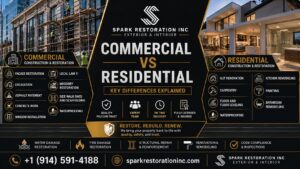
The facade repair cost in NYC varies significantly between commercial and residential properties. While both involve similar types of work, the scale, complexity, and regulatory requirements of commercial buildings often make them more expensive to repair and restore.
Understanding these differences helps property owners set realistic budgets and choose the right approach for their building type.
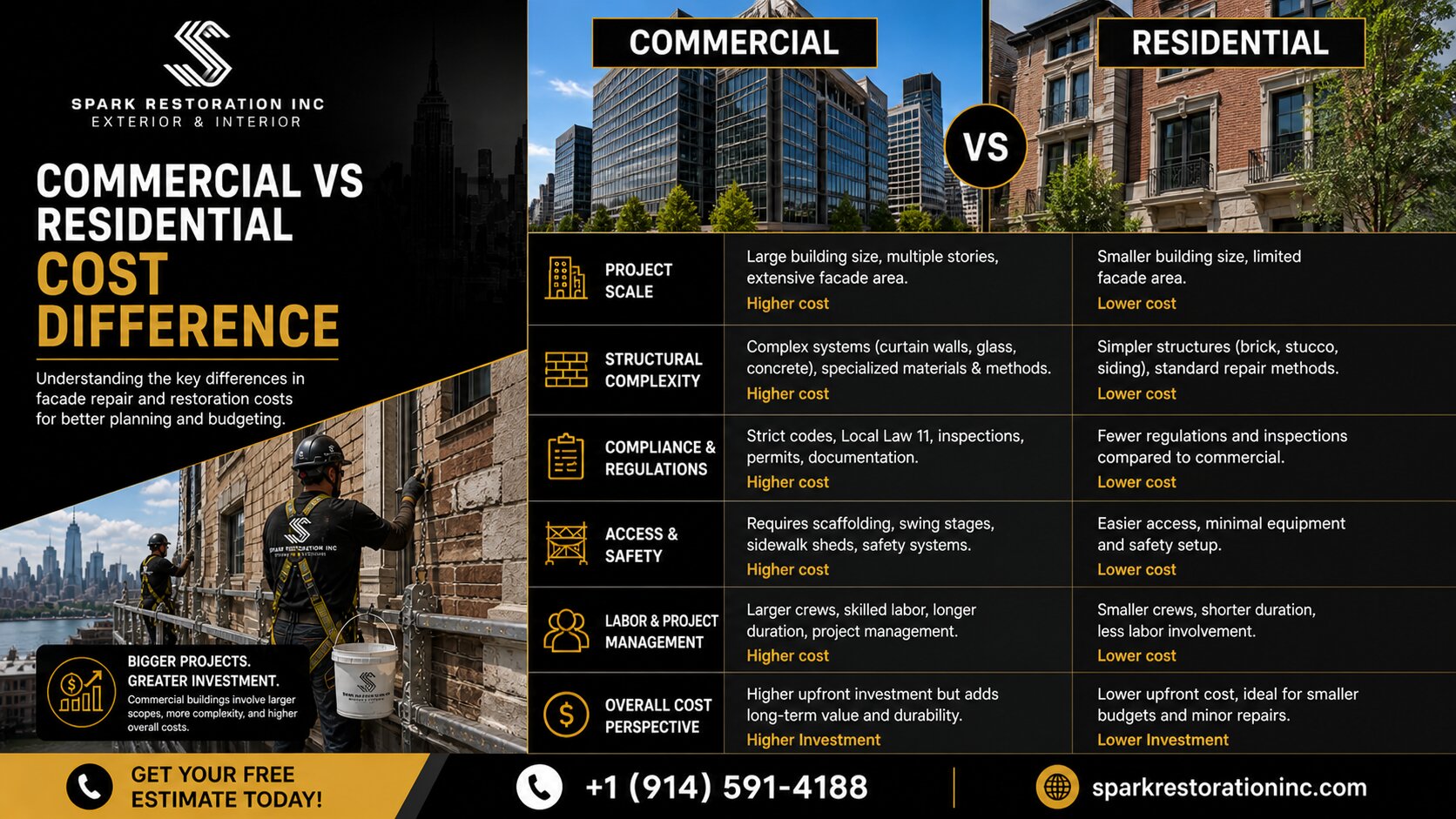
Project Scale and Scope
Commercial buildings are typically larger and more complex than residential properties.
- Multi-story office buildings, retail spaces, and mixed-use properties require extensive surface coverage
- Larger façades mean more materials, labor, and time
In contrast, residential buildings—especially low-rise structures—generally involve smaller work areas, which reduces overall cost.
Structural Complexity
Commercial buildings often use advanced facade systems such as:
- Curtain walls
- Glass panels
- Reinforced concrete systems
These systems require specialized repair methods and skilled labor, increasing the commercial facade restoration cost in NYC.
Residential properties, on the other hand, usually involve simpler materials like brick or stucco, making repairs more straightforward and cost-effective.
Compliance and Regulatory Requirements
Commercial projects are subject to stricter safety and compliance standards.
- Local Law 11 requirements are more common in commercial buildings
- Additional inspections and documentation may be required
- Higher safety measures are necessary due to public exposure
These factors contribute to higher overall costs compared to residential projects.
Access and Safety Requirements
Commercial buildings, especially in high-traffic areas, require more extensive safety measures.
This may include:
- Larger sidewalk sheds
- Enhanced safety barriers
- More complex scaffolding systems
These requirements increase both labor and equipment costs.
Labor and Project Management
Commercial facade restoration projects often involve:
- Larger teams
- Multiple subcontractors
- Dedicated project managers
This level of coordination increases costs but ensures efficient execution for large-scale work.
Residential projects typically require fewer resources, making them less expensive overall.
Cost Perspective
Residential Properties:
- Lower overall cost
- Simpler scope of work
- Less complex compliance requirements
Commercial Properties:
- Higher investment
- Greater complexity
- Strong focus on long-term durability and ROI
Choosing the Right Contractor for Cost Efficiency
Selecting the right contractor plays a major role in controlling the facade repair cost in NYC. While many property owners focus on getting the lowest quote, the reality is that poor contractor selection often leads to higher long-term expenses due to delays, rework, and compliance issues.
A qualified contractor not only delivers quality work but also helps optimize cost through accurate planning, efficient execution, and proper project management.
Importance of Transparent Estimates
A professional contractor will provide a detailed and transparent cost breakdown instead of a vague or lump-sum quote.
A clear estimate should include:
- Scope of work
- Material specifications
- Labor costs
- Equipment and access systems
- Timeline and milestones
This level of transparency allows you to understand exactly where your budget is being allocated and prevents unexpected charges during the project.
Experience with NYC Facade Projects
Facade restoration in New York is highly specialized due to strict regulations and complex building conditions.
An experienced contractor will:
- Understand Local Law 11 (FISP) requirements
- Be familiar with NYC Department of Buildings processes
- Know how to handle high-rise and urban projects
This expertise reduces the risk of delays, compliance issues, and costly mistakes.
Avoiding Low-Cost Traps
Choosing the lowest bid can often result in higher costs later.
Common issues with low-cost contractors:
- Use of substandard materials
- Incomplete scope of work
- Lack of proper safety measures
- Poor workmanship requiring rework
In many cases, these shortcuts lead to repeated repairs and increased overall building facade repair cost.
Value vs Price Approach
Instead of focusing only on price, it’s important to evaluate the overall value a contractor provides.
A higher-quality contractor may:
- Complete the project faster
- Reduce future maintenance costs
- Deliver long-lasting results
This approach ensures better return on investment and minimizes long-term expenses.
Role of Proper Project Management
Efficient project management directly impacts cost control.
A professional contractor will:
- Plan work phases effectively
- Manage labor and materials efficiently
- Monitor progress and address issues quickly
This reduces delays and keeps the project within budget.
Communication and Reliability
Strong communication is essential throughout the project.
Look for contractors who:
- Provide regular updates
- Respond quickly to concerns
- Maintain clear documentation
Reliable communication helps prevent misunderstandings and keeps the project on track.
Conclusion
Understanding the facade repair cost in NYC requires more than just looking at average price ranges. As we’ve covered throughout this guide, costs are influenced by multiple factors including building height, material type, extent of damage, compliance requirements, and project complexity.
Whether you are dealing with minor repairs or planning a full-scale restoration, the key is to approach the project with proper planning, professional assessment, and a clear budget strategy. Ignoring early signs of damage or delaying necessary work can lead to significantly higher costs, safety risks, and regulatory penalties.
By investing in timely facade repair and working with experienced professionals, property owners can ensure:
- Long-term structural integrity
- Compliance with NYC regulations
- Improved property value
- Reduced maintenance costs over time
Ultimately, facade restoration should be viewed as a strategic investment rather than a short-term expense.
Get a Professional Facade Repair Estimate in NYC
If you’re planning a project or need an accurate cost assessment, working with a trusted contractor is essential.
At Spark Restoration INC, we help property owners across New York with:
- Detailed facade inspections
- Transparent cost estimation
- Complete repair and restoration solutions
- Full Local Law 11 (FISP) compliance
Our team ensures every project is handled with precision, safety, and efficiency, delivering long-lasting results.