Maintaining a home’s exterior is more than a matter of appearance—it’s about long-term protection and structural integrity. Among the most effective solutions for durable exterior walls is stucco repair & reapplication, a process that restores damaged surfaces and prevents moisture, mold, and deterioration. Understanding when and how to perform these repairs is essential for homeowners and professionals alike.
Modern stucco systems offer aesthetic appeal and resilience, but exposure to weather, moisture, and natural wear can cause cracks, chips, or peeling. Stucco repair & reapplication not only restores the wall’s appearance but also ensures it remains waterproof and insulated. Proper attention to preparation, materials, and application techniques is crucial to achieving lasting results.
Professionals and DIY enthusiasts recognize the value of timely intervention. With a structured approach to stucco repair & reapplication, even minor issues can be addressed effectively, preventing expensive repairs in the future. This guide explores all aspects, from identifying damage to performing high-quality reapplication, providing practical insights and expert advice.
What is Stucco and Why Proper Maintenance Matters?
Stucco is a versatile, durable exterior finish composed of cement, lime, and sand, applied in layers to protect and beautify walls. Its popularity stems from its resilience, energy efficiency, and ability to create smooth or textured finishes. However, like all building materials, stucco is vulnerable to environmental stress, which can cause cracks, water damage, or surface degradation.
Proper maintenance, including stucco repair & reapplication, is essential to retain both aesthetics and structural integrity. Neglecting damaged areas can result in water infiltration, mold growth, and weakened masonry. Key benefits of regular maintenance include extended wall life, reduced repair costs, and improved insulation.
Additionally, well-maintained stucco contributes to property value and curb appeal. Homeowners should inspect walls periodically, noting cracks, discoloration, or peeling. Stucco repair & reapplication ensures surfaces remain smooth, visually appealing, and fully protected from external elements, reinforcing both durability and energy efficiency.
Signs You Need Stucco Repair & Reapplication
Identifying early signs of damage is crucial to prevent costly repairs. Homeowners should watch for visible cracks, peeling, or crumbling surfaces, which indicate the stucco has weakened. Water stains, mold growth, and efflorescence (white salt deposits) also signal moisture infiltration that requires immediate attention.
Other warning signs include uneven surfaces, discoloration, and areas where stucco has separated from the wall substrate. Neglecting these issues can lead to structural damage, insulation loss, and decreased energy efficiency. Regular inspections, especially after severe weather, can prevent long-term problems.
Key indicators of needed stucco repair & reapplication:
- Hairline cracks and visible fissures
- Water damage or stains on exterior walls
- Loose or flaking stucco
- Mold or mildew accumulation
- Discoloration or texture inconsistencies
By addressing these issues promptly, homeowners can maintain both the appearance and function of their stucco surfaces.
DIY Stucco Repair vs. Professional Reapplication
Homeowners often debate between DIY fixes and hiring professionals. Minor surface cracks or cosmetic imperfections can be addressed with simple tools and pre-mixed repair compounds. DIY stucco repair & reapplication is cost-effective for small-scale projects and provides a sense of accomplishment.
However, larger structural cracks, water-damaged sections, or areas affecting insulation require professional intervention. Certified contractors have access to specialized materials, proper mixing techniques, and finishing tools to ensure durability and compliance with building standards.
When deciding between DIY and professional services, consider:
- Size and depth of cracks or damage
- Water penetration or underlying structural issues
- Availability of tools and materials
- Time and expertise required
By understanding the scope of damage, homeowners can choose the appropriate method, ensuring both efficiency and long-lasting results.
Advanced Techniques for Long-Lasting Stucco Repair & Reapplication
For homeowners and professionals aiming for durable results, advanced stucco repair & reapplication techniques make a significant difference. These include using high-performance polymer-modified stucco mixes, proper layering of base and finish coats, and ensuring correct curing times to prevent cracking. Professionals often recommend incorporating fiberglass mesh reinforcement for larger cracks, enhancing structural stability and reducing future maintenance needs.
Other techniques involve precise texture matching to blend repairs seamlessly with existing walls and applying high-quality waterproof sealants to protect against moisture penetration. Using specialized tools like hawks, trowels, and finishing floats ensures even application and smooth surfaces. By employing these advanced methods, homeowners can extend the life of their stucco walls while maintaining both aesthetic appeal and functional durability.
Environmental Factors Affecting Stucco Longevity and Maintenance
Stucco’s durability is heavily influenced by environmental conditions, making regular inspection and preventive measures essential. High humidity, excessive rainfall, and prolonged sun exposure can cause cracking, fading, and water infiltration if left unaddressed. Seasonal changes also affect stucco expansion and contraction, potentially leading to separation from the substrate.
Proper maintenance involves adjusting repair techniques based on local climate, such as using moisture-resistant coatings in wet regions or UV-protective finishes in areas with strong sunlight. Ensuring effective drainage and properly installed gutters minimizes water exposure, reducing long-term damage. Awareness of environmental factors allows homeowners to schedule timely stucco repair & reapplication, preventing costly issues and extending wall life.
Choosing the Right Materials and Tools for Stucco Repair & Reapplication
Selecting high-quality materials and proper tools is crucial for successful stucco repair & reapplication. Homeowners should prioritize cement-lime blends or pre-mixed polymer-enhanced stucco for durability and adhesion. Using compatible primers, sealants, and paints ensures water resistance and longevity. Material selection also influences texture, color match, and finish quality.
Equally important are application tools such as trowels, hawks, floats, brushes, and scaffolding for safety and precision. Choosing the right tools helps achieve smooth, uniform surfaces and proper layer thickness. Additionally, quality mixing equipment and accurate measurement of ratios prevent weak spots and cracking. Thoughtful selection of both materials and tools ensures a professional-looking finish, long-lasting protection, and minimal maintenance over time.
Step-by-Step Stucco Repair Process
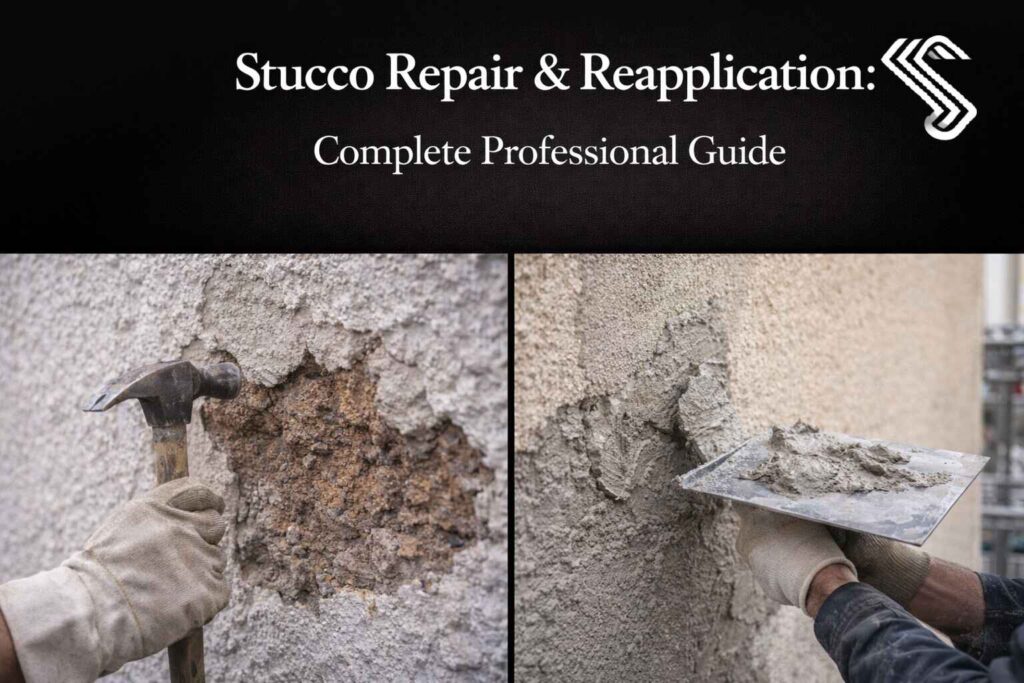
A methodical approach to stucco repair & reapplication guarantees optimal results. The process begins with thorough preparation, including cleaning the surface, removing loose stucco, and repairing minor substrate damage. Proper preparation ensures adhesion and prevents future cracking.
Next, a base coat is applied, carefully mixed to match existing stucco composition. Tools such as trowels or hawks help achieve an even surface. After curing, a finish coat is applied, which can be smooth or textured to match surrounding walls. Finally, optional painting and sealing enhance aesthetics and provide additional protection against UV rays and moisture.
Step-by-step highlights:
- Surface cleaning and loose material removal
- Base coat application with proper curing
- Finish coat application for texture and uniformity
- Optional painting and waterproof sealing
- Inspection to ensure adherence and durability
Following these steps ensures a durable, visually appealing, and structurally sound exterior.
Common Mistakes in Stucco Reapplication & How to Avoid Them
Mistakes during stucco repair & reapplication can compromise durability and result in recurring issues. A common error is improper mixing ratios, which can lead to cracking or poor adhesion. Applying stucco on wet or damp surfaces can trap moisture, accelerating deterioration.
Another frequent mistake is neglecting underlying structural damage. Addressing only surface cracks without inspecting walls can result in recurring problems. Inconsistent texture, uneven application, and failure to seal exposed surfaces are additional errors that reduce the lifespan of the repair.
Tips to avoid mistakes:
- Follow correct cement-to-lime-to-sand ratios
- Always prepare a clean, dry surface
- Inspect for underlying water or structural damage
- Apply consistent texture and smoothness
- Use quality sealing materials for protection
Attention to detail prevents future repair needs and ensures a long-lasting finish.
Cost of Stucco Repair & Reapplication
The cost of stucco repair & reapplication varies depending on project size, damage severity, materials, and labor. DIY repairs for small cracks or localized areas are more affordable, requiring minimal tools and materials. Larger or professionally handled projects involve higher costs due to labor, equipment, and expertise.
Other factors influencing cost include regional labor rates, surface complexity, and whether additional preparation, such as water damage mitigation, is required. While DIY repairs can save money, professional services often ensure compliance with building standards, extended durability, and a uniform finish.
Typical cost considerations:
- DIY materials: stucco mix, trowels, and sealants
- Professional services: labor, scaffolding, and specialized tools
- Additional treatments: waterproofing, painting, or substrate repair
- Surface area and texture complexity
Budget planning ensures homeowners make informed choices for lasting results.
Maintenance Tips to Extend Stucco Life
Regular maintenance is essential for preserving stucco repair & reapplication results. Frequent inspections help detect cracks, water damage, or peeling before they escalate. Keeping surfaces clean and free from debris reduces mold and mildew growth.
Additional tips include:
- Schedule annual inspections, especially after storms
- Clean walls with gentle pressure washing or mild detergents
- Repaint and seal surfaces every few years to protect against UV and moisture
- Ensure proper drainage and gutter maintenance to prevent water pooling
- Address minor cracks promptly with patching compounds
Consistent maintenance prolongs stucco lifespan, prevents structural damage, and maintains home aesthetics, providing homeowners with peace of mind.
Conclusion
Proper stucco repair & reapplication is a vital step in maintaining a home’s exterior beauty and structural integrity. Timely intervention prevents costly repairs, water damage, and insulation loss, ensuring the wall surfaces remain durable and visually appealing.
Homeowners can tackle minor issues themselves, but complex or widespread damage requires professional attention. Following step-by-step procedures, avoiding common mistakes, and implementing consistent maintenance prolongs stucco life and enhances property value. By understanding the importance of stucco care, homeowners can enjoy strong, protected, and aesthetically pleasing exterior walls for decades.