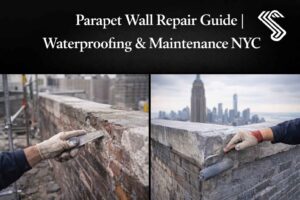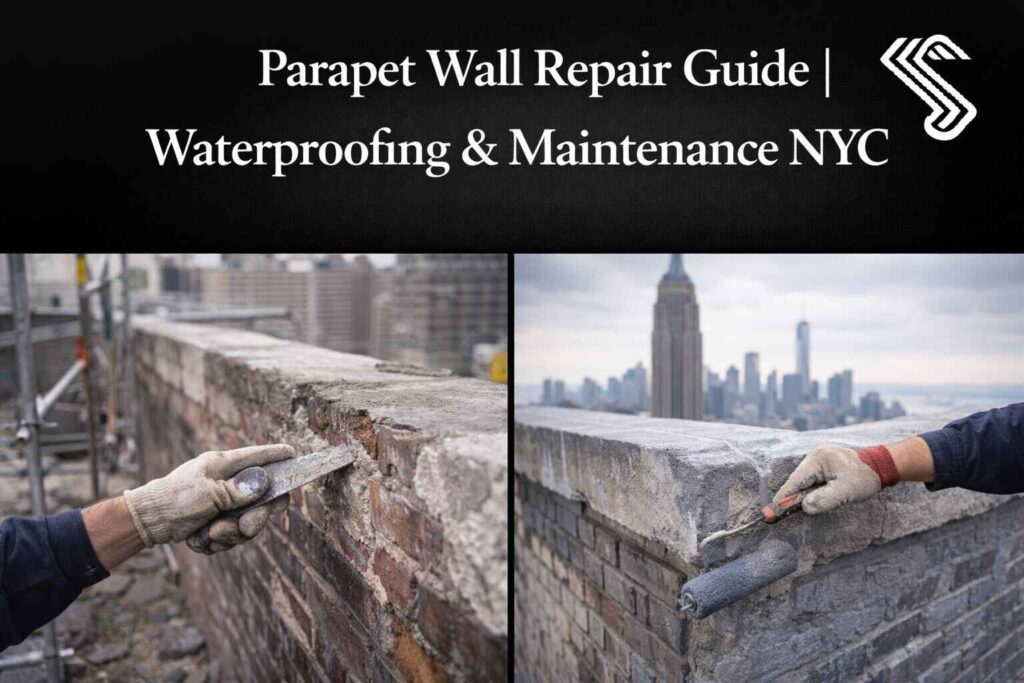
Parapet wall repair is one of the most overlooked yet high-impact aspects of building maintenance. These short vertical walls rising above rooflines are constantly exposed to wind, rain, snow, UV radiation, and thermal movement. When parapet walls fail, they rarely fail quietly. Water intrusion, masonry deterioration, interior leaks, and structural weakening often follow—sometimes long before visible damage appears indoors.
Unlike interior walls, parapet walls sit at the intersection of roofing, masonry, and waterproofing systems. This makes them a frequent failure point when construction shortcuts, aging materials, or improper repairs are involved. Industry inspections consistently show that parapet wall leaks are among the top causes of persistent roof edge water damage, even on newly replaced roofs.
This comprehensive guide explains how parapet walls fail, how professionals diagnose damage, and how modern repair and waterproofing systems restore long-term performance. It also clarifies when repairs are sufficient, when replacement is unavoidable, and how ongoing maintenance prevents repeat failures.
What Is a Parapet Wall and Why Proper Repair Matters?
A parapet wall is a vertical extension of an exterior wall above the roof surface. While originally used for safety and fire separation, modern parapet walls serve multiple functional purposes in commercial, residential, and industrial buildings. They protect roof edges from wind uplift, help manage water runoff, conceal rooftop equipment, and support flashing and waterproofing systems.
When parapet wall repair is ignored, moisture enters through cracks, failed mortar joints, damaged coping stones, or missing flashing. This water does not stay at the surface. It migrates downward into wall cavities, insulation, and roof assemblies, accelerating decay and increasing repair costs exponentially.
Proper parapet wall maintenance and repair:
- Prevents roof leaks at vulnerable edge transitions
- Protects masonry from freeze-thaw damage
- Extends roof system lifespan
- Reduces mold and interior moisture risks
- Preserves structural integrity and property value
Parapet walls are not decorative elements. They are load-bearing, weather-exposed building components that require proactive care.
What Causes Parapet Wall Damage? (Root Causes Explained)
Parapet wall deterioration is rarely caused by a single issue. In professional inspections, damage almost always results from combined material stress, water exposure, and construction flaws.
Primary Causes of Parapet Wall Failure
Water Infiltration
Water is the dominant cause of parapet wall damage. Failed flashing, cracked coping stones, open mortar joints, and deteriorated sealants allow moisture to enter masonry. Once inside, water weakens mortar, corrodes embedded metals, and expands during freeze-thaw cycles.
Thermal Expansion and Contraction
Parapet walls experience extreme temperature fluctuations. Daily and seasonal movement causes cracking, joint separation, and sealant failure—especially when rigid materials are used without expansion allowances.
Poor Original Construction
Common construction errors include:
- Missing or improperly installed flashing
- Insufficient coping overhang
- Incompatible mortar mixes
- No drainage or weep systems
These defects almost guarantee premature parapet wall repair needs.
Structural Movement
Building settlement, roof deflection, and seismic activity create stress fractures that compromise waterproofing layers and masonry bonds.
How to Identify Common Parapet Wall Problems Early?
Early detection significantly reduces parapet wall repair costs. Experienced inspectors look for warning signs that often appear months—or years—before interior leaks occur.
Visible Signs of Parapet Wall Damage
- Cracks in masonry or stucco, especially near corners and joints
- Efflorescence, a white powdery residue indicating moisture movement
- Spalling bricks or concrete, caused by trapped water expansion
- Loose or missing coping stones, exposing the wall core
- Deteriorated mortar joints, crumbling or recessed
- Damaged flashing, lifting, rusting, or separation
- Water staining on interior walls below the roof edges.
Parapet wall leaks often bypass roof membranes entirely, making them difficult to diagnose without targeted inspection.
Professional Parapet Wall Inspection: What Experts Look For
A proper parapet wall inspection goes beyond surface cracks. Professionals assess moisture pathways, material compatibility, and structural behavior.
Key Inspection Areas
- Coping stones and caps (cracks, slope, overhang)
- Flashing continuity beneath coping
- Mortar joint condition and depth
- Sealant elasticity and adhesion
- Drainage paths and weep holes
- Moisture content within masonry
Advanced inspections may use moisture meters, infrared scanning, or probe testing to locate hidden saturation zones.
Step-by-Step Parapet Wall Repair Process (Professional Standard)
Effective parapet wall repair follows a systematic sequence. Skipping steps leads to repeat failures.
1. Damage Assessment and Scope Definition
All cracked, loose, or water-damaged materials are identified. The repair scope includes visible and concealed damage.
2. Surface Preparation
- Remove loose masonry, failing mortar, and old sealants.
- Clean surfaces to ensure proper adhesion
- Clear drainage paths and weep holes
3. Crack Repair and Repointing
- Hairline cracks sealed with flexible masonry sealants
- Larger cracks repaired using compatible mortar repointing.
- Structural cracks stabilized before cosmetic repair.
4. Flashing Repair or Replacement
New flashing is installed beneath coping stones to interrupt moisture pathways. Modern flashing systems comply with ASTM and NRCA standards.
5. Coping Stone Repair or Replacement
Damaged coping stones are reset or replaced with proper slope, drip edges, and expansion joints.
6. Waterproofing Application
Liquid-applied membranes, cementitious coatings, or sheet membranes are installed based on exposure conditions.
7. Final Inspection and Testing
Repairs are inspected after curing and tested during rain events to confirm performance.
Parapet Wall Waterproofing Methods That Actually Work
Waterproofing is the most critical component of parapet wall repair. Paint alone is never sufficient.
Effective Waterproofing Systems
- Liquid-Applied Membranes
- Seamless, flexible, and ideal for complex details
- Cementitious Waterproof Coatings
- Breathable and compatible with masonry
- Bituminous Sheet Membranes
- High-durability protection for severe exposure zones
- Integrated Flashing Systems
- Prevent water migration behind masonry.
Material selection depends on climate, wall type, and building movement.
How Climate and Weather Conditions Accelerate Parapet Wall Damage?
Climate plays a decisive role in how quickly parapet walls deteriorate. Constant exposure to rain, snow, UV radiation, and temperature fluctuations places parapet walls under continuous stress. In colder regions, freeze-thaw cycles are especially destructive. Water enters small cracks, freezes, expands, and gradually fractures masonry, mortar joints, and coping stones. In hotter climates, intense sunlight and heat cause expansion and contraction that weakens sealants and flashing systems over time.
High-wind areas experience additional pressure at roof edges, increasing the risk of flashing separation and moisture intrusion. Coastal environments introduce salt exposure, which accelerates corrosion of metal components embedded within parapet walls. Because weather-related damage compounds over time, parapet wall repair strategies must be climate-specific. Selecting flexible waterproofing membranes, UV-resistant coatings, and proper expansion detailing ensures parapet walls remain durable despite environmental stressors.
The Role of Flashing Systems in Long-Term Parapet Wall Performance
Flashing is one of the most critical yet frequently misinstalled components of parapet wall assemblies. Its primary purpose is to redirect water away from vulnerable joints where parapet walls intersect with roof membranes. When flashing is missing, discontinuous, or improperly terminated, water bypasses surface coatings and penetrates deep into the wall structure.
Modern parapet wall repair standards emphasize continuous flashing beneath coping stones and behind wall finishes. This creates a secondary defense line that prevents moisture migration even if surface materials crack. High-performance flashing systems made from reinforced membranes or corrosion-resistant metals significantly improve durability. Proper overlap, secure terminations, and compatibility with roof membranes are essential for effectiveness. Without correctly installed flashing, even high-quality waterproof coatings will fail prematurely, making flashing integrity central to every successful parapet wall repair project.
Why Incompatible Repair Materials Cause Repeat Parapet Wall Failures?
One of the most common reasons parapet wall repairs fail is the use of incompatible materials. Masonry systems rely on balance—mortars must be softer than bricks, sealants must remain flexible, and coatings must allow controlled vapor transmission. When repairs use overly rigid mortars, non-breathable paints, or generic sealants, stress concentrates at weak points and accelerates cracking.
For example, hard cement mortars applied to historic brick parapet walls prevent natural movement and moisture release, leading to spalling and internal damage. Similarly, waterproof paints that trap vapor cause blistering and hidden decay. Professional parapet wall repair prioritizes material compatibility, ensuring repairs move with the building rather than resisting it. Using system-approved products designed specifically for exterior masonry dramatically reduces recurrence of cracks, leaks, and surface failures.
When Parapet Wall Repair Is No Longer Enough, and Replacement Is Required?
In some cases, parapet wall repair alone cannot restore structural safety or waterproofing performance. Advanced deterioration—such as extensive masonry displacement, deep structural cracking, or widespread moisture saturation—signals that replacement may be the more responsible option. Temporary repairs in these conditions often mask symptoms without addressing root causes.
Indicators that replacement should be considered include recurring leaks despite multiple repairs, bulging or leaning parapet walls, corroded reinforcement, and severely deteriorated coping systems. Full parapet reconstruction allows modern detailing, upgraded flashing, improved drainage, and compliance with current building codes. Although replacement requires a higher upfront investment, it often proves more cost-effective over time by eliminating repeated repairs and reducing interior damage risks. Knowing when to transition from repair to replacement is a key decision point in responsible building maintenance.
Parapet Wall Maintenance: How to Prevent Repeat Repairs?
Preventive maintenance dramatically extends parapet wall lifespan.
Recommended Maintenance Schedule
Quarterly
- Visual inspection for cracks and sealant failure
- Clear debris from drainage points
Annually
- Check flashing integrity
- Test waterproof coatings
Seasonally
- Seal minor cracks before freeze-thaw cycles.
- Inspect coping stones after storms.
Buildings with routine parapet wall maintenance experience fewer emergency repairs and lower lifecycle costs.
DIY vs Professional Parapet Wall Repair: What’s Realistic?
Some parapet wall tasks are manageable for property owners. Many are not.
Suitable DIY Tasks
- Sealing minor surface cracks
- Cleaning drainage paths
- Monitoring visible deterioration
Repairs That Require Professionals
- Structural cracking
- Flashing installation
- Coping stone replacement
- Full waterproofing systems
- Work requiring scaffolding or fall protection
Improper DIY repairs often trap moisture, making damage worse.
How Much Does Parapet Wall Repair Cost?
Costs vary based on access, materials, and damage severity.
Cost Influencing Factors
- Height and accessibility
- Extent of water damage
- Waterproofing system selection
- Labor and safety requirements
Minor repairs cost significantly less than full restoration, which reinforces the value of early intervention.
Final Thoughts
Parapet wall repair is not optional maintenance—it is a strategic investment in roof performance, structural durability, and moisture control. Buildings that address parapet wall issues proactively avoid cascading damage that affects interiors, insulation, and structural components.
By understanding how parapet walls fail, selecting proven waterproofing systems, and committing to regular inspections, property owners can eliminate chronic leaks, extend roof life, and reduce long-term repair costs.