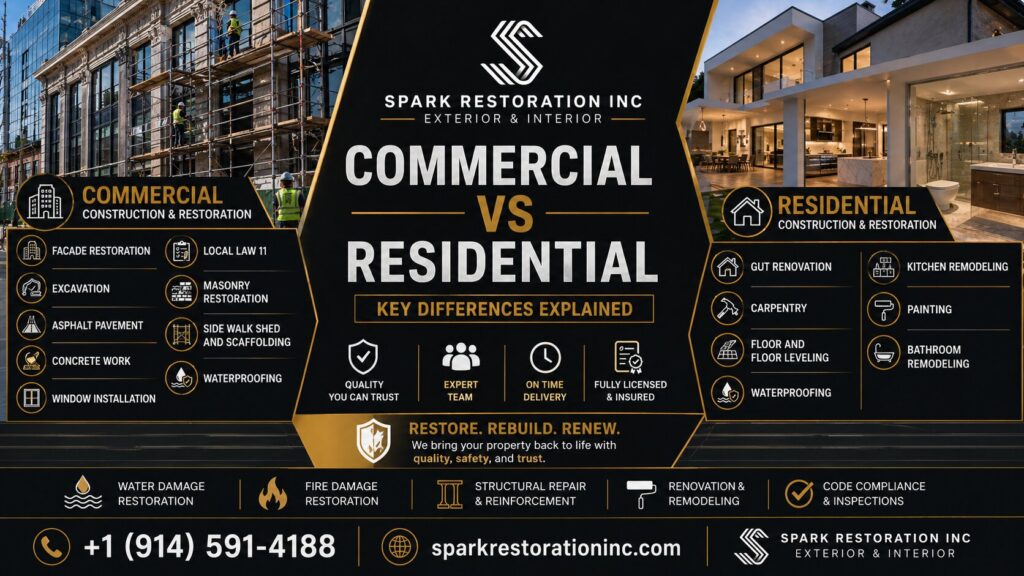
When planning a property upgrade, repair, or full-scale build, understanding the difference between commercial vs residential construction and restoration is essential. Whether you’re dealing with property damage, structural upgrades, or renovation projects, each type requires a different approach in terms of project management, compliance, cost estimation, and execution.
At Spark Restoration INC, we specialize in both commercial and residential restoration, renovation, and construction services, helping property owners make informed decisions and avoid costly mistakes.
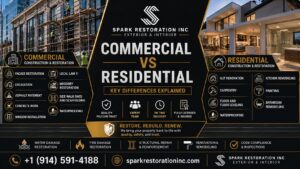
What is Commercial Construction & Restoration?

Commercial construction and restoration involves building, repairing, or upgrading structures used for business or public operations, such as:
- Office buildings
- Retail stores
- Warehouses
- Hotels
- Healthcare facilities
Key Characteristics:
- Large-scale, high-value projects
- Complex structural systems and building infrastructure
- Strict building codes and compliance requirements
- Requires advanced construction project management and site supervision
- Often includes restoration after damage (water, fire, structural issues)
👉 Commercial projects demand experienced contractors to handle compliance, safety standards, and large-team coordination.
What is Residential Construction & Restoration?

Residential construction and restoration focuses on homes and living spaces, including:
- Single-family houses
- Apartments
- Condominiums
- Townhouses
Key Characteristics:
- Smaller-scale, personalized projects
- Focus on comfort, safety, and aesthetics
- Includes home renovation, remodeling, and damage repair
- Faster timelines compared to commercial work
- Flexible design and customization
👉 Residential projects often involve repair, restoration, and modernization of existing structures.
Key Differences Between Commercial and Residential Project
1. Project Scope and Complexity
Commercial:
- Large-scale construction and restoration projects
- Complex systems (HVAC, electrical, plumbing)
- Multi-phase execution
Residential:
- Smaller projects
- Less complex systems
- Easier coordination
👉 Spark Insight: Commercial restoration requires deeper technical expertise and structured planning.
2. Building Codes and Compliance
Commercial:
- Strict building codes and regulatory compliance
- Fire safety and accessibility standards
- Frequent inspections
Residential:
- Basic safety regulations
- Fewer compliance layers
👉 Why It Matters: Non-compliance in commercial projects can lead to legal issues and project shutdowns.
3. Restoration and Repair Requirements
Commercial:
- Often includes large-scale damage restoration (water, fire, structural)
- Requires specialized equipment and certified teams
Residential:
- Focus on home repairs, remodeling, and upgrades
- Less intensive restoration processes
👉 Spark Advantage: We provide fast, reliable restoration solutions for both sectors.
4. Cost and Budgeting
Commercial:
- Higher investment
- Detailed construction cost estimation and risk management
- Larger workforce and materials
Residential:
- More flexible budgets
- Lower overall costs
👉 Best Practice: Always include contingency for unexpected repair or restoration needs.
5. Timeline and Project Management
Commercial:
- Longer timelines
- Requires professional construction management services
- Multiple stakeholders involved
Residential:
- Faster execution
- Simpler project coordination
👉 Key Insight: Proper project planning and scheduling prevents delays.
6. Materials and Construction Methods
Commercial:
- Steel, reinforced concrete, industrial-grade materials
- Heavy machinery
Residential:
- Wood framing, lightweight materials
- Standard tools
👉 Impact: Material selection directly affects durability and long-term maintenance.
7. Safety Standards
Commercial:
- Strict construction safety standards and compliance protocols
- High-risk environment
Residential:
- Basic safety requirements
👉 Spark Commitment: Safety is a top priority across all projects.
8. Purpose and Return on Investment
Commercial:
- Focused on business operations and revenue generation
Residential:
- Focused on living comfort and property value
👉 Strategy: Commercial projects prioritize ROI, while residential emphasizes lifestyle.
Which One is Right for You?
Choose Commercial Construction/Restoration If:
- You own or manage business property
- You need large-scale upgrades or repairs
- You require professional construction management services
Choose Residential Construction/Restoration If:
- You are improving or repairing your home
- You want customization and comfort
- You need quick and efficient project completion
Why Choose Spark Restoration INC?
At Spark Restoration INC, we combine construction expertise with restoration specialization to deliver high-quality results.
What We Offer:
- Commercial & residential construction services
- Full-scale restoration and repair solutions
- Accurate cost estimation and project planning
- Code-compliant construction and renovations
- Expert site supervision and quality control
👉 We provide turnkey solutions—from initial consultation to final handover.
Final Thoughts
Understanding the difference between commercial vs residential construction and restoration helps you choose the right approach, avoid costly mistakes, and ensure long-term success.
Whether it’s a large commercial project or a residential renovation, the key lies in:
- Proper planning
- Hiring experienced professionals
- Maintaining quality and compliance
Get Expert Restoration & Construction Services
Planning a project or dealing with property damage?
👉 Spark Restoration INC is here to help.
- Fast response
- Reliable execution
- Transparent pricing
- High-quality results
Contact us today for a consultation and let our experts restore, rebuild, and upgrade your property with confidence.