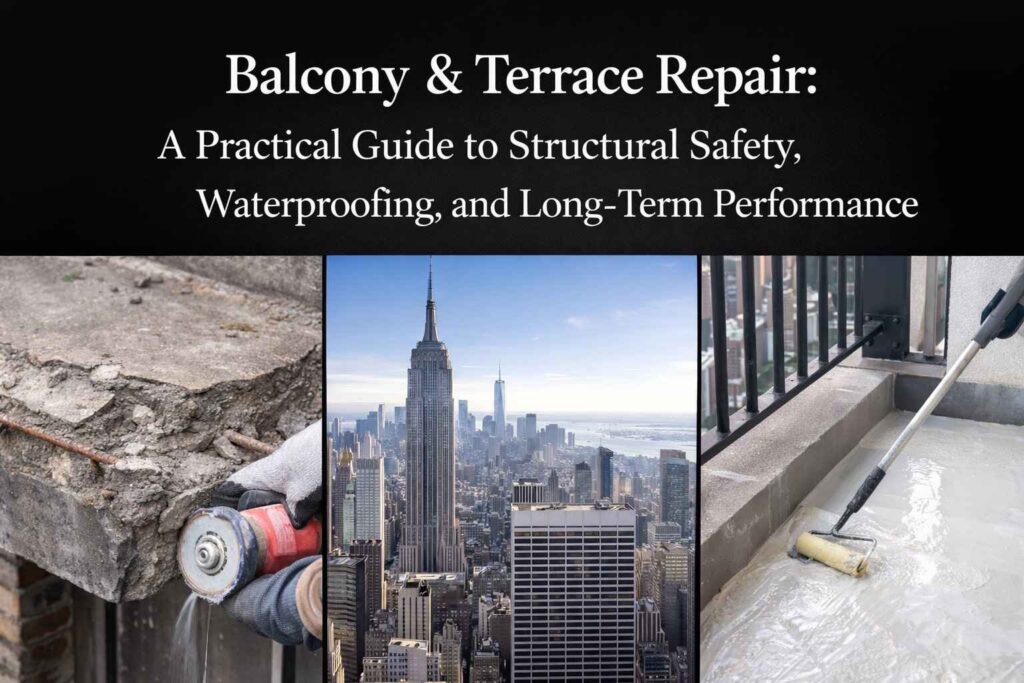
Balconies and terraces are exposed structural elements that experience more environmental stress than almost any other part of a building. In dense urban environments like New York City, these exterior platforms are constantly subjected to moisture intrusion, freeze–thaw cycles, heavy foot traffic, and aging construction materials. When not properly maintained, balconies and terraces can become safety liabilities rather than functional assets.
This guide explains balcony & terrace repair from a professional, real-world perspective—covering structural issues, waterproofing systems, surface restoration, and compliance considerations specific to NYC buildings. It is written for property owners, building managers, and homeowners who want to understand how professional repairs protect both people and property.
What Is Balcony & Terrace Repair?
Balcony and terrace repair is a specialized branch of exterior structural restoration focused on correcting deterioration in load-bearing slabs, surface finishes, railings, and waterproofing systems. These repairs address both visible damage and hidden failures beneath the surface.
Unlike cosmetic exterior work, balcony and terrace repairs often involve:
- Structural concrete rehabilitation
- Waterproof membrane replacement
- Drainage correction
- Railing anchorage reinforcement
In NYC, this work must frequently align with Local Law 11 (FISP) requirements and DOB safety standards.
Common Causes of Balcony & Terrace Deterioration
Most balcony and terrace failures are not sudden—they develop gradually due to predictable environmental and construction factors.
Primary Causes
- Water infiltration through failed membranes or cracks
- Freeze–thaw expansion in concrete slabs
- Corrosion of embedded steel reinforcement
- Improper slope or blocked drainage systems
- Aging construction materials exceeding design life
In boroughs like Manhattan, Brooklyn, and Queens, older buildings often have original balconies that were never designed with modern waterproofing standards.
Signs Your Balcony or Terrace Needs Repair
Early identification of damage can significantly reduce repair costs and prevent safety hazards.
Warning Indicators
- Cracks radiating from corners or railing posts
- Spalling or flaking concrete
- Rust stains indicating steel corrosion
- Soft or hollow-sounding surface tiles
- Ponding water after rainfall
Any of these signs should trigger a professional assessment before deterioration accelerates.
Structural Concrete Repairs for Balconies & Terraces
Concrete balconies rely on steel reinforcement for strength. When moisture penetrates the concrete, it reaches the steel, causing corrosion that expands and fractures the surrounding material.
Professional Repair Process
- Removal of unsound concrete
- Cleaning and treating exposed steel reinforcement
- Application of corrosion inhibitors
- Structural patching with repair mortar
- Surface leveling and curing
These steps restore load-bearing capacity and prevent further deterioration.
Waterproofing Systems: The Core of Long-Lasting Repairs
Waterproofing is the single most critical element of balcony and terrace performance. Without a continuous, properly installed membrane, even newly repaired concrete will fail prematurely.
Common Waterproofing Systems
- Liquid-applied elastomeric membranes
- Sheet membrane systems
- Cementitious waterproof coatings
- Traffic-rated deck waterproofing systems
In NYC climates, professional systems are selected based on exposure, usage, and substrate condition—not cost alone.
Drainage Design and Slope Correction
Improper drainage is a leading cause of balcony and terrace failure. Standing water accelerates membrane breakdown and increases freeze–thaw stress.
Best Practices
- Minimum slope of ¼ inch per foot away from the building
- Functional scuppers or drains
- Proper flashing at wall transitions
- Secondary overflow protection
Drainage correction is often addressed during waterproofing replacement.
Surface Finishes: Tile, Pavers, and Protective Coatings
Surface materials play both functional and aesthetic roles in balcony and terrace systems.
Common Finish Options
- Porcelain or stone tile systems
- Concrete pavers on pedestal systems
- Decorative concrete coatings
- Non-slip protective deck coatings
Each system must be compatible with the waterproofing layer beneath it to avoid trapped moisture and bond failure.
Balcony Railings, Parapets, and Safety Compliance
Railings and parapet walls are integral safety components that must be structurally secure and code-compliant.
Professional Railing Repairs Include
- Reinforcing loose or corroded anchors
- Sealing penetrations at mounting points
- Replacing deteriorated parapet coping
- Ensuring code-compliant height and spacing
In NYC, railing failures are often cited during building inspections.
Balcony & Terrace Repair in NYC: Local Considerations
New York City buildings face unique regulatory and environmental challenges.
NYC-Specific Factors
- Local Law 11 (FISP) inspections
- High building density and limited access
- Older construction methods and materials
- Increased exposure to pollution and moisture
Experienced contractors understand how to coordinate repairs with DOB requirements and inspection timelines.
Preventive Maintenance vs. Reactive Repairs
Proactive maintenance significantly reduces long-term repair costs and safety risks.
Preventive Maintenance Includes
- Annual waterproofing inspections
- Drain cleaning and slope checks
- Sealant and joint maintenance
- Early crack repair
Reactive repairs, by contrast, often require extensive structural reconstruction.
Choosing the Right Balcony & Terrace Repair Contractor
Not all exterior contractors have the expertise required for balcony and terrace systems.
What to Look For
- Proven experience with structural concrete repair
- Waterproofing system certifications
- Knowledge of NYC building codes
- Clear repair documentation and warranties
Companies like Spark Restoration Inc specialize in integrated repair approaches that address both structure and moisture protection.
How Long Do Balcony & Terrace Repairs Last?
When executed correctly, professional balcony and terrace repairs provide long-term performance.
Typical Lifespans
- Waterproofing systems: 10–20 years
- Structural concrete repairs: 25+ years
- Surface finishes: 10–15 years
Longevity depends on material selection, installation quality, and ongoing maintenance.
Final Note
Balcony and terrace repairs are not cosmetic upgrades—they are critical structural and safety investments. When addressed by experienced professionals using proper systems, these exterior spaces can remain safe, functional, and durable for decades.