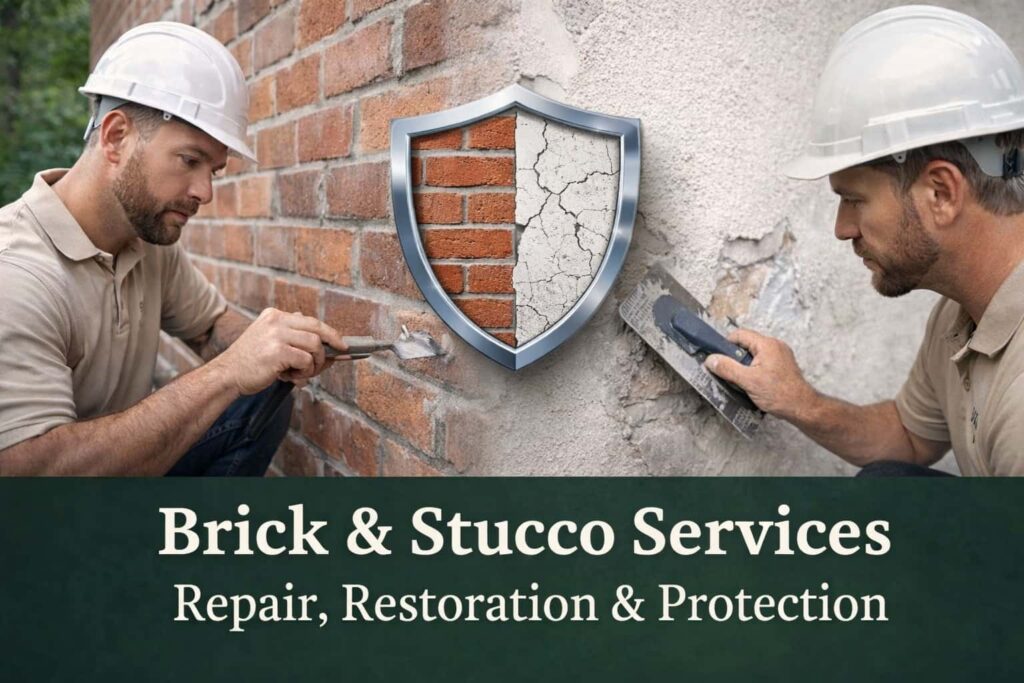
Brick and stucco are two of the most widely used exterior finishes in residential and commercial construction. While both materials offer durability and aesthetic appeal, they are also vulnerable to weather exposure, moisture infiltration, and natural aging. Professional brick & stucco services are essential to maintain structural integrity, prevent water damage, and preserve the appearance of your property.
This guide explains how brick and stucco systems function, common issues they face, and the professional solutions used to repair, restore, and protect them for long-term performance.
Understanding Brick & Stucco as Building Materials
Brick is a masonry material made from fired clay units bonded together with mortar. It provides excellent compressive strength and long service life. Stucco, on the other hand, is a cement-based exterior finish applied in layers over masonry or framed substrates, offering flexibility in texture and design.
Both materials are porous by nature, meaning they absorb moisture. Without proper maintenance and protection, this moisture can lead to cracks, spalling, and interior leaks.
Common Brick & Stucco Problems Property Owners Face
Over time, brick and stucco surfaces develop visible and hidden issues that require professional attention.
Common brick-related issues:
- Cracked or deteriorated mortar joints
- Spalling or flaking brick faces
- Efflorescence (white salt deposits)
- Structural movement cracks
- Water penetration through joints
Common stucco-related issues:
- Hairline and structural cracks
- Delamination or bulging surfaces
- Moisture trapped behind stucco
- Peeling or powdering finishes
- Mold or staining due to water intrusion
Early repair prevents minor issues from becoming expensive structural problems.
Professional Brick Repair & Restoration Services
Brick repair focuses on restoring both the structural and aesthetic performance of masonry walls.
Key brick services include:
- Brick repointing: Removing and replacing deteriorated mortar joints
- Brick replacement: Removing damaged bricks and installing new matching units
- Crack repair: Stabilizing movement-related cracks
- Structural reinforcement: Addressing load-bearing masonry issues
- Brick cleaning: Removing pollution, staining, and biological growth
Proper brick repair restores load transfer, prevents moisture intrusion, and extends wall lifespan by decades.
Stucco Repair, Restoration & Refinishing Solutions
Stucco requires specialized techniques due to its layered construction and flexibility requirements.
Professional stucco services include:
- Crack repair and patching using compatible materials
- Full stucco resurfacing for aging or heavily damaged facades
- Texture and color matching for seamless repairs
- Delamination repair to re-secure detached layers
- Protective stucco coatings to prevent moisture absorption
Correct material selection and application techniques are critical to avoid trapping moisture behind stucco systems.
Brick & Stucco Waterproofing: A Critical Protection Step
Water infiltration is the leading cause of failure in both brick and stucco assemblies. Professional waterproofing systems protect surfaces while allowing vapor to escape.
Waterproofing methods include:
- Breathable masonry sealers
- Crack and joint sealing
- Flashing and joint detailing
- Foundation and wall drainage solutions
Unlike paint, professional waterproof coatings do not block vapor transmission, preventing blistering and internal moisture buildup.
You can Also Read About: Expert Guide to Masonry Waterproofing & Leak Prevention Solutions
Preventive Maintenance for Brick & Stucco Buildings
Preventive maintenance programs reduce long-term costs and extend the life of exterior renovation systems.
Maintenance benefits:
- Early detection of cracks and leaks
- Reduced emergency repair costs
- Extended facade lifespan
- Improved energy efficiency
- Increased property value
Annual or bi-annual inspections are recommended, especially in climates with freeze–thaw cycles.
Brick vs Stucco: Choosing the Right Repair Approach
| Feature | Brick | Stucco |
|---|---|---|
| Primary vulnerability | Mortar joints | Cracks & moisture trapping |
| Repair method | Repointing & brick replacement | Patching & resurfacing |
| Waterproofing | Penetrating sealers | Breathable coatings |
| Longevity | 50+ years with maintenance | 20–40 years with maintenance |
Why Professional Brick & Stucco Services Matter?
Improper repairs—such as using incorrect mortar or sealing stucco with non-breathable paint—often cause accelerated damage. Professional contractors understand material compatibility, moisture movement, and structural behavior.
Expert brick & stucco services ensure:
- Code-compliant repairs
- Long-term durability
- Moisture-safe assemblies
- Preservation of architectural character
Final Thoughts
Brick and stucco systems are long-term investments that require informed care. Professional repair, restoration, and waterproofing protect your building from water damage, structural deterioration, and costly future repairs.
Timely intervention not only restores appearance but also preserves safety, performance, and property value.
(FAQs)
1. How do I know if my brick or stucco needs repair?
Visible cracks, loose mortar, staining, bulging surfaces, or interior leaks are common signs that professional evaluation is needed.
2. Can brick and stucco cracks be repaired permanently?
Yes. When cracks are properly diagnosed and repaired using compatible materials, they can be stabilized and prevented from spreading.
3. Is stucco waterproof on its own?
No. Stucco is water-resistant but not waterproof. Without proper coatings and detailing, moisture can penetrate behind the surface.
4. How long do brick and stucco repairs last?
High-quality brick repairs can last decades, while stucco repairs typically last 10–25 years, depending on exposure and maintenance.
5. Should waterproofing be done before or after repairs?
Always after repairs. Waterproofing over damaged masonry traps moisture and leads to further deterioration.