
Lintel & Shelf Angle Construction In New York

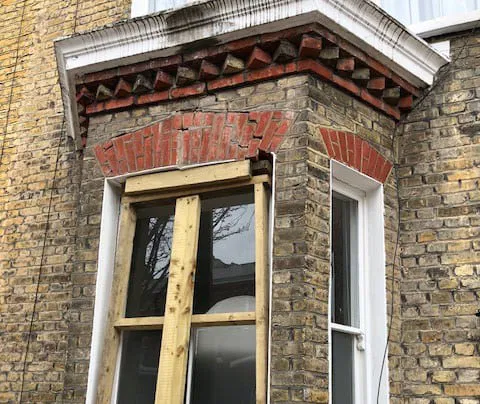
Brick cracking and displacement above windows signal active lintel or shelf angle failure on New York City buildings. Corroded steel reduces bearing and creates falling-debris exposure over occupied areas. Lintel and shelf angle repair stabilizes the opening immediately, arrests movement, and contains the condition before moisture, freeze–thaw, or inspection pressure escalates the hazard.

Best Lintel & Shelf Angle Repairing Work Near Me

Lintel failure is an active falling-brick hazard over the public right-of-way, not a scheduled maintenance issue. Brick movement continues until the steel support is stabilized. Local crews secure the sidewalk, access the opening, and arrest movement the same day so the condition does not spread or trigger enforcement.

Delayed access allows water intrusion and rust expansion to accelerate loss of bearing. Non-local response widens exposure between visits. A NYC-based crew closes the stabilization window immediately, protects pedestrians, and contains the hazard before further displacement occurs.

Lintel & Shelf Angle Repairing Work In New York

Why Choose Us?

From Harlem brownstones to Westchester townhomes, our experienced team understands New York masonry inside and out.

Why locals trust Spark Restoration Inc for masonry services in NYC:

  • Licensed & fully insured masonry experts
  • Deep knowledge of NYC construction codes
  • Skilled in historic restoration and modern builds
  • Quick turnaround for masonry violation corrections
  • Honest pricing and detailed project planning

We proudly serve all boroughs and nearby neighborhoods with responsive, reliable service.

Reviews

Customers consistently praise Spark Restoration Inc. for reliable service, skilled workmanship, and durable results across exterior repair, renovation, masonry services, and full property restoration. Homeowners and commercial clients value the team’s professionalism, clear communication, and high-quality finishes.

Request a Quote

Ready to Work Together? Build a project with us!

Need any help with projects?

Have questions or need professional property restoration services? Spark Restoration Inc is here to help. Get in touch today to schedule a consultation and let us bring your property improvement project to life.

Frequently Asked Questions

Cracked or shifting brick above an opening is treated as an unsafe condition until the support is confirmed stable. Loss of bearing allows masonry to loosen without warning. Areas below remain exposed until the lintel or shelf angle is stabilized.

Visible movement, displacement, and loose masonry commonly trigger enforcement when observed. Once flagged, conditions escalate quickly. Stabilizing the support shows the hazard is being actively contained.

Movement does not pause. Moisture, freeze–thaw, and vibration continue to reduce remaining steel section. Early stabilization limits the condition to the opening instead of allowing it to migrate into adjacent façade areas.

Yes, when the work is treated as hazard containment. Controlled zones, sidewalk protection, and staged access allow stabilization without interrupting building use.

When failed steel is corrected, bearing is restored and displacement stops. Existing cracks may remain visible, but the condition is stabilized. If multiple openings are affected, each must be addressed so movement does not continue elsewhere.

Scroll to Top